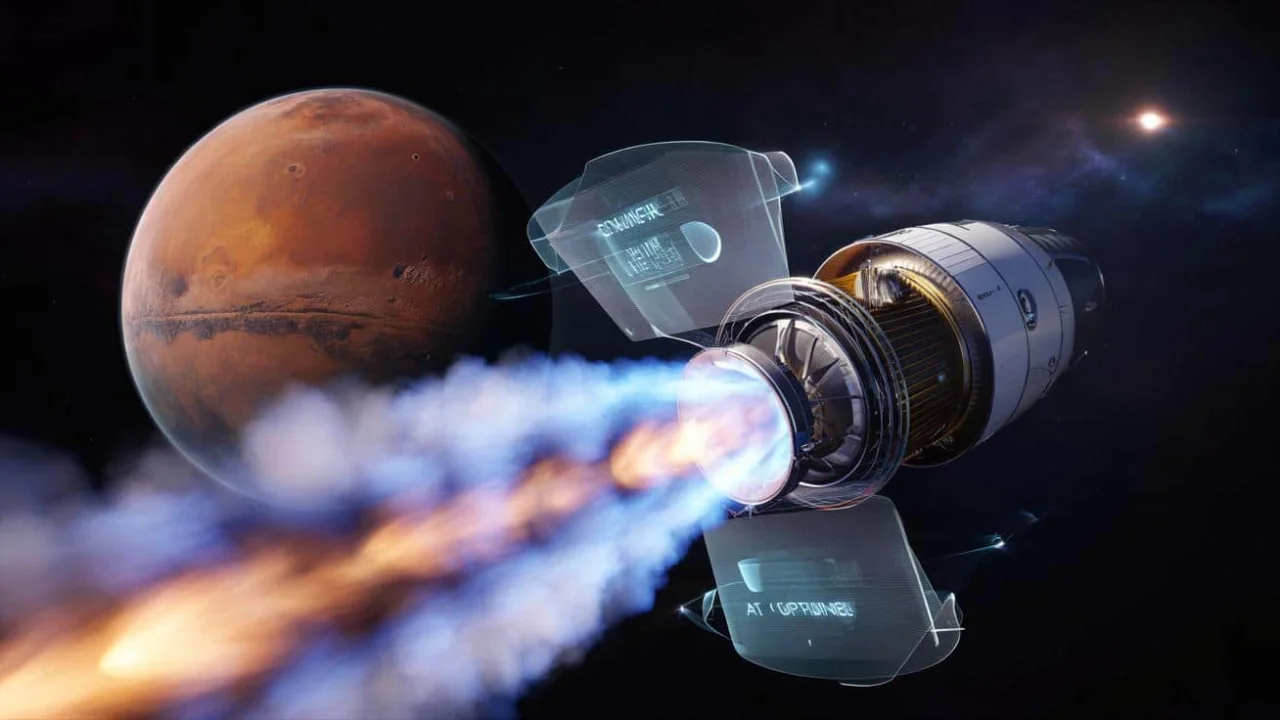
The countdown reaches zero, engines roar to life, and another rocket thunders toward the stars. But behind the spectacular flames and earth-shaking vibrations, something quieter is happening—software is learning. While engineers in mission control watch their screens, artificial intelligence algorithms are silently optimizing fuel flows, adjusting thrust vectors, and making split-second decisions that could determine whether a mission succeeds or fails.
Sarah Chen remembers the moment she realized everything was changing. As a propulsion engineer at a major aerospace company, she’d spent years manually tweaking rocket parameters, running endless simulations, and hoping her calculations were right. Then AI stepped in, and suddenly her computer was finding solutions she never would have considered—solutions that worked better than anything she’d designed.
This isn’t science fiction. It’s happening right now in rocket labs across the globe, and it’s completely transforming how we think about getting to Mars.
The Smart Revolution Behind the Flames
For over sixty years, rocket propulsion has followed the same basic playbook: mix fuel and oxidizer, ignite the mixture, and channel the explosion out the back. This brute-force approach got us to the moon and built the International Space Station, but it’s hitting a wall when it comes to longer missions.
AI rocket propulsion represents a fundamental shift from this old-school approach. Instead of relying solely on pre-programmed instructions, modern rockets are learning to think for themselves. They’re analyzing thousands of sensor readings every second, predicting problems before they happen, and automatically adjusting their performance to squeeze every drop of efficiency from their fuel.
“We’re moving from rockets that follow a script to rockets that improvise,” explains Dr. Michael Rodriguez, a propulsion specialist who’s worked on several Mars mission concepts. “The difference is like comparing a player piano to a jazz musician.”
The heart of this transformation lies in machine learning, particularly a technique called reinforcement learning. Think of it as teaching a rocket engine to learn through trial and error—except instead of making mistakes with real hardware worth millions of dollars, the AI practices in virtual worlds where failure costs nothing.
How AI is Rewriting the Rocket Rulebook
Traditional rocket design involves teams of engineers running calculations, building prototypes, and testing components over months or years. AI rocket propulsion flips this process on its head by letting algorithms explore millions of possibilities in the time it takes to drink a cup of coffee.
Here’s how the technology is being applied across different aspects of rocket propulsion:

- Engine Design Optimization: AI analyzes combustion patterns to create more efficient nozzle shapes and fuel injection systems
- Real-time Performance Tuning: Algorithms adjust thrust levels, mixture ratios, and cooling flows based on current conditions
- Predictive Maintenance: Machine learning spots engine problems before they become critical failures
- Trajectory Optimization: AI calculates the most fuel-efficient paths to destinations, accounting for gravitational assists and orbital mechanics
- Failure Recovery: When engines malfunction, AI systems automatically compensate by adjusting remaining thrusters
The numbers tell the story of this revolution:
| Aspect | Traditional Method | AI-Enhanced Method | Improvement |
|---|---|---|---|
| Design Iterations | 50-100 per month | 10,000+ per day | 1000x faster |
| Fuel Efficiency | 85-90% | 92-96% | 5-10% savings |
| Reaction Time | Minutes to hours | Milliseconds | Near-instantaneous |
| Mission Success Rate | 85-95% | 97-99% | Higher reliability |
“The efficiency gains might seem small, but when you’re talking about missions to Mars that cost billions of dollars, a 5% fuel savings could mean the difference between mission success and failure,” notes Lisa Park, an aerospace systems analyst.
What This Means for Getting to Mars and Beyond
The implications of AI rocket propulsion stretch far beyond technical specifications. We’re talking about fundamentally changing what’s possible in space exploration.
For Mars missions, AI-powered engines could reduce travel time from nine months to six months by finding more efficient flight paths and optimizing fuel usage throughout the journey. That’s not just a convenience—it’s a matter of crew safety and mission viability.
But the real game-changer comes with long-duration missions. When you’re sending a spacecraft to Jupiter or Saturn, the journey takes years, and there’s no way to send a software update or replacement parts. AI rocket propulsion systems can adapt to changing conditions, compensate for component wear, and even reprogram themselves based on what they learn along the way.
“We’re essentially giving spacecraft the ability to be their own flight engineers,” says Dr. Amanda Foster, who leads an AI propulsion research team. “They can troubleshoot problems, optimize performance, and make decisions that would normally require ground control input.”
The technology is already making waves in the commercial space industry. Companies like SpaceX are using AI to optimize their reusable rocket landings, while newer players are building AI directly into their engine designs from the ground up.
For everyday people, this revolution means more reliable satellite internet, cheaper space-based manufacturing, and eventually, more affordable space tourism. When rockets become more efficient and reliable through AI, the cost of getting to space drops, opening up possibilities we can barely imagine today.
The timeline for seeing these benefits varies. Some AI rocket propulsion improvements are already flying on current missions, while more advanced applications won’t reach Mars until the 2030s. But the trend is clear: artificial intelligence is becoming as essential to rocket propulsion as fuel and oxidizer.
“What excites me most is that we’re just scratching the surface,” reflects Chen, the propulsion engineer who witnessed this transformation firsthand. “Every mission teaches these AI systems something new, and they get smarter with each launch. We’re not just building better rockets—we’re building rockets that build themselves better.”
FAQs
How does AI make rockets more efficient?
AI continuously analyzes engine performance and automatically adjusts fuel flows, thrust levels, and other parameters to optimize efficiency in real-time, often finding improvements human engineers would miss.
Are AI-controlled rockets safe?
Yes, AI systems include multiple safety layers and can actually improve safety by detecting and responding to problems faster than human operators, while always operating within pre-programmed safety limits.
Will AI replace human rocket engineers?
No, AI enhances human engineers’ capabilities rather than replacing them. Engineers still design the systems, set the goals, and oversee the AI’s operations.
When will we see AI rockets going to Mars?
Several Mars missions planned for the 2030s will incorporate AI propulsion systems, though simpler AI applications are already being used in current space missions.
How much cheaper could AI make space travel?
While exact figures vary, experts estimate AI optimization could reduce launch costs by 10-20% initially, with larger savings possible as the technology matures.
Can AI help rockets land themselves?
Yes, companies like SpaceX already use AI to help rockets land precisely on platforms, and this technology is becoming more sophisticated with each mission.
About the Author