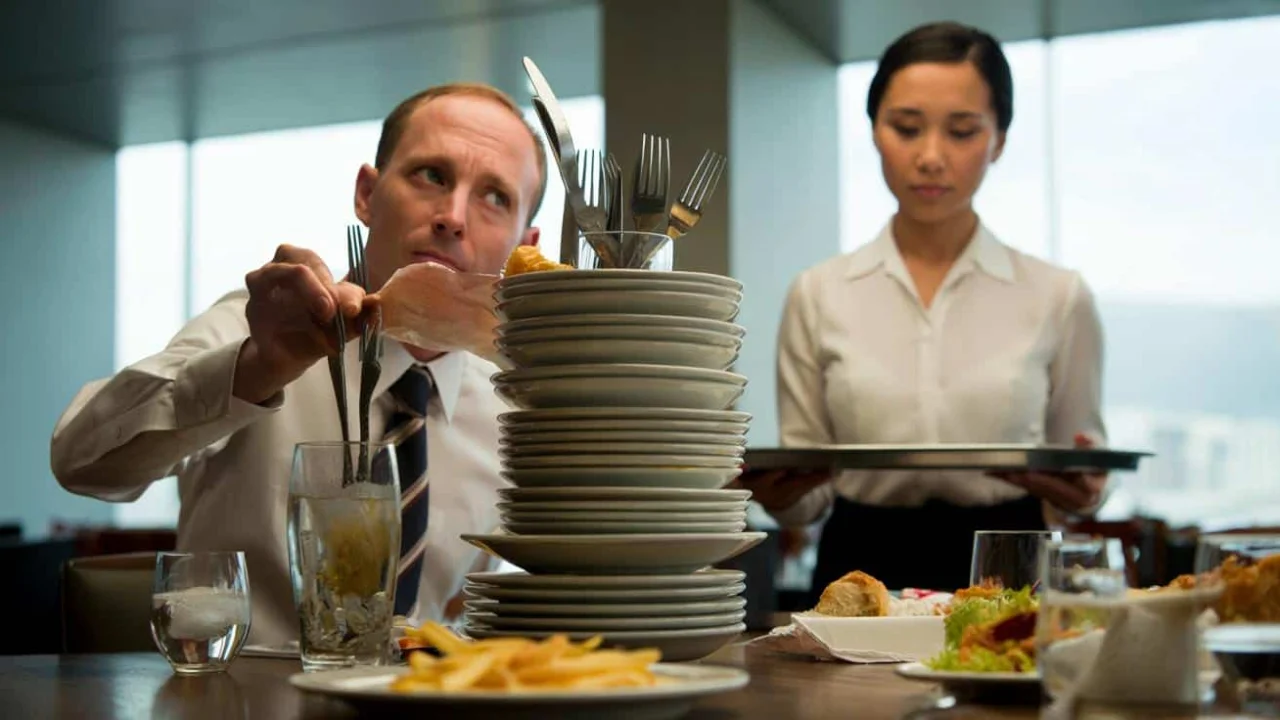
Sarah always did it without thinking. The moment the last person at her table finished eating, she’d spring into action like a dinner cleanup superhero. Plates went into neat stacks, silverware got sorted, napkins folded. She felt proud watching the server’s face light up with gratitude.

Until one evening, when she overheard two servers talking by the kitchen. “Table six is doing that thing again,” one muttered. “Now I have to redo everything they just ‘helped’ with.” Sarah froze. Were they talking about her table?
That moment changed everything she thought she knew about helping restaurant servers.
The uncomfortable truth about your “helpful” habit
Helping restaurant servers clear tables feels like the right thing to do. You see overworked staff rushing between tables, and your instinct kicks in. Stack those plates, gather those glasses, make their job easier. It’s thoughtful, considerate, human.
Except it’s often not.

What looks like kindness from your seat might actually reveal something darker about your personality. That urge to jump in and “fix” things? It’s less about the server and more about you.
“When customers start stacking plates, they’re usually stacking them wrong,” explains Marcus Chen, who spent five years waiting tables in Chicago. “We have a specific system for clearing tables efficiently. When someone ‘helps,’ it actually creates more work.”
The problem runs deeper than logistics. Your need to help often stems from discomfort with being served, a compulsion to control your environment, or worse – a performance of goodness that puts your moral image ahead of practical reality.
What servers really think when you “help”
Let’s break down what actually happens when you decide to play assistant manager at your dinner table:

- Safety hazards: Customers often stack plates with knife blades facing out or balance heavy items precariously
- System disruption: Servers are trained in specific clearing patterns that maximize efficiency
- Extra work: Incorrectly stacked items often need to be reorganized before heading to the dish pit
- Timing issues: Your “help” might interrupt the server’s carefully planned table rotation
- Hygiene concerns: Customers don’t know which items need special handling or separation
“The worst is when people dump all the silverware into water glasses,” says Restaurant Manager Lisa Rodriguez. “Now we have to fish out forks from dirty water instead of just grabbing clean glasses.”
| What You Think You’re Doing | What Actually Happens |
|---|---|
| Making neat stacks | Creating unstable towers that servers have to rebuild |
| Saving time | Adding 30-60 seconds of reorganization work |
| Being considerate | Ignoring professional systems and training |
| Helping the overworked staff | Creating small obstacles they’re too polite to mention |
The most telling part? Most servers will still thank you enthusiastically. They’re trained to be gracious, even when your “help” makes their job harder.
The psychology behind your need to control the table
So why do you feel compelled to help restaurant servers when they haven’t asked for it?
The answer often lies in your discomfort with power dynamics. Being served triggers anxiety in many people. You’re sitting there while someone else cleans up your mess, brings you food, tends to your needs. It feels unequal.
Helping restaurant servers becomes a way to restore balance – in your mind. You’re not just being waited on; you’re contributing. You’re showing that you understand service work, that you’re not some entitled customer who makes messes for others to clean.
“There’s definitely a control element,” notes behavioral psychologist Dr. Janet Williams. “People who constantly ‘help’ in situations where help wasn’t requested often struggle with feeling powerless or guilty about service relationships.”
But here’s the twist: your need to demonstrate that you’re “not like other customers” actually centers the entire interaction around you and your comfort level. The server’s expertise, their trained systems, their professional workflow – all of that becomes secondary to your emotional need to feel helpful.
Some people take it even further, creating elaborate clearing performances that are clearly more about being seen as considerate than about actual consideration. These are the diners who make a show of stacking every single item, wiping down surfaces, even organizing condiments.
When helping becomes harmful performance
The rise of social media has made this phenomenon worse. Videos of customers dramatically cleaning tables rack up millions of views, praised as examples of “treating service workers with respect.” But ask actual servers, and you’ll get a different story.
“I’ve had customers literally filming themselves cleaning up while I’m standing there waiting to do my job,” shares server Emma Thompson. “It’s awkward for everyone involved.”
This performative helping sends a subtle but troubling message: that you know better than trained professionals how their job should be done. It’s the restaurant equivalent of mansplaining, wrapped in a bow of fake consideration.
Real respect for service workers looks different. It means:
- Trusting them to do their trained job efficiently
- Not creating messes unnecessarily
- Being patient while they work their system
- Tipping appropriately for the service provided
- Treating servers as skilled professionals, not charity cases
“The customers who actually make my job easier are the ones who sit back and let me work,” explains veteran server Mike Rodriguez. “They don’t make extra messes, they’re patient, and they trust that I know what I’m doing.”
If you genuinely want to help restaurant servers, the most helpful thing you can do is often nothing at all. Let them clear your table using their trained methods. Don’t create unnecessary work by trying to “fix” a system that wasn’t broken.
Your urge to help might feel noble, but it often reveals an inability to be comfortable in a service relationship without trying to control it. True kindness means recognizing when your help isn’t actually helpful – and stepping back accordingly.
FAQs
Is it ever okay to help clear my table at a restaurant?
If your server specifically asks for help or seems overwhelmed and you ask first, brief assistance might be welcome. But generally, letting professionals do their job is more helpful.
What should I do instead of stacking plates?
Simply sit back and let your server handle the clearing. Focus on being a pleasant, patient customer who doesn’t create unnecessary messes.
Why do servers thank me if my help makes more work?
Servers are trained to be gracious and positive with customers. They’re unlikely to tell you that your help is actually hindering their efficiency.
How can I actually help restaurant staff?
Tip well, be patient, don’t make unnecessary messes, and treat servers as skilled professionals rather than people who need your assistance.
What if I feel awkward just sitting there while someone cleans up after me?
That discomfort is normal, but it’s your issue to manage, not something the server should accommodate through your “help.”
Are there cultural differences in restaurant helping expectations?
Yes, but in most Western restaurant settings, servers are trained professionals who don’t need customer assistance with clearing tables.
About the Author