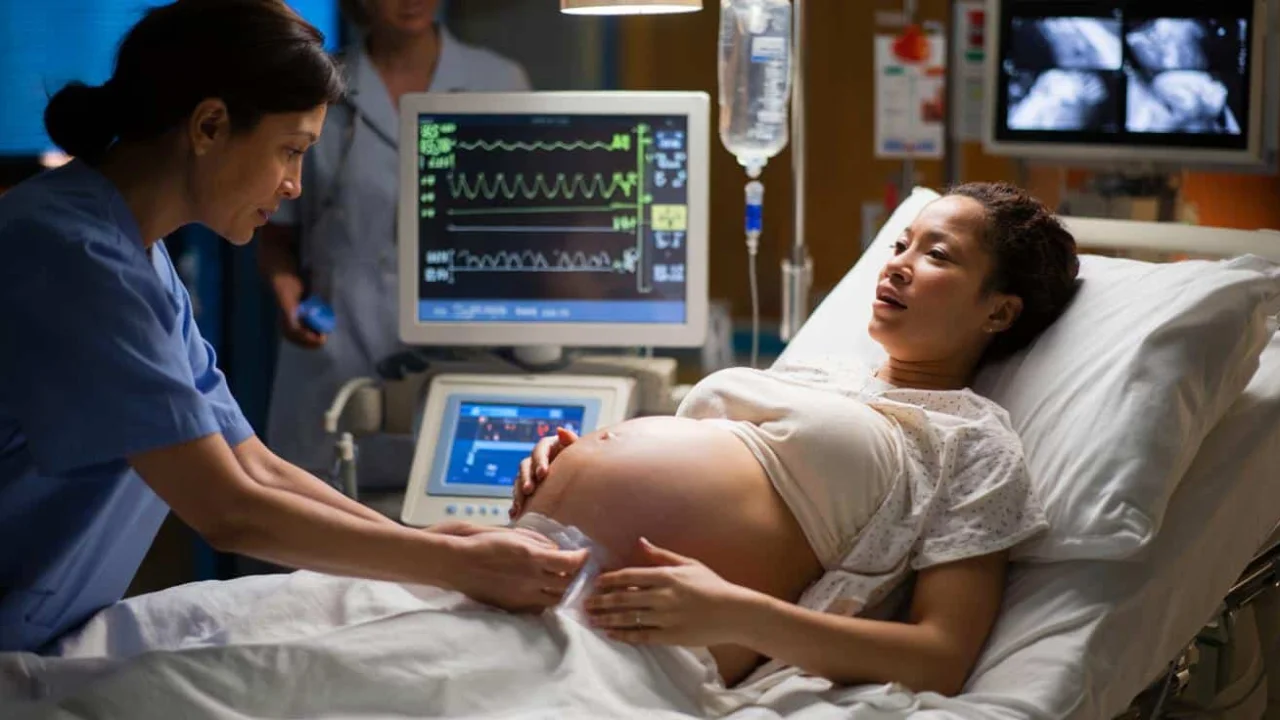
Sarah gripped her husband’s hand as another contraction rolled through her body. At 35 weeks pregnant with twins, she was already facing a high-risk delivery. When her doctor mentioned an epidural, Sarah’s first thought was about pain relief. What she didn’t know was that this decision might be protecting her from far more serious complications than just the pain of labor.

Like millions of women worldwide, Sarah viewed epidurals through a simple lens: comfort versus natural birth. But groundbreaking research is changing that conversation entirely, revealing that epidural complications might actually be prevented rather than caused by this common procedure.
The traditional debate around epidurals has always centered on personal choice and pain management. Now, medical professionals are discovering that for certain women, epidurals could be a crucial medical intervention that saves lives.

The Research That’s Changing Everything
A massive study published in The BMJ in 2024 analyzed over 567,000 births in Scotland, focusing specifically on high-risk pregnancies. The results stunned researchers and could reshape how we think about epidural complications during childbirth.
The study didn’t look at every woman who gave birth. Instead, researchers zeroed in on mothers facing the greatest challenges: those with severe obesity, existing heart conditions, pre-eclampsia, or carrying multiple babies. These women already face higher risks during delivery, making them perfect candidates to study whether epidurals truly help or harm.

“We found that among these higher-risk women, receiving an epidural during labor was linked to about a 50% lower risk of severe complications after birth,” explains Dr. Rachel Morrison, a leading researcher in maternal medicine. “This isn’t about minor discomfort. We’re talking about life-threatening situations.”
The complications tracked weren’t everyday concerns. The research focused on major hemorrhaging, dangerous infections, and organ failure occurring in the weeks following delivery. These are the kinds of epidural complications that can turn a joyful birth experience into a medical emergency.

Who Benefits Most from Epidural Protection
The protective effects appeared strongest among specific groups of women, revealing patterns that could guide future medical decisions. Understanding these risk factors helps explain why some mothers might need epidurals for reasons beyond pain relief.
| Risk Factor | Why Epidurals Help | Complication Reduction |
|---|---|---|
| Severe Obesity | Reduces cardiovascular stress | Up to 55% |
| Heart Disease | Stabilizes blood pressure | Up to 60% |
| Multiple Pregnancies | Manages extended labor stress | Up to 45% |
| Premature Delivery | Supports unprepared body systems | Up to 50% |
| Pre-eclampsia | Controls dangerous blood pressure spikes | Up to 65% |
Women giving birth prematurely showed particularly strong benefits. Their bodies often aren’t fully prepared for the physical demands of labor, making the stress-reducing effects of epidurals especially valuable.

The research also highlighted how epidurals work beyond just blocking pain. By partially numbing the lower body, epidurals help stabilize the autonomic nervous system – the network controlling heart rate, blood vessel function, and stress responses.
“Think of an epidural as a circuit breaker for your nervous system,” says Dr. Jennifer Collins, an anesthesiologist specializing in obstetric care. “It prevents dangerous overload when your body is already under extreme stress.”
What This Means for Expecting Mothers
These findings don’t suggest every woman needs an epidural. Instead, they point toward more personalized medical care based on individual risk factors. For healthy women with straightforward pregnancies, the choice remains primarily about comfort and personal preference.
But for high-risk mothers, the conversation is shifting. Medical teams are now viewing epidurals as potential protective interventions, not just pain management tools. This could lead to earlier discussions about epidurals during prenatal care, especially for women with existing health conditions.
The implications extend beyond individual births. Hospitals might need to adjust their policies around epidural availability, ensuring that high-risk mothers have access when medically indicated rather than treating it as an optional comfort measure.
“We’re moving toward a model where epidurals are prescribed based on medical need, not just requested for comfort,” notes Dr. Maria Santos, head of maternal-fetal medicine at a major teaching hospital. “This research gives us evidence to support those medical decisions.”
Insurance coverage could also evolve. If epidurals prove to prevent serious complications, insurance companies might be more willing to cover them as medical necessities rather than elective procedures, particularly for high-risk pregnancies.
The research also highlights the importance of early risk assessment. Identifying high-risk mothers during pregnancy allows medical teams to plan comprehensive care strategies, with epidurals as one component of broader protective measures.
For women like Sarah, this research offers reassurance. Her decision to accept an epidural wasn’t just about managing pain – it was potentially protecting her from dangerous complications that could have threatened both her recovery and her ability to care for her newborn twins.
“Understanding that epidurals can prevent rather than cause complications changes everything,” says Dr. Collins. “We’re not just offering comfort anymore. For some women, we’re offering protection.”
FAQs
Do epidurals always prevent complications during birth?
No, epidurals specifically help high-risk women with conditions like heart disease, severe obesity, or multiple pregnancies. Healthy women may not see the same protective benefits.
What complications can epidurals help prevent?
The research shows epidurals may reduce risks of major hemorrhaging, dangerous infections, and organ failure occurring after delivery by up to 50-65% in high-risk cases.
Should all pregnant women get epidurals based on this research?
No, the benefits are most significant for women with existing medical conditions or high-risk pregnancies. Healthy women should still make decisions based on personal preference and comfort.
When should women discuss epidurals with their doctors?
Women with heart conditions, severe obesity, multiple pregnancies, or pre-eclampsia should discuss epidurals as a medical intervention during prenatal visits, not just during labor.
How do epidurals protect against complications beyond pain relief?
Epidurals help stabilize the autonomic nervous system, which controls heart rate and blood pressure, reducing dangerous stress responses during labor in vulnerable women.
Will insurance cover epidurals as medical necessities now?
Coverage policies may evolve as more evidence emerges, particularly for high-risk pregnancies where epidurals serve as protective medical interventions rather than comfort measures.
About the Author