Sarah Martinez was checking her internet connection for the third time that morning when she noticed something odd. Her rural Montana ranch, which relied on Starlink for everything from video calls with her grandkids to monitoring cattle prices, had experienced a brief but complete outage on December 9th. She shrugged it off as routine maintenance.

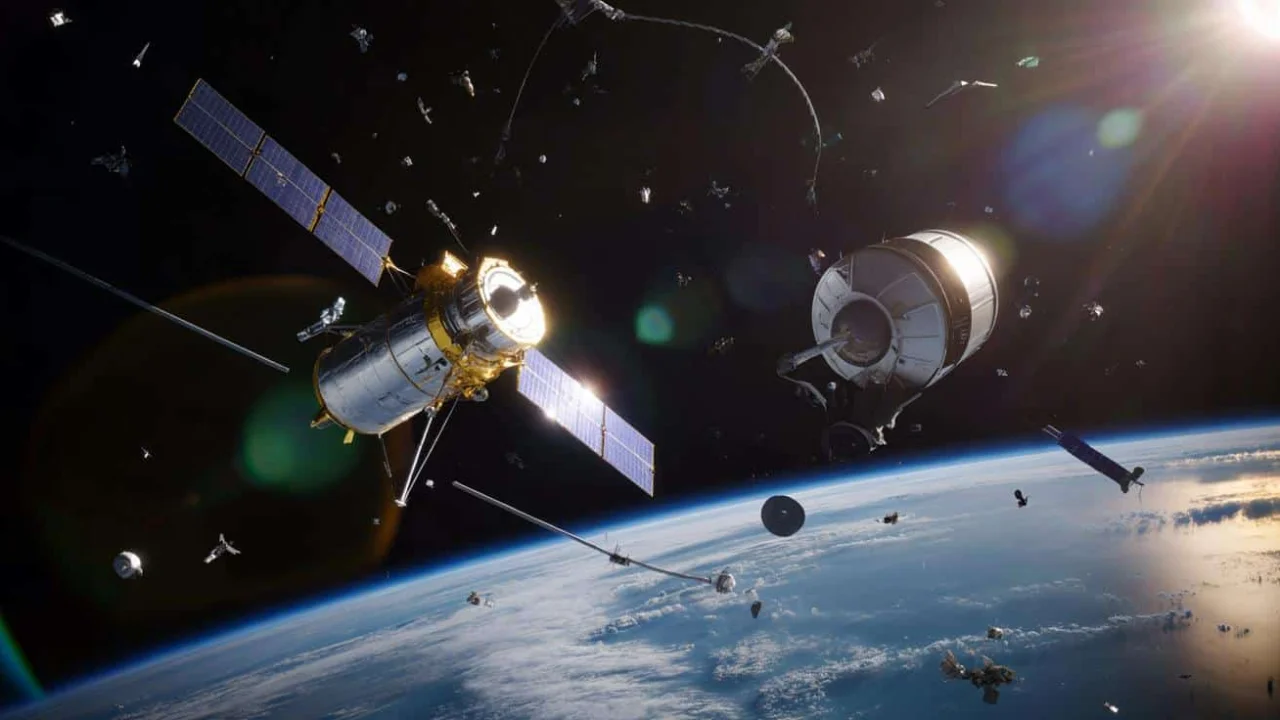
What Sarah didn’t know was that 340 miles above her head, two pieces of space technology had just missed each other by mere meters – a collision that could have triggered the first major space crisis between China and the United States. The near-miss involved her internet lifeline and a Chinese satellite, coming so close that space experts are still holding their breath.
This wasn’t just another routine orbital dance. The incident revealed dangerous gaps in international space coordination that could spark conflicts far beyond Earth’s atmosphere.
When 200 Meters Feels Like an Inch
On December 9th, STARLINK-6079 – one of SpaceX’s internet satellites – and a freshly deployed Chinese spacecraft screamed past each other at orbital speeds of roughly 17,500 miles per hour. The gap between them? Just 200 meters.
To put that in perspective, imagine two Formula 1 cars racing toward each other at full speed, missing by less than two football fields. Except these “cars” were traveling 50 times faster, and a collision would have created thousands of pieces of deadly debris.

“When you’re dealing with orbital mechanics, 200 meters might as well be touching,” explains former NASA administrator Jim Bridenstine. “At those speeds, even paint flecks become bullets.”
The Chinese satellite had just been released from a Kinetica-1 rocket launched from the Jiuquan Satellite Launch Center. What made this particularly nerve-wracking was the complete lack of coordination between the two space programs. SpaceX vice-president Michael Nicolls later took to social media with a pointed warning that operators were “flying blind” with one another.

The space crisis between China and the United States suddenly felt very real. Without shared orbital data and real-time coordination, both nations were essentially playing Russian roulette with billion-dollar satellites and critical infrastructure.
The Launch That Changed Everything
The Kinetica-1 mission wasn’t just any routine satellite deployment. This Chinese rocket carried nine satellites into low Earth orbit, creating a complex web of new objects that had to be tracked and monitored. Here’s what went up that day:

| Satellite Type | Quantity | Purpose | Owner |
|---|---|---|---|
| Multi-purpose satellites | 6 | Tech demonstration & commercial services | China |
| Observation satellite | 1 | Earth monitoring | United Arab Emirates |
| Scientific satellite | 1 | Research | Egypt |
| Educational satellite | 1 | STEM programs | Nepal |
This launch highlighted China’s growing influence as a low-cost space launcher for developing nations. But it also revealed a critical problem: when multiple satellites deploy from a single rocket, tracking becomes exponentially more complex.
“Each new object in orbit has to be cataloged and monitored against thousands of existing satellites,” notes space debris expert Dr. Heiner Klinkrad. “Miss one calculation, and you could have a catastrophic collision.”
The problem gets worse when you consider that neither country was sharing detailed orbital data with the other. China’s satellites weren’t broadcasting their exact positions, and the United States wasn’t providing real-time Starlink trajectory information to Chinese space authorities.
Why This Near-Miss Matters to Everyone
You might wonder why a close call between two satellites matters to people on Earth. The answer affects everything from your GPS navigation to emergency communications systems.
Starlink satellites provide internet access to remote areas, military operations, and disaster relief efforts. A collision would have created a debris field that could damage dozens of other satellites. The cascading effect could knock out communications for millions of people worldwide.
The space crisis between China and the United States extends beyond just these two satellites. Low Earth orbit now hosts over 8,000 active satellites, with thousands more launching each year. Key impacts include:
- Internet connectivity disruptions affecting rural and remote communities
- GPS navigation failures impacting transportation and logistics
- Weather forecasting interruptions affecting agriculture and emergency planning
- Military communications vulnerabilities exposing national security risks
- Scientific research delays from damaged or destroyed equipment
“We’re one collision away from creating a debris field that could make certain orbital zones unusable for decades,” warns space policy expert Dr. Victoria Samson.
The December 9th incident also exposed how quickly space incidents could escalate into diplomatic crises. Without proper communication channels, both countries could misinterpret routine satellite maneuvers as hostile actions.
Commercial space companies like SpaceX are caught in the middle. They need to protect their investments while navigating increasingly complex international relationships. Meanwhile, countries like the UAE, Egypt, and Nepal – whose satellites were also part of the Chinese launch – could find themselves inadvertently involved in superpower space disputes.
The near-collision revealed another troubling reality: space traffic control systems remain largely fragmented. Unlike air traffic control, which coordinates flights globally, satellite operators often work with incomplete information about what’s happening in orbit around them.
“Right now, we’re managing space traffic like it’s still 1960, but with 2024 technology and 2024 congestion levels,” explains aerospace analyst John Logsdon.
Moving forward, both nations need to establish better communication protocols before the next close call becomes an actual collision. The space crisis between China and the United States may have been averted this time, but experts warn that without immediate action, future incidents are inevitable.
The stakes couldn’t be higher. Space has become too important to the global economy and national security to leave coordination to chance. Sarah’s internet connection – and millions of others like it – depends on getting this right.
FAQs
How close did the Chinese and American satellites actually come?
The satellites passed within approximately 200 meters of each other, which is extremely close in space terms given their orbital speeds of about 17,500 mph.
What would have happened if the satellites had collided?
A collision would have created thousands of pieces of debris traveling at high speed, potentially damaging other satellites and creating a cascading effect that could disrupt global communications and GPS systems.
Why didn’t China coordinate with SpaceX before the launch?
There are currently no mandatory international protocols requiring coordination between different countries’ satellite operators, leading to dangerous information gaps in orbital traffic management.
How many satellites are currently in orbit?
There are over 8,000 active satellites in orbit today, with thousands more launching each year, making space traffic management increasingly complex and critical.
Could this type of incident trigger a real conflict between the US and China?
While unlikely, space incidents could escalate into diplomatic crises if either country misinterprets satellite maneuvers as hostile actions, especially given the strategic importance of space-based infrastructure.
What’s being done to prevent future close calls?
Space agencies and commercial operators are calling for better international coordination protocols and real-time data sharing systems, though implementation remains challenging due to national security concerns.
About the Author