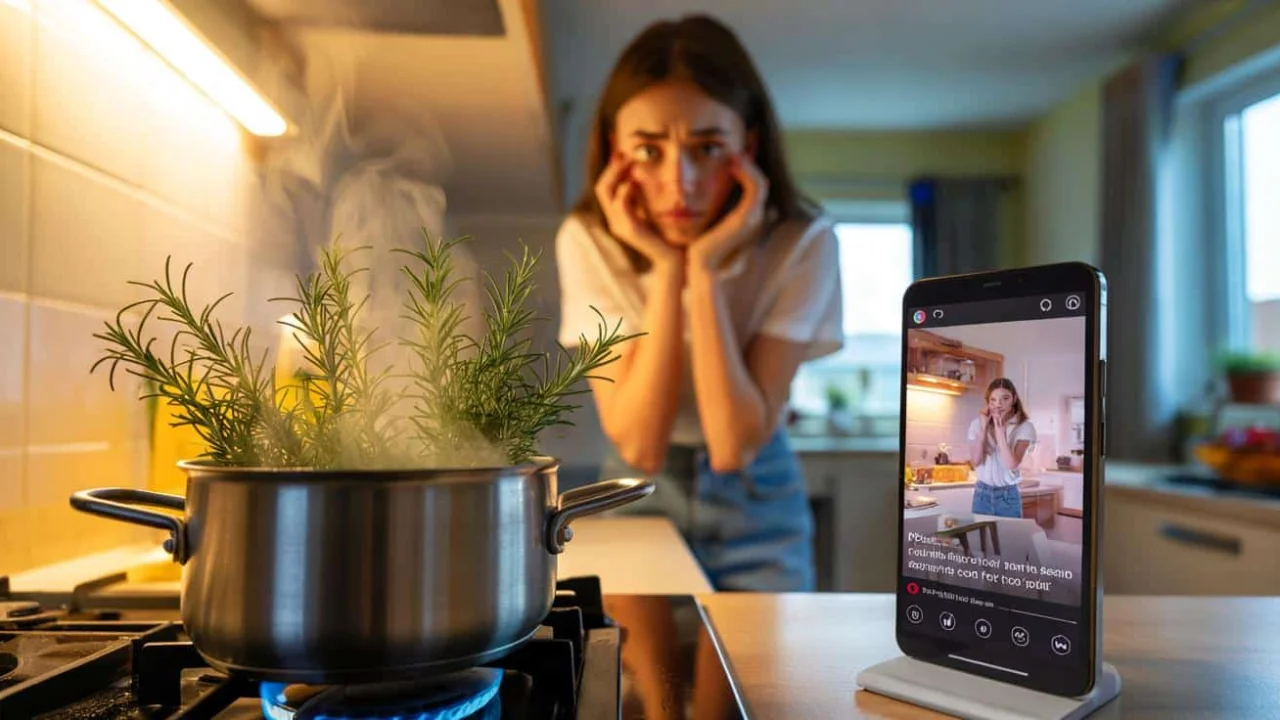
Sarah stared at her phone screen, watching the TikTok video for the third time. The creator smiled serenely as she dropped fresh rosemary into boiling water, promising that this simple act would “cleanse negative energy” from her entire home. Within minutes, Sarah was at her stove, following along like she was recreating a cooking tutorial.
Twenty minutes later, her apartment reeked of overcooked herbs, the windows were fogged with steam, and her smoke alarm had gone off twice. Her cat hid under the bed, probably wondering why his human had lost her mind.
But Sarah felt accomplished. She’d done something. She’d taken action against the invisible forces supposedly making her life difficult. Never mind that her actual problems—student loans, a difficult boss, and a leaky ceiling—remained exactly the same.

How a Kitchen Herb Became a Spiritual Miracle Worker
Walk into any grocery store, and rosemary sits peacefully in the herb section, minding its own business. It’s meant for lamb, roasted potatoes, maybe some focaccia bread. Practical. Culinary. Normal.
Somewhere between the produce aisle and social media algorithms, this humble Mediterranean plant got promoted to mystical energy cleanser. Now millions of people genuinely believe that boiling rosemary purification rituals can solve problems that actually require real-world solutions.

“I see clients spending hours on these rituals instead of addressing their underlying stress and anxiety,” says Dr. Michael Chen, a behavioral psychologist in San Francisco. “They’re looking for quick fixes to complex emotional issues.”
The rosemary purification trend exploded across platforms like TikTok and Instagram, where hashtags like #rosemarycleanse and #energypurification have millions of views. Users film themselves dropping herbs into boiling water while making grandiose claims about removing “bad vibes” and “negative energy.”

But here’s what’s really happening: people are confusing pleasant smells with spiritual transformation. The strong scent of rosemary can indeed make a space smell different, but that’s not the same as fundamentally changing your life circumstances.
Breaking Down the Boiling Rosemary Claims vs Reality
Let’s examine what proponents of boiling rosemary purification actually claim versus what science tells us:

| Popular Claims | Scientific Reality |
|---|---|
| Removes negative energy from homes | No measurable evidence for “negative energy” as defined by these practices |
| Cleanses spaces of bad spirits | No scientific basis for spiritual entities affected by herb vapors |
| Improves mental clarity and mood | Pleasant scents can temporarily improve mood, but effects are minimal and brief |
| Purifies air quality | Boiling herbs adds moisture and scent, doesn’t filter toxins or pollutants |
| Connects you with ancestral wisdom | Many traditional uses of herbs were medicinal, not supernatural |
The most generous interpretation is that boiling rosemary creates a pleasant smell that some people find calming. That’s it. There’s no energy field being purified, no spiritual cleansing occurring, and no ancestral magic being activated.
“When people feel like their environment smells fresh and different, they might feel psychologically refreshed too,” explains aromatherapist Lisa Rodriguez. “But that’s a far cry from the supernatural claims being made online.”
What’s particularly concerning is how these practices are being marketed as solutions to serious problems. People dealing with depression, anxiety, relationship issues, or financial stress are being told that boiling herbs will help. It won’t.
Why We’re So Desperate to Believe in Magic Solutions
The rosemary purification craze isn’t really about herbs. It’s about our collective need to feel like we have control over increasingly chaotic lives. When rent is unaffordable, job security is a myth, and global events feel overwhelming, a simple ritual offers the illusion of power.
Social media amplifies this desperation by packaging superstition as empowerment. Influencers with thousands of followers speak confidently about “energy work” and “spiritual cleansing,” lending credibility to practices that have no scientific foundation.
The demographics tell a story too. Young adults, particularly those dealing with mental health challenges or economic uncertainty, are most likely to embrace these trends. They’re looking for affordable ways to improve their lives, and boiling herbs costs less than therapy or meaningful lifestyle changes.
“There’s definitely a correlation between economic stress and belief in alternative practices,” notes sociology professor Dr. Amanda Walsh. “When traditional paths to improvement feel blocked, people turn to magical thinking.”
But here’s the problem: time spent on elaborate herb-boiling rituals is time not spent on actions that might actually help. Instead of addressing root causes of unhappiness, people are literally watching water boil and convincing themselves it’s progress.
The real tragedy isn’t that people are wasting rosemary. It’s that they’re wasting hope on solutions that can’t deliver what they promise. When the herbs stop steaming and the apartment still feels the same, the underlying problems remain untouched.
This isn’t about dismissing all traditional practices or natural remedies. Many plants do have genuine therapeutic properties. Rosemary itself contains compounds that may support cognitive function when used appropriately. But boiling it in your kitchen while chanting about negative energy isn’t unlocking some ancient wisdom—it’s just making your house smell like a very intense Italian restaurant.
We’ve become so disconnected from critical thinking that we’ll believe anything wrapped in mystical language and delivered with confidence. The same generation that mocks their grandparents for believing everything they read on Facebook is now convinced that TikTok teenagers have unlocked the secrets of spiritual purification through produce.
Maybe it’s time we stopped looking for magic solutions and started dealing with our problems like adults. Your house doesn’t need purification from bad energy. You need better boundaries, improved financial planning, or professional help for mental health issues. Rosemary can’t fix what’s really broken, but facing reality might.
FAQs
Does boiling rosemary actually purify anything?
No, boiling rosemary only creates a strong herbal scent and adds moisture to the air.
Why do people think rosemary can remove negative energy?
Social media influencers have popularized these claims, mixing traditional herb use with modern spiritual beliefs.
Is there any harm in boiling rosemary at home?
The practice itself is harmless, but relying on it instead of addressing real problems can be counterproductive.
What should I do instead of herb purification rituals?
Focus on practical solutions like improving air quality, organizing your space, or seeking professional help for underlying issues.
Are all traditional herb practices useless?
No, many herbs have legitimate medicinal properties, but claims about spiritual purification lack scientific evidence.
How can I tell if a wellness trend is legitimate?
Look for scientific studies, avoid claims that seem too good to be true, and consult healthcare professionals for serious concerns.
About the Author