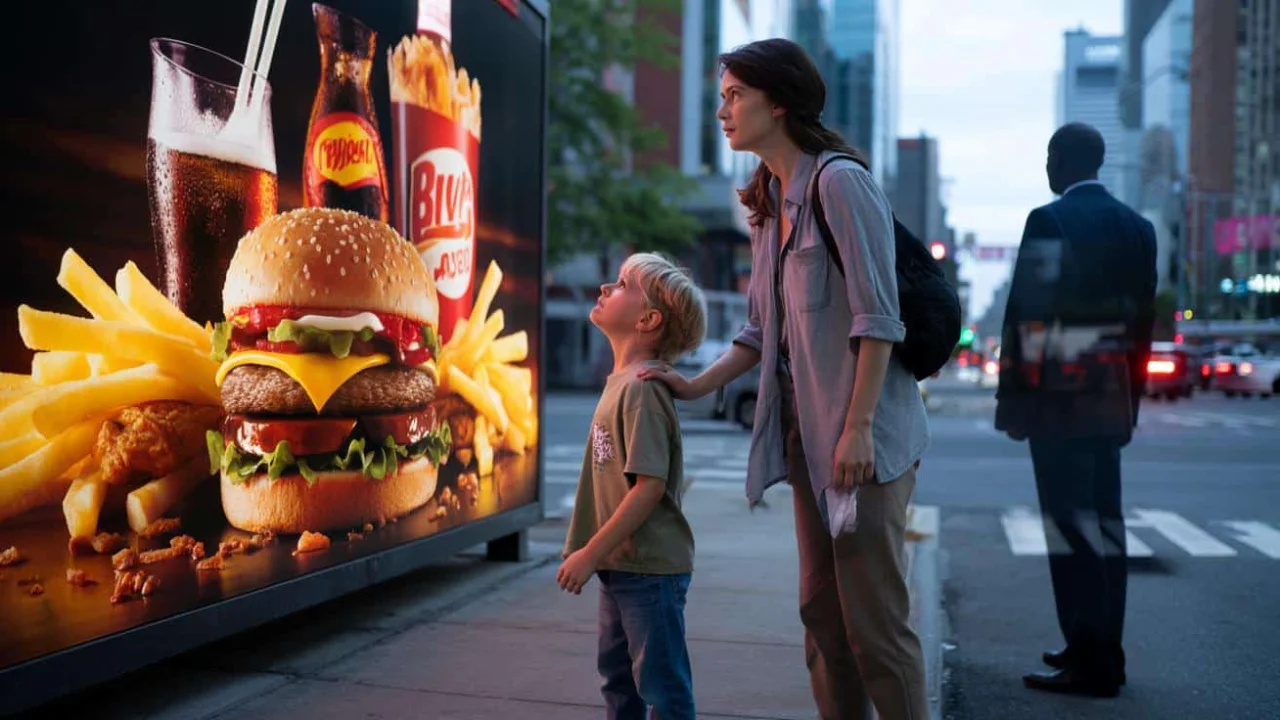
Sarah was scrolling through her phone when her six-year-old daughter burst into the kitchen, singing a catchy tune about chicken nuggets shaped like dinosaurs. The jingle was stuck on repeat, complete with hand gestures the kid had learned from a YouTube ad that played between her favourite cartoon episodes.

“Mummy, can we get the dino nuggets? The ad says they’re made with real chicken and they roar when you bite them!” The enthusiasm was infectious, but Sarah felt that familiar knot in her stomach. Another marketing message had successfully bypassed her parental filters and landed directly in her child’s developing brain.
This scene plays out in millions of homes daily, as children absorb thousands of food advertisements before they even understand what advertising really means. Now, governments worldwide are stepping in with junk food advertising bans, sparking heated debates about whether this protection crosses the line into overreach.

The Battle Lines Are Drawn Over Children’s Exposure
A junk food advertising ban represents one of the most contentious policy debates of our time. On one side, public health advocates argue that children’s developing minds are vulnerable to sophisticated marketing tactics designed to create lifelong brand loyalty and poor eating habits.
Dr. Emma Richardson, a pediatric nutritionist, explains it simply: “Kids can’t distinguish between entertainment and advertising until they’re about eight years old. Before that, every colorful food commercial is just another fun show to them.”

The numbers tell a stark story. Children aged 2-11 see an average of 4,427 food advertisements per year on television alone. When you add digital platforms, billboards, and packaging, that exposure skyrockets. Nearly 80% of these ads promote products high in sugar, salt, or unhealthy fats.
But critics of advertising restrictions argue that parents, not governments, should control what their children see and eat. They view junk food advertising bans as government overreach that undermines personal responsibility and free market principles.

“We’re creating a society where the state decides what’s best for our families,” argues Marcus Thompson, a consumer rights advocate. “Today it’s burger ads, tomorrow it could be anything the government deems ‘unhealthy.'”
Where Bans Are Taking Hold and What They Cover
Countries implementing junk food advertising bans are taking varied approaches, creating a patchwork of regulations with different scopes and enforcement mechanisms.

| Country/Region | Ban Scope | Implementation Status | Key Restrictions |
|---|---|---|---|
| United Kingdom | TV and Online | Phasing in 2025 | No HFSS ads before 9pm on TV, paid ads online banned |
| Chile | Comprehensive | Fully implemented | No marketing to under-14s, school zone restrictions |
| Quebec, Canada | TV and Print | Since 1980 | No commercial advertising to under-13s |
| South Korea | Children’s Programming | Implemented 2010 | Fast food ads banned during kids’ shows |
The restrictions typically target several key areas:
- Television advertising during children’s programming hours
- Online advertising on platforms popular with kids
- Sponsorship of children’s events and sports teams
- Marketing near schools and playgrounds
- Use of cartoon characters and celebrity endorsements aimed at children
- Product placement in children’s media content
Some bans go further, restricting the use of toys in kids’ meals or requiring health warnings on advertisements for high-calorie foods.
Professor Lisa Chen, who studies food policy at a leading university, notes: “The most effective bans are comprehensive. When you only restrict TV ads, companies just shift their marketing budgets to digital platforms where kids spend even more time.”
The Real-World Impact on Families and Industry
Early results from countries with established junk food advertising bans show mixed but promising outcomes. Chile, which implemented some of the world’s strictest rules in 2016, has seen a 23% reduction in sugary drink purchases among households with children.
Parents in restricted markets report feeling less pressure from their children to buy heavily advertised snack foods. Maria Santos, a mother of two in Santiago, describes the change: “My kids still ask for treats, but they’re not constantly bombarded with the same branded messages. Shopping has become less of a battlefield.”
However, the food industry argues these bans harm business innovation and job creation. Companies have had to restructure their marketing departments, shifting resources from child-focused campaigns to adult-oriented advertising.
The economic impact extends beyond advertising agencies. Some fast-food chains report initial sales declines in markets with strict advertising restrictions, though these often stabilize as companies adapt their strategies.
Restaurant industry spokesperson James Mitchell warns: “These bans create an uneven playing field where small businesses struggle to compete against established brands that already have strong recognition.”
Digital platforms face particular challenges enforcing age-appropriate advertising restrictions. YouTube and TikTok have invested millions in technology to identify child users and filter inappropriate content, but critics argue these systems remain imperfect.
The enforcement question looms large. Unlike tobacco advertising, which is easier to monitor, food marketing appears across countless platforms and formats. Regulatory agencies must determine how to fairly and consistently apply restrictions while avoiding overreach.
Some unintended consequences have emerged. Companies have become more creative in their marketing approaches, using health-focused messaging that can be equally misleading. Products marketed as “natural” or “organic” may still be high in sugar or sodium.
The debate ultimately reflects broader questions about the balance between individual freedom and collective responsibility. As childhood obesity rates continue climbing globally, the pressure for government intervention grows stronger, even as critics worry about expanding state control over personal choices.
FAQs
Do junk food advertising bans actually reduce childhood obesity?
Early studies show modest but positive effects, with Chile seeing reduced purchases of sugary drinks and snacks among families with children.
What foods are typically considered “junk food” in these bans?
Most bans target foods high in sugar, salt, or unhealthy fats, including fast food, sugary cereals, candy, and soft drinks.
How do companies get around advertising restrictions?
Businesses often shift to digital marketing, health-focused messaging, or adult-targeted campaigns that children still see incidentally.
Are there free speech concerns with advertising bans?
Legal challenges focus on commercial speech rights, though courts generally allow restrictions on advertising to children due to their vulnerability.
Which countries have the strictest junk food advertising rules?
Chile and Quebec have the most comprehensive restrictions, banning most food marketing to children across multiple platforms.
Do parents support these advertising restrictions?
Polls show majority parent support for reasonable restrictions, though opinions vary on how extensive the bans should be.
About the Author