Sarah stared at her monstera, its once-glossy leaves now drooping like deflated balloons. Just three months ago, this same plant had been the star of her Instagram feed, sprawling magnificently across her living room corner. Now it looked like it was staging a slow-motion protest against winter.

She wasn’t alone. Walking through her apartment building, window after window told the same story: yellowing pothos, crispy-edged snake plants, and fiddle-leaf figs that looked more like autumn trees than tropical houseplants. But there was one apartment on the third floor where something different was happening.
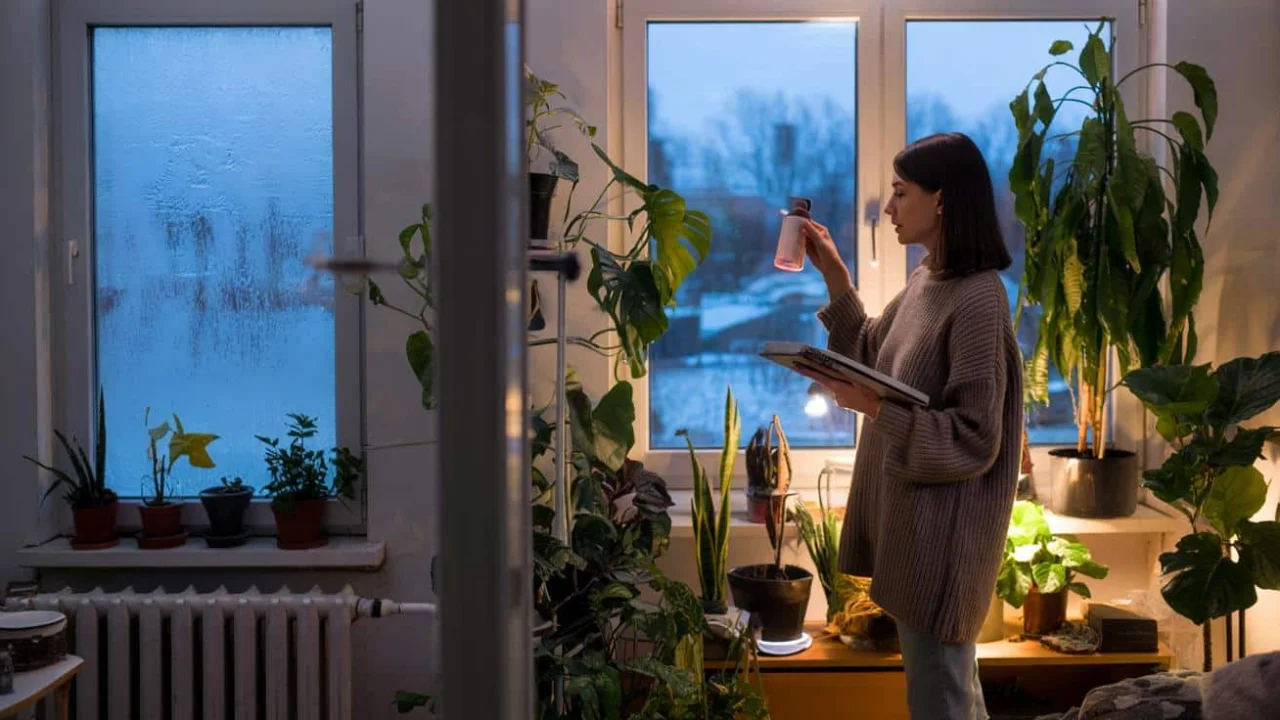
Behind those windows, a small jungle still thrived. The owner moved between her plants with deliberate care, carrying what looked like a notebook rather than a watering can. She wasn’t rushing to fix anything – she was simply paying attention in a way that seemed almost revolutionary.

The winter plant care secret that changes everything
People who successfully maintain thriving plants all year long aren’t blessed with magical green thumbs. They’re doing something much simpler and more radical: they completely change their approach when winter arrives, instead of stubbornly trying to maintain summer routines in a winter world.
The key difference? They switch from automatic plant care to seasonal plant care. This means abandoning the “water every Sunday” mentality and instead learning to read what their plants actually need in the dramatically different conditions that winter brings indoors.

“Most people kill their plants with kindness in winter,” explains Maria Rodriguez, a certified master gardener with 15 years of experience. “They keep watering on the same schedule, even though the plant is barely using any water in the low light and cool temperatures.”
Winter fundamentally transforms your home’s environment. Days shrink to just eight or nine hours of weak sunlight. Heating systems create bone-dry air. Windows become cold zones that can shock tropical plants. Your living room essentially becomes a different climate zone, and successful plant parents adjust accordingly.

What successful winter plant care actually looks like
The most crucial shift happens in how often you interact with your plants. Instead of following rigid schedules, winter plant care requires a more responsive approach.
Here’s what changes when you switch to seasonal care:

- Watering frequency drops by 50-70% – Soil stays moist much longer in cool, dim conditions
- Plant positioning becomes critical – Moving plants away from heat sources and cold windows
- Humidity management takes priority – Combating dry indoor air becomes essential
- Growth expectations shift – Most houseplants enter semi-dormancy and stop growing
- Fertilizing stops completely – Feeding dormant plants can actually harm them
“I tell people to think of winter as plant naptime,” says David Chen, owner of Brooklyn’s Plant Parent Collective. “You wouldn’t wake up a sleeping baby to feed it, and you shouldn’t force winter plants to grow when they want to rest.”
The most successful plant parents create what amounts to a winter routine that’s completely different from their summer approach. This includes weekly soil checks instead of automatic watering, strategic plant repositioning, and adding humidity through grouping plants together or using pebble trays.
| Summer Plant Care | Winter Plant Care |
|---|---|
| Water every 7-10 days | Water every 14-21 days |
| Fertilize monthly | No fertilizer until spring |
| Plants near bright windows | Plants away from cold glass |
| Regular repotting | Avoid disturbing roots |
| Expect new growth | Expect dormancy |
Why this approach saves plants (and your sanity)
The impact of switching to seasonal plant care extends far beyond just keeping plants alive. It fundamentally changes your relationship with indoor gardening and eliminates the frustration that drives many people to give up on houseplants entirely.
When you stop fighting winter and start working with it, several things happen immediately. Your plants stop showing stress signals like brown leaf tips, yellowing, or sudden leaf drop. You stop feeling guilty about “failing” your plants. Most importantly, you develop actual plant care skills instead of just following generic advice.
“Once I started treating winter like a different season for my plants, everything clicked,” says Jennifer Wu, who now maintains over 40 thriving houseplants in her Chicago apartment. “I stopped panicking when they weren’t growing and started appreciating the quiet months.”
This approach also saves money. Instead of constantly replacing plants that die from overwatering or heat stress, you keep the same plants healthy year after year. The initial investment in a few good plants becomes worthwhile when they survive multiple winters.
The psychological benefits are equally significant. Learning to read your plants’ actual needs, rather than following rigid schedules, builds confidence and genuine plant care skills. Many people report that successfully wintering their plants becomes a source of genuine accomplishment.
Perhaps most importantly, this approach recognizes that plants are living things with natural cycles, not decorative objects that should look the same year-round. Accepting plant dormancy and seasonal changes creates a more sustainable and less stressful approach to indoor gardening.
“The best plant parents are the ones who learn to slow down in winter just like their plants do,” notes Amanda Foster, author of “The Mindful Plant Parent.” “It’s not about doing more – it’s about doing differently.”
For anyone struggling to keep plants alive through winter, the solution isn’t more complicated care or expensive equipment. It’s simply recognizing that winter plant care requires a completely different mindset, one that prioritizes observation over action and seasonal adjustment over year-round consistency.
FAQs
How often should I water my plants in winter?
Check soil moisture weekly, but most plants need water only every 2-3 weeks in winter, roughly half as often as summer.
Should I move my plants away from windows in winter?
Move them away from cold glass and heating vents, but keep them near windows for whatever light is available.
Why are my plant’s leaves turning yellow in winter?
Yellow leaves in winter usually indicate overwatering, as plants use much less water in dormant periods.
Can I fertilize my houseplants during winter months?
Avoid fertilizing from November through February, as most houseplants are dormant and can’t process nutrients properly.
How do I increase humidity for winter plants?
Group plants together, use pebble trays with water, or run a humidifier near your plant area.
Is it normal for plants to stop growing in winter?
Yes, most houseplants enter semi-dormancy in winter due to reduced light and cooler temperatures – this is completely natural.
About the Author