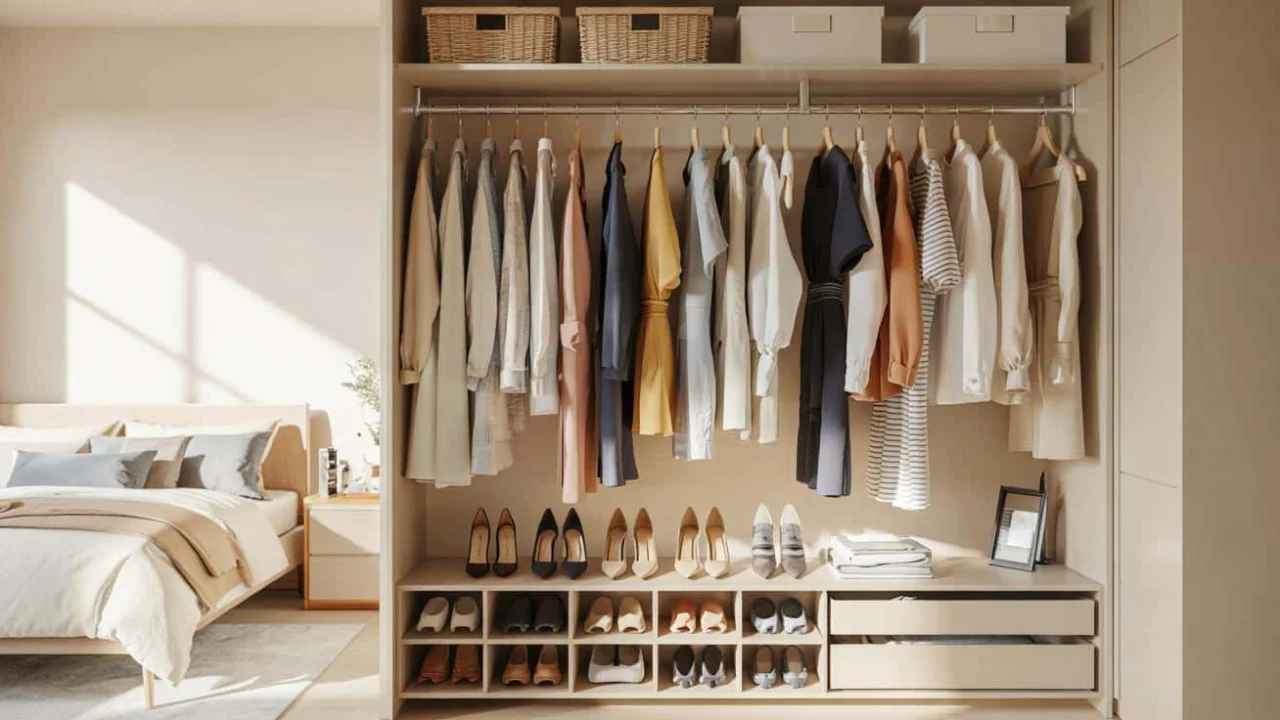
Sarah stares at her overflowing closet at 7:15 AM, already running late for her morning meeting. Three blazers hang crooked on wire hangers, a pile of jeans threatens to topple from the shelf, and somewhere in the chaos is the black dress that makes her feel confident. Twenty minutes later, she’s wearing a wrinkled shirt she pulled from the “clean” pile on her dresser, feeling frazzled before her day even begins.

Sound familiar? You’re not alone. The average person wastes 12 minutes every morning just deciding what to wear, according to a recent study. That’s over an hour each week spent staring into closet chaos, feeling overwhelmed by too many choices that don’t actually work together.
But what if getting dressed could feel as automatic as brushing your teeth? What if your closet organization system worked so well that picking an outfit became the easiest part of your morning routine?

Why your closet feels like your enemy every morning
Your closet isn’t just storage space—it’s a decision-making battlefield. Every morning, your tired brain has to process dozens of visual inputs: colors, textures, seasons, occasions, and whether that shirt still fits. When everything is crammed together without rhyme or reason, your brain goes into overdrive trying to make sense of the mess.
“I see clients who own beautiful clothes but can never find them when they need them,” says professional organizer Marie Chen. “They’re drowning in options but starving for solutions.”

The real problem isn’t having too many clothes or too few. It’s that your current system forces you to make too many micro-decisions when you’re least equipped to handle them. At 7 AM, you don’t want to debate whether navy and black go together. You want to grab something that works and move on with your day.
Think about your favorite outfit—the one you reach for when you’re running late but still want to look good. Chances are, it’s not your most expensive or trendy piece. It’s the combination that requires zero mental energy to pull together.

The foolproof system that transforms morning chaos into calm
Effective closet organization isn’t about expensive organizers or color-coordinated hangers (though those can help). It’s about creating a system that matches how your brain actually works in the morning. Here’s the step-by-step approach that busy professionals swear by:
Start with the brutal edit: Pull everything out and sort into three piles: love it, like it, and haven’t worn it in six months. Be honest. That “like it” pile is usually full of clothes you keep for imaginary occasions that never happen.

Create outfit zones: Group clothes by complete looks rather than by type. Keep all your work blazers next to the pants and shirts they pair with. This eliminates the mental gymnastics of matching pieces across different sections.
Use the “one-week test”: Pick seven complete outfits and hang them together at the front of your closet. For one week, only choose from these pre-planned combinations. Notice which ones you gravitate toward and which you skip.
| Closet Zone | What Goes Here | Time Saved |
|---|---|---|
| Work Week Corner | 5 complete professional outfits | 8-10 minutes daily |
| Weekend Section | Casual combinations for errands, social events | 5-7 minutes |
| Special Occasion Area | Date night, formal events, seasonal pieces | 15+ minutes when needed |
| Exercise Zone | Workout clothes, athletic shoes together | 3-5 minutes |
“The game-changer for my clients is treating their closet like a boutique,” explains stylist James Rodriguez. “In a good store, you see complete looks, not random pieces scattered everywhere.”
Here are the specific tactics that make the biggest difference:
- Face everything the same direction – Your eye can scan much faster when hangers all face one way
- Group by color within categories – Light to dark creates a visual gradient that’s easy to navigate
- Keep one empty space – A gap between sections helps your brain process each zone separately
- Put favorite combinations at eye level – Prime real estate should go to pieces you actually wear
- Use matching hangers – This isn’t just aesthetic; uniform hangers help clothes hang properly and look more organized
How smart closet organization changes your entire morning routine
The ripple effects of a well-organized closet extend far beyond just finding clothes faster. When getting dressed becomes effortless, you start your day with a small win instead of a stressful scramble. That positive momentum carries into your commute, your first meeting, and how you handle unexpected challenges.
Real-world results speak for themselves. Marketing executive Lisa Park reorganized her closet using the zone method and now gets dressed in under three minutes every morning. “I used to lay out clothes the night before because mornings were so stressful,” she says. “Now I can decide what to wear based on how I actually feel that day, not what I planned to feel like twelve hours earlier.”
The financial impact is equally compelling. When you can see everything you own clearly, you stop buying duplicates of items you already have. You also wear more of what you own, increasing the cost-per-wear of each piece. Professional organizer Chen reports that clients typically find 20-30% more wearable outfits in their existing wardrobe after a proper reorganization.
For working parents, the time savings compound throughout the week. Getting yourself dressed faster means more time to help kids find their soccer cleats or pack a proper lunch. Those extra minutes add up to reduced stress for the entire household.
The psychological benefits run deeper than convenience. “When clients can get dressed quickly and feel good about how they look, it changes their confidence for the whole day,” notes Rodriguez. “They stop rushing into meetings feeling frazzled and start showing up feeling put-together.”
Even your laundry routine becomes more efficient. When everything has a designated spot, putting clean clothes away takes minutes instead of creating new piles of “I’ll deal with this later.”
FAQs
How long does it take to completely reorganize a closet?
Most people can transform their closet organization in 4-6 hours spread over a weekend, including time to try on questionable pieces and make donation piles.
What if I don’t have enough space for separate zones?
Even in small closets, you can create mini-zones by grouping just 3-4 complete outfits together at the front of each clothing category.
Should I organize by season or keep everything accessible?
Keep current season items at eye level and easily reachable spots, but store truly out-of-season pieces (heavy winter coats in July) in less prime real estate.
How do I maintain the organization once it’s set up?
Follow the “one in, something out” rule and do a quick 10-minute closet reset every Sunday evening to put things back in their designated zones.
What’s the biggest mistake people make when organizing their closets?
Trying to organize without first eliminating clothes they don’t actually wear—you can’t organize clutter, you can only move it around.
How many work outfits should I plan in advance?
Five complete work combinations give you options without overwhelm, and you can rotate through them while building additional outfits over time.
About the Author