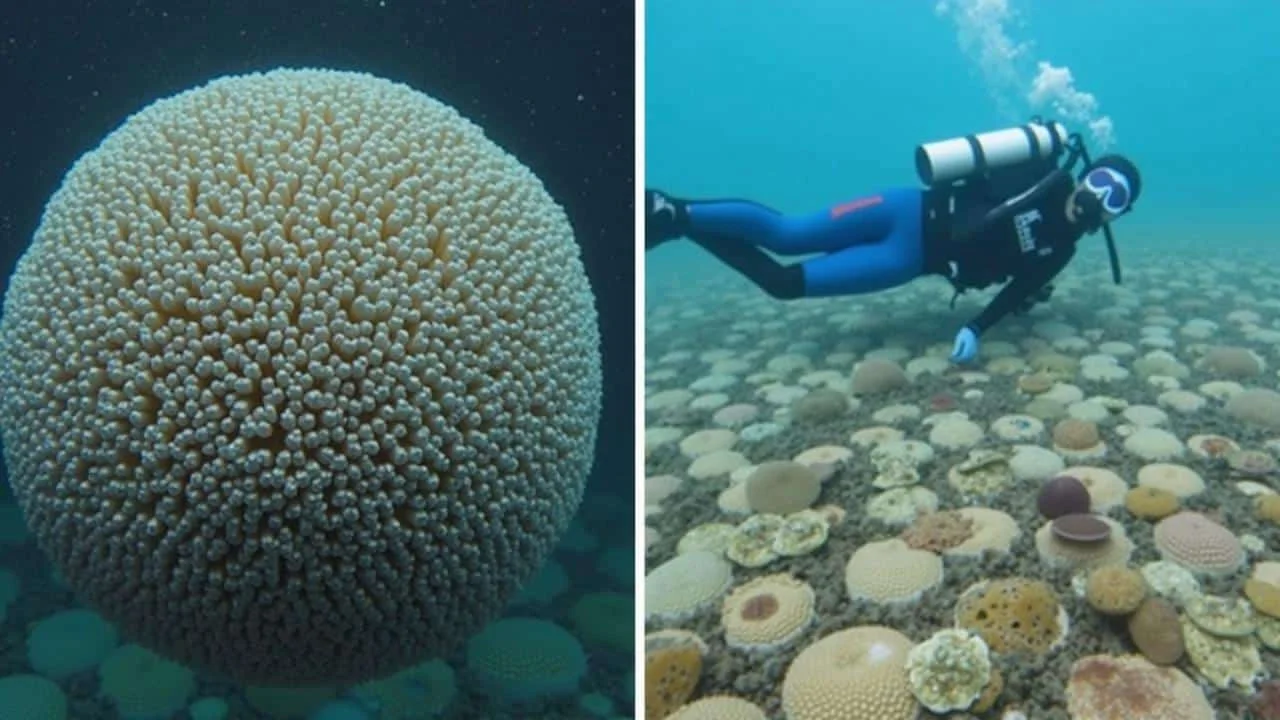
Maria remembers the exact moment she fell in love with coral reefs. She was eight years old, snorkeling in shallow waters off her grandmother’s island home, when a parrotfish the size of a dinner plate glided right past her mask. Behind it stretched what looked like an underwater city – towers of coral in every shade of orange and purple, with fish darting between them like busy commuters.
Twenty years later, Maria returned to that same spot as a marine biologist. The underwater city was gone. In its place lay a wasteland of grey, bleached skeletons. The silence was deafening.
But today, Maria is back underwater again – not as a mourner, but as a gardener. Around her, hundreds of coral fragments dangle from rope lines like Christmas ornaments, each one pulsing with life. This is coral reef restoration in action, and it’s quietly changing the future of our oceans.
The underwater farms bringing reefs back to life
Picture walking through an underwater forest where the trees are made of PVC pipes and every branch holds a piece of living coral. That’s what these coral nurseries look like – part science lab, part garden center, part miracle in progress.
The concept is beautifully simple. Scientists take small fragments from healthy coral colonies and grow them in protected nursery sites, away from the threats that killed the original reefs. These fragments grow 25 to 50 times faster in nurseries than they would on natural reefs, protected from predators, disease, and sediment damage.
“When we first started, people thought we were crazy,” says Dr. Ken Nedimyer, founder of the Coral Restoration Foundation. “Now we’re seeing fish swimming through our planted sites that haven’t been there in decades.”
The numbers tell an incredible story. In Florida alone, restoration teams have outplanted over 200,000 coral fragments onto damaged reefs. The Maldives reports survival rates of 70-80% for their nursery-grown corals. Across the Caribbean, Pacific, and Indian Ocean, networks of coral nurseries now measure their output in millions, not thousands.

Each fragment starts no bigger than a fingernail. Within months, it can grow to the size of a dinner plate. Give it a few years, and that same fragment becomes a boulder-sized coral head, providing shelter for dozens of fish species.
The science behind coral reef restoration success
The restoration process follows a carefully orchestrated timeline that maximizes survival rates and ecological impact:

| Phase | Duration | Key Activities | Success Rate |
|---|---|---|---|
| Fragment Collection | 1-2 days | Harvest healthy coral pieces | 95-99% |
| Nursery Growth | 6-18 months | Grow fragments on ropes or trees | 80-90% |
| Outplanting | Ongoing | Transplant to reef sites | 70-85% |
| Monitoring | 2-5 years | Track growth and fish recruitment | 60-80% |
The most successful restoration projects focus on these key strategies:
- Growing multiple coral species to rebuild biodiversity
- Selecting resilient genetic varieties that can handle warming waters
- Creating connected networks of restored sites
- Training local communities as restoration technicians
- Combining restoration with pollution reduction efforts
Different coral species respond better to different nursery methods. Branching corals like staghorn and elkhorn thrive on rope lines, while boulder corals prefer table-like structures. Scientists have learned to match the technique to the species, dramatically improving survival rates.
“We’re not just growing corals anymore,” explains marine biologist Dr. Anastazia Banaszak. “We’re rebuilding entire ecosystems, one fragment at a time.”
Fish are flooding back to restored reefs
The real magic happens about 18 months after corals get planted on degraded reefs. That’s when the fish start showing up.
First come the small ones – wrasses and gobies that dart between the coral branches. Then the herbivores arrive, parrotfish and tangs that keep algae from smothering the young corals. Finally, the predators follow, drawn by the abundance of smaller fish.
Research sites in the Florida Keys have documented a 400% increase in fish biomass within five years of coral restoration. The Bahamas reports similar numbers, with some restored sites now supporting more fish than nearby natural reefs.
The economic impact extends far beyond the reef itself. Healthy coral reefs support tourism, fisheries, and coastal protection worth an estimated $36 billion annually in the United States alone. Every dollar invested in coral reef restoration returns between $3 and $4 in ecosystem services.
“When the corals come back, everything else follows,” says restoration diver Carlos Mendez, who has planted over 10,000 coral fragments in the past three years. “The reef sounds different now – you can hear it coming back to life.”
Local fishing communities are among the biggest beneficiaries. In Jamaica, restored reefs have increased local fish catches by 25% in areas where restoration has been active for more than five years. The corals provide both nursery habitat for juvenile fish and hunting grounds for larger species.
Climate change remains the biggest long-term threat, but restoration is buying reefs precious time. Scientists are now breeding heat-tolerant coral varieties and testing assisted gene flow techniques that could help corals adapt faster than natural evolution allows.
The work isn’t just happening in exotic locations either. Restoration projects are active in 25 countries, from the Great Barrier Reef to the Red Sea to Caribbean islands. Each site contributes fragments, techniques, and knowledge to a growing global network of coral gardeners.
“Every fragment we plant is a vote for the future,” reflects Dr. Banaszak. “We’re not just restoring reefs – we’re restoring hope.”
FAQs
How long does it take for restored corals to attract fish?
Most restored reef sites see significant fish recruitment within 12-18 months, with full ecosystem recovery taking 3-5 years.
Can restored reefs survive future bleaching events?
Scientists are developing heat-tolerant coral varieties and using assisted evolution techniques to improve resilience, though results are still being tested.
How much does coral reef restoration cost?
Costs range from $10-100 per coral fragment, but economic benefits typically return $3-4 for every dollar invested.
What can regular people do to support coral reef restoration?
Support reef-friendly sunscreen, reduce carbon emissions, donate to restoration organizations, and choose sustainable seafood options.
Are there coral restoration projects I can visit or volunteer with?
Many programs offer volunteer opportunities and eco-tourism experiences, particularly in Florida, the Caribbean, and Pacific islands.
How successful is coral reef restoration compared to natural recovery?
Restoration accelerates recovery by 25-50 times compared to natural regrowth, with survival rates often exceeding 70% in well-managed sites.
About the Author