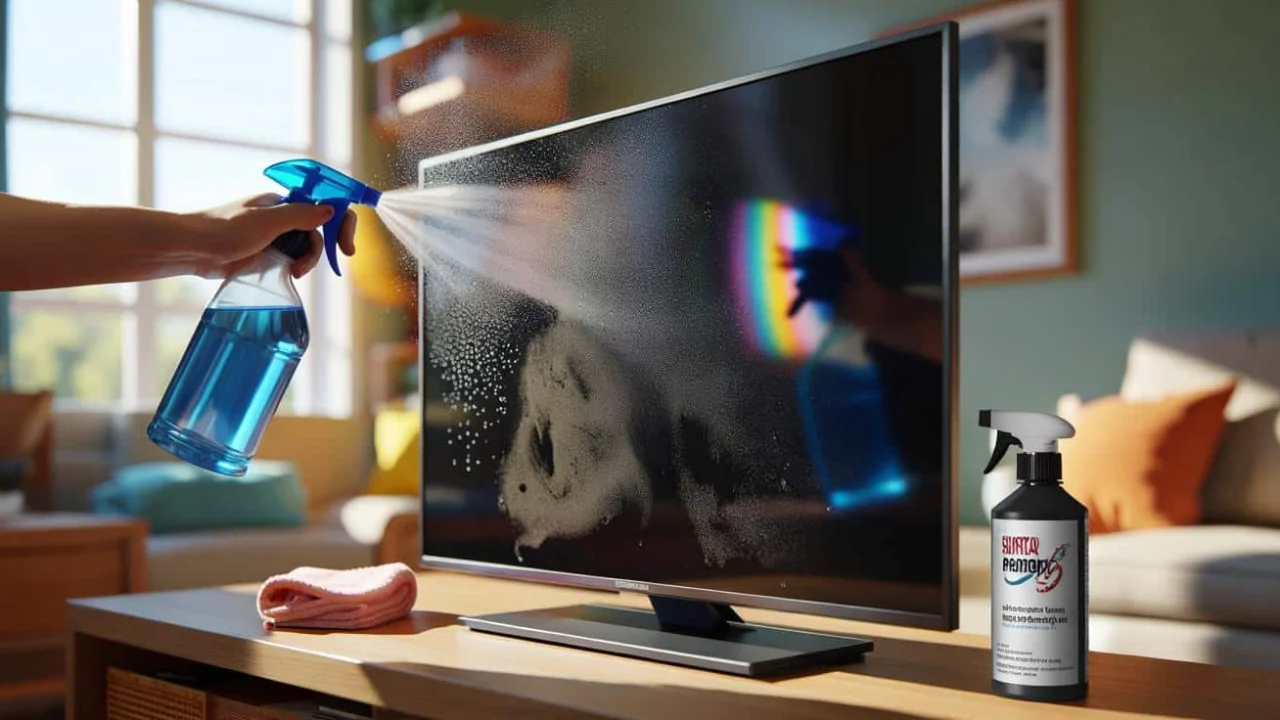
Sarah thought she was being responsible when she reached for the glass cleaner. Her new 65-inch OLED TV had tiny fingerprints from her toddler, and company was coming over for movie night. One quick spritz of the familiar blue liquid, a few swipes with a paper towel, and the screen looked pristine.

Two hours later, as the opening credits rolled, she noticed something wrong. Strange rainbow streaks appeared every time the screen went dark. By morning, under natural light, the damage was undeniable—cloudy patches covered the center of her $2,000 television, and no amount of gentle wiping would make them disappear.
Sarah had just learned an expensive lesson that thousands of TV owners discover too late: glass cleaner and flat screen TVs don’t mix.
The hidden danger lurking in your cleaning cabinet
Most glass cleaners contain ammonia, alcohol, or other harsh solvents designed to cut through grime on windows and mirrors. These chemicals work perfectly on regular glass, but flat-screen TVs aren’t made of simple glass. They’re sophisticated displays with multiple ultra-thin coatings that enhance picture quality and reduce glare.
“I see this damage at least three times a week,” says Mike Rodriguez, a certified TV repair technician in Phoenix. “People use glass cleaner on flat screen TV thinking it’s just glass, but those chemical cleaners literally dissolve the anti-reflective coating. Once it’s gone, it’s gone forever.”

The anti-glare coating on modern TVs is incredibly delicate—often just a few molecules thick. When ammonia or alcohol makes contact, it begins breaking down the coating’s molecular structure immediately. The process might start slowly, creating barely visible streaks, but repeated cleaning sessions accelerate the damage exponentially.
What makes this particularly frustrating is that the damage often appears gradually. Your first cleaning session might only weaken the coating. The second application finishes destroying it, leaving permanent cloudy patches, streaks, or areas where the screen appears duller than the rest.

What actually happens when chemicals meet your screen
Understanding why glass cleaner damages flat screen TVs requires looking at how modern displays are constructed. Unlike old CRT televisions with thick glass fronts, today’s screens use multiple layers of specialized materials:
- Polarizing filters that control light direction
- Anti-reflective coatings that reduce glare
- Oleophobic treatments that repel fingerprints
- Hardening layers that provide scratch resistance

Each layer serves a specific purpose and uses different chemical compositions. When ammonia-based glass cleaner contacts these surfaces, it triggers chemical reactions that permanently alter or remove the coatings.
“The ammonia essentially acts like a paint stripper on these delicate films,” explains Dr. Jennifer Walsh, a materials scientist who studies display technologies. “You might not see the damage immediately because the coating dissolves unevenly, but once the process starts, there’s no stopping it.”
Different TV brands use varying coating formulations, which explains why some screens show damage faster than others. However, no flat screen TV is immune to chemical damage from standard glass cleaners.
| TV Type | Coating Vulnerability | Damage Timeline |
|---|---|---|
| OLED | Very High | Minutes to hours |
| QLED | High | 1-3 cleaning sessions |
| LED/LCD | Moderate to High | 2-5 cleaning sessions |
| Standard LCD | Moderate | Multiple sessions |
The real cost of this common mistake
The financial impact of using glass cleaner on flat screen TVs extends far beyond the initial purchase price. Most manufacturers explicitly void warranties when chemical damage is detected, leaving owners responsible for expensive repairs or replacements.
Repair costs vary dramatically based on the damage extent and TV size. Small affected areas on budget models might cost $200-400 to fix, while premium large-screen TVs often require complete panel replacement—frequently costing more than buying a new television.
“I’ve seen people destroy $3,000 TVs trying to remove a $0.50 smudge,” says Maria Santos, who manages a consumer electronics repair shop in Seattle. “The saddest cases are brand-new TVs where someone cleaned them once and ruined the screen permanently.”
Insurance typically doesn’t cover this type of damage either, since it’s considered user error rather than a manufacturing defect or accident. This leaves many families facing unexpected expenses for what seemed like routine cleaning.
Beyond financial costs, the visual impact significantly affects your viewing experience. Damaged anti-reflective coatings create:
- Permanent cloudy or hazy patches
- Uneven brightness across the screen
- Increased glare and reflections
- Color distortion in affected areas
- Rainbow-like artifacts during dark scenes
These problems become more noticeable over time and worsen with continued exposure to cleaning chemicals. Professional cleaning services report that they refuse to clean TVs that show signs of previous chemical damage because additional cleaning would make the problem worse.
The psychological impact shouldn’t be underestimated either. Many TV owners describe feeling frustrated every time they watch their damaged screen, knowing that one moment of careless cleaning permanently reduced their viewing quality.
Prevention remains the only effective solution. Once chemical damage occurs, no amount of professional repair can restore the original anti-reflective coating properties. The specialized equipment and materials required for reapplication simply don’t exist for consumer-level repairs.
“My advice is simple: never use anything on your TV screen except distilled water and microfiber cloths,” recommends technician Rodriguez. “It might take a bit more elbow grease to remove stubborn marks, but you’ll save yourself thousands in the long run.”
FAQs
Can I use alcohol-based cleaners instead of ammonia glass cleaner on my flat screen TV?
No, alcohol can also damage the anti-reflective coating. Stick to distilled water and microfiber cloths only.
Will using glass cleaner void my TV warranty?
Yes, most manufacturers consider chemical damage as user error and will void the warranty if they detect cleaning product residue or coating damage.
How can I tell if I’ve already damaged my screen with glass cleaner?
Look for cloudy patches, uneven brightness, increased glare, or rainbow streaks that appear when the screen displays dark colors.
Is there any way to repair coating damage from glass cleaner?
Unfortunately, no. Once the anti-reflective coating is chemically damaged or stripped away, it cannot be restored or reapplied.
What’s the safest way to clean fingerprints off my flat screen TV?
Use only distilled water on a clean microfiber cloth. Gently wipe in circular motions and ensure the TV is powered off and cool.
Do all flat screen TVs have these delicate coatings?
Yes, virtually all modern flat screen TVs use some form of anti-reflective or anti-glare coating that can be damaged by household cleaning products.
About the Author
