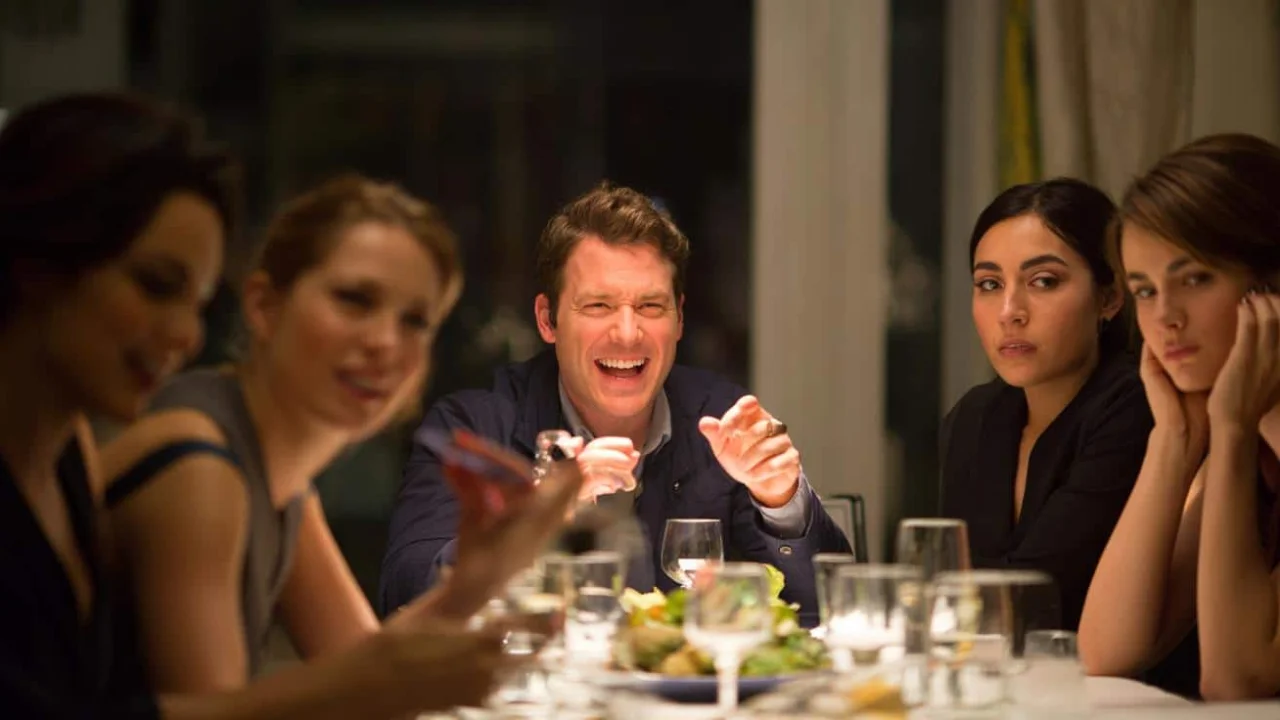
Sarah always thought she was invisible at work meetings. While her colleagues competed to pitch the loudest ideas and dominate every discussion, she sat quietly in the corner, taking notes and listening. Her manager barely acknowledged her presence, always gravitating toward the vocal performers who filled every silence with their opinions.

But Sarah saw things others missed. She noticed when Jake interrupted women but never men. She caught the eye-roll Maria gave whenever the budget numbers came up. She watched their director’s face tighten every time someone mentioned the unrealistic deadline. While everyone else was busy talking, Sarah was busy learning who really held power in that room.
Three months later, when the project collapsed exactly as Sarah had quietly predicted, her colleagues were shocked. Sarah wasn’t. She had been watching the warning signs all along, collecting data while everyone else was performing.

The Hidden Power of Silent Observation
Psychology research reveals that quiet observers judge situations and people with remarkable accuracy, often seeing flaws and patterns that escape more vocal individuals entirely. This phenomenon stems from what psychologists call “high situational awareness” – the ability to process multiple streams of information simultaneously while others focus on broadcasting their own thoughts.
Dr. Jennifer Martinez, a behavioral psychologist at Stanford University, explains: “When people are talking, they’re using significant cognitive resources to formulate and express their ideas. Observers, meanwhile, can dedicate their full mental capacity to analyzing what’s really happening around them.”

The difference isn’t about intelligence or social skills. It’s about where attention gets directed. Loud talkers focus outward, projecting their presence and ideas. Quiet observers focus inward and around, processing subtle cues that others miss entirely.
This creates a fascinating dynamic where the people who seem least engaged often understand social situations most deeply. They’re not just hearing words – they’re reading between every line, cataloging inconsistencies, and building detailed mental maps of group dynamics.
What Quiet Observers Actually Notice
The scope of what silent watchers pick up on can be startling. Their observations go far beyond surface-level interactions, diving into the subtle psychology that drives human behavior.
- Micro-expressions: Brief facial expressions that reveal true emotions before people can mask them
- Voice patterns: Changes in pitch, speed, or tone that indicate stress, deception, or discomfort
- Body language mismatches: When someone’s words don’t align with their physical posture or gestures
- Power dynamics: Who defers to whom, interruption patterns, and subtle dominance displays
- Emotional undertones: Jealousy, insecurity, or frustration that others express indirectly
- Group hierarchies: Unspoken rules about who gets heard and who gets ignored
| What Loud Talkers Focus On | What Quiet Observers Notice |
|---|---|
| Getting their point across | Who’s actually listening vs. who’s waiting to speak |
| Being entertaining or impressive | Genuine reactions vs. polite social responses |
| Filling awkward silences | What those silences reveal about discomfort or disagreement |
| Their own performance | How their words affect different people differently |
| Immediate responses | Long-term patterns and relationship dynamics |
“Silent observers are like emotional archaeologists,” notes Dr. Robert Chen, who studies social cognition at UCLA. “They’re excavating layers of meaning that most people never even realize exist.”
Why This Judgment Happens Behind the Scenes
The judgment that quiet observers engage in isn’t necessarily mean-spirited or petty. It’s often an unconscious survival mechanism – a way of understanding their environment and the people in it. This hypervigilance can develop for various reasons, from childhood experiences to personality traits that favor observation over participation.
Many quiet observers learned early that watching and listening provided valuable information about safety, acceptance, or how to navigate complex social situations. They developed finely-tuned radar for detecting insincerity, hidden agendas, or potential conflicts before they explode into the open.
The problem is that this constant analysis can become exhausting. While loud talkers get energized by social interaction, observers often leave gatherings mentally drained from processing so much unspoken information. They’ve essentially been conducting psychological research on everyone in the room.
Dr. Lisa Park, a therapist specializing in social anxiety, observes: “Quiet observers often carry the emotional weight of seeing things others don’t want to acknowledge. They notice the hurt feelings, the power struggles, the insecurities that everyone else glosses over with small talk.”
This creates an interesting paradox. The people who seem least involved in social situations often have the deepest understanding of what’s actually happening beneath the surface. They see the flaws, contradictions, and vulnerabilities that more vocal participants either don’t notice or actively ignore.
But this heightened awareness comes with a cost. Quiet observers can become cynical or judgmental, seeing human flaws everywhere they look. They might struggle to turn off their analytical mode and simply enjoy social interactions without dissecting them.
The most successful quiet observers learn to balance their natural tendency toward analysis with compassion and understanding. They recognize that everyone has flaws and insecurities, and use their observations to build empathy rather than fuel judgment.
Understanding this dynamic can benefit both personality types. Loud talkers might benefit from occasionally stepping back to observe, while quiet observers might find value in sharing their insights more openly – creating a more balanced and authentic social environment for everyone.
FAQs
Are quiet observers always more accurate in their judgments?
Not necessarily. While they notice more details, their interpretations can be influenced by their own biases or past experiences.
Is it healthy to constantly analyze other people’s behavior?
Moderate observation is normal, but excessive analysis can lead to social anxiety or cynicism. Balance is key.
Can loud talkers become better observers?
Yes, by practicing active listening and taking breaks from speaking to focus on what others are really communicating.
Why do some people naturally observe more than others?
It often stems from personality traits, childhood experiences, or learned coping mechanisms for navigating social situations.
Do quiet observers enjoy social situations less?
Not always. Some find deep satisfaction in understanding group dynamics, though the constant analysis can be mentally tiring.
Should quiet observers share their observations more often?
When appropriate and constructive, yes. Their insights can help groups communicate more effectively and address underlying issues.
About the Author
