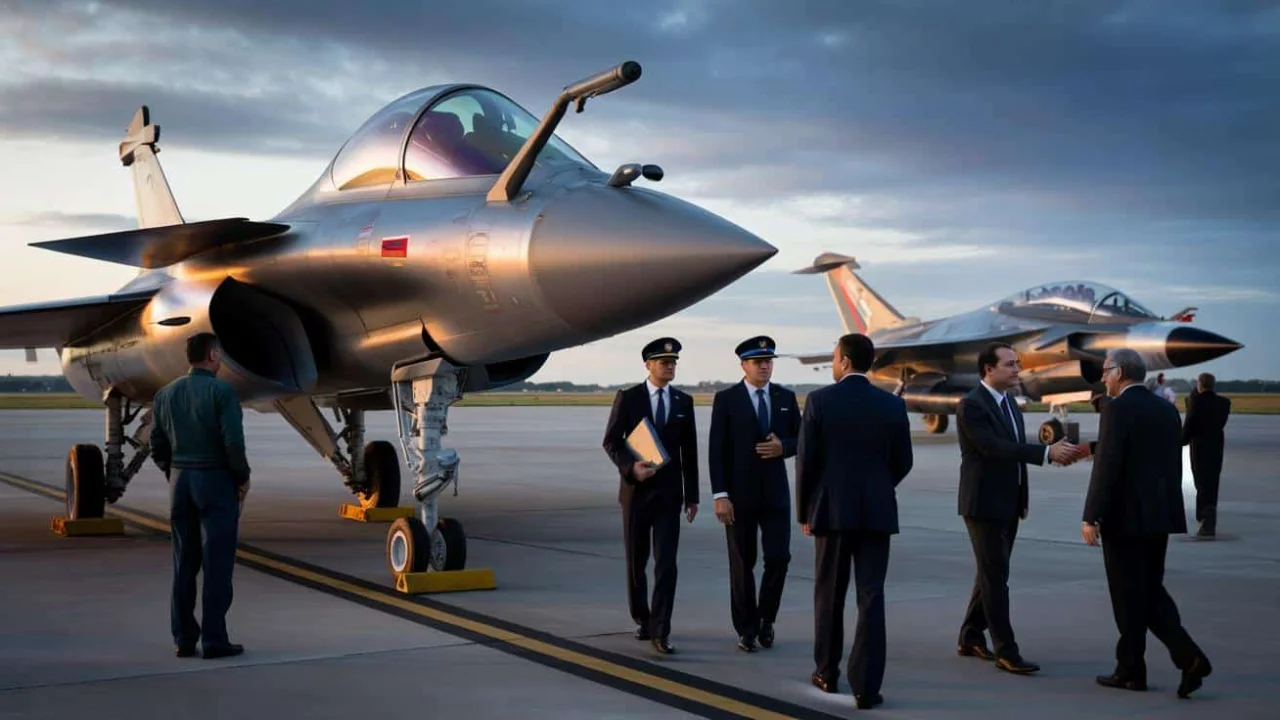
Pierre Dubois had been counting down the days. As a technician at Dassault Aviation’s Saint-Cloud facility, he’d already started preparing his passport for the six-month training assignment overseas. His wife Marie had begun researching international schools for their daughter. The €3.2 billion Rafale deal wasn’t just another contract—it meant job security, career advancement, and a chance to work on cutting-edge aviation technology abroad.

Then his phone buzzed during lunch break. The group chat exploded with confusion, disbelief, and anger. The deal was off. Just like that, months of preparation evaporated. Pierre stared at his half-eaten sandwich, thinking about the mortgage payments and his daughter’s university fund.
This isn’t just a story about corporate disappointment. It’s about real families, real workers, and a French defense industry that just watched billions of euros walk away at the last possible moment.
When a Sure Thing Becomes a Diplomatic Nightmare
The Rafale deal collapse reads like a masterclass in international betrayal. Until 48 hours before the announcement, French officials were practically printing the press releases. Diplomats had spent months crafting what they called a “strategic partnership for the ages.” Test pilots from the purchasing country had already completed evaluation flights. Technical teams were finalizing maintenance agreements.
Inside the Ministry of Armed Forces, confidence ran so high that junior staff were already being briefed on the celebration timeline. “Everyone treated this as a done deal,” explains a former French defense attaché. “The level of preparation was extraordinary. We weren’t just selling aircraft—we were building a long-term relationship.”

Then came the delays. First, a postponed signing ceremony. Then radio silence from key contacts. French officials initially dismissed these as standard bureaucratic hiccups. Defense contracts often face last-minute technical reviews, they reasoned.
But seasoned negotiators felt the shift in tone immediately. Phone calls became shorter. Email responses grew formal. The enthusiasm that had characterized months of discussions suddenly vanished. “When a defense minister stops returning your calls, you know something’s wrong,” noted one Dassault executive.

The final blow came through diplomatic channels—a brief, clinical statement announcing the country’s decision to “explore alternative partnerships.” No explanation. No apology. Just a €3.2 billion door slamming shut.
What France Lost in the Rafale Deal Reversal
The financial numbers tell only part of the story. This Rafale deal represented far more than aircraft sales—it was France’s gateway to establishing long-term strategic influence in a crucial region.

| Impact Area | Details |
|---|---|
| Direct Revenue Loss | €3.2 billion in immediate sales |
| Job Impact | Approximately 1,500 positions affected across suppliers |
| Technology Transfer | Planned 10-year maintenance and upgrade partnership |
| Strategic Influence | Major foothold in regional defense cooperation lost |
| Future Opportunities | Estimated €2 billion in follow-up contracts now uncertain |
The ripple effects extend far beyond Dassault’s headquarters. French suppliers had already begun scaling up production. Safran was preparing engine deliveries. Thales had developed customized avionics packages. Small and medium-sized enterprises across France’s aerospace valley had hired additional workers in anticipation.
“This isn’t just about one contract,” warns Jean-Michel Verdier, a defense industry analyst. “France loses credibility in future negotiations. Other potential buyers will wonder: if this deal could collapse at the last minute, what about ours?”
The geopolitical implications cut even deeper. France has spent decades building its reputation as a reliable defense partner, offering advanced technology without the political strings often attached to American or Russian sales. This reversal damages that carefully cultivated image.
The Human Cost Behind the Headlines
While politicians and executives debate diplomatic strategy, real people face real consequences. French aerospace employs over 300,000 workers, many in regions where defense contracts provide crucial economic stability.
In Toulouse, families like the Dubois are reassessing their futures. Engineering graduates who chose aerospace careers over tech jobs now question their decisions. Suppliers who invested in specialized equipment for this contract face financial uncertainty.
The psychological impact runs deeper than spreadsheets can capture. “We put everything into this deal,” explains a Dassault project manager who requested anonymity. “Late nights, weekend calls with overseas partners, family dinners interrupted by urgent technical questions. You invest emotionally in these projects. When they collapse like this, it feels personal.”
French taxpayers also bear the burden. The government provided export credits, diplomatic support, and promotional resources worth millions of euros. Those investments now generate zero return, while competitor nations celebrate their successful lobbying efforts.
Regional economic development suffers too. The planned Rafale deal included significant offset agreements—investments in local infrastructure, technology transfers, and joint research projects. Those opportunities now flow to France’s competitors, potentially creating jobs and innovation elsewhere.
“France doesn’t just lose money,” observes Marie Blanchard, an international trade specialist. “We lose the chance to embed our technology and expertise in another country’s defense structure. That’s influence you can’t buy back easily.”
The timing makes the betrayal sting even more. As European nations increase defense spending in response to global tensions, France needed this Rafale deal to demonstrate its aircraft’s international appeal. Instead, potential customers now see a high-profile contract collapse, raising questions about French reliability and diplomatic effectiveness.
For workers like Pierre Dubois, the immediate future remains unclear. His overseas assignment is canceled. His daughter’s international education plans are on hold. His family joins thousands of others across France’s defense sector wondering when the next opportunity might emerge—and whether it will prove more reliable than this one.
FAQs
How much was the Rafale deal worth to France?
The contract was valued at €3.2 billion, with potential follow-up agreements worth an additional €2 billion over the next decade.
Which country canceled the Rafale purchase?
While the specific purchasing country hasn’t been officially disclosed, diplomatic sources indicate it was a strategically important nation where France had been building defense partnerships.
How many jobs were affected by this deal collapse?
Approximately 1,500 positions across Dassault Aviation and its supplier network were directly impacted by the contract cancellation.
Why did the buyer country reverse their decision at the last minute?
Sources suggest intensive lobbying from competing nations, along with potentially more attractive financial and political terms from alternative suppliers.
Can France recover this lost contract?
While technically possible, defense contracts of this magnitude rarely return once officially canceled. France will likely need to focus on securing new opportunities elsewhere.
How does this affect France’s defense industry reputation?
The last-minute reversal raises questions about French diplomatic effectiveness and could make other potential buyers more cautious about committing to Rafale purchases.
About the Author
