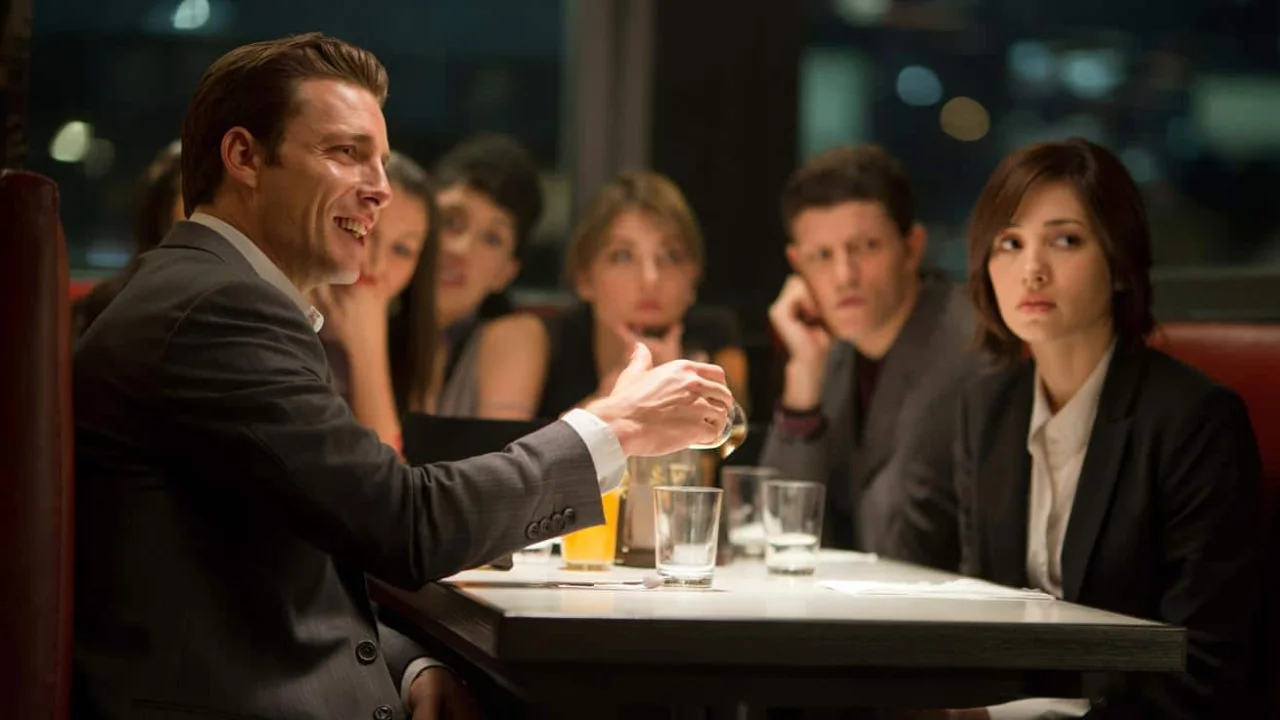
Sarah had always been the quiet one at family gatherings. While her cousins competed for attention with loud stories and dramatic gestures, she’d sit back and watch. Last Thanksgiving, she noticed something everyone else missed: Uncle Mike’s forced laugh when someone mentioned his “successful” business, and how Aunt Linda’s smile disappeared every time he spoke. Six months later, when the divorce papers were filed, Sarah wasn’t surprised.

She’d seen the cracks long before anyone else because she wasn’t distracted by the noise. While everyone else got caught up in the performance, she was reading the real story written in glances, pauses, and the things people desperately tried not to say.
This isn’t just family drama. It’s psychology in action, and it reveals something fascinating about how we communicate and deceive ourselves.
Why Silent Observers See What Others Miss
When someone fills every silence with words, they’re often trying to control more than just the conversation. They’re managing perception, steering attention away from uncomfortable truths, and creating a version of reality that serves their needs. But here’s the thing: the human brain processes far more than just spoken words.
Silent observers have a distinct psychological advantage. While talkers focus on crafting their next sentence, quiet people are absorbing the complete picture. They’re noticing micro-expressions that flash across faces in split seconds, hearing the slight tremor in someone’s voice when they hit a sensitive topic, and watching how body language contradicts spoken words.

“The most revealing moments happen between words,” explains Dr. Rachel Martinez, a behavioral psychologist. “When people are busy talking, they miss the involuntary reactions that tell the real story.”
Think about your last work meeting. The person who dominated the discussion might have sounded confident, but the silent observer probably noticed their fidgeting hands, the way they avoided eye contact during certain questions, or how they subtly deflected blame onto others.

This isn’t about being judgmental. It’s about processing information differently. Silent observers aren’t trying to catch people in lies – they’re simply seeing the full spectrum of human communication while others focus on just the verbal layer.
What Silent People Actually Notice
The observational skills of quiet people extend far beyond basic body language. They’re unconsciously cataloging patterns that escape others entirely. Here’s what research shows they typically pick up on:

- Emotional inconsistencies – When someone’s words don’t match their facial expressions or tone
- Power dynamics – Who actually holds influence versus who just talks the most
- Avoidance patterns – Topics people consistently steer away from or gloss over quickly
- Authenticity markers – The difference between genuine enthusiasm and performed confidence
- Group dynamics – How people’s behavior changes based on who’s listening
- Stress indicators – Physical and vocal signs of anxiety that others miss
| What Talkers Focus On | What Silent Observers Notice |
|---|---|
| Content of words | Tone and delivery changes |
| Getting their point across | Others’ reactions and responses |
| Maintaining conversation flow | Awkward pauses and what causes them |
| Appearing knowledgeable | Who’s genuinely listening versus performing |
| Immediate responses | Long-term behavioral patterns |
“Silent people often have the clearest read on group dynamics because they’re not invested in managing their own image,” notes Dr. James Chen, who studies communication patterns. “They can afford to be objective.”
This advantage shows up everywhere. In romantic relationships, the quieter partner often spots red flags first. In friendships, they notice when someone consistently makes excuses or shifts blame. At work, they see through office politics and identify who actually gets things done versus who just takes credit.
The Real Impact on Relationships and Life
This observational gap creates fascinating relationship dynamics. Chatty people often feel frustrated that silent observers seem to “know” things without explanation. They might ask, “How did you see that coming?” or “Why didn’t you warn me?” But the truth is, silent observers did try to communicate – just not with words.
The challenge is that our society rewards verbal communication. We promote the people who speak confidently in meetings, even if their ideas aren’t the strongest. We’re attracted to charismatic talkers in dating, even when quieter people might be better long-term partners. We trust the salesperson who talks the most, even when they’re hiding crucial information.
This creates real consequences for both personality types. Silent observers often feel unheard or undervalued, while excessive talkers miss out on crucial feedback and insights. The result? Decisions get made with incomplete information, relationships fail because warning signs were ignored, and problems fester because the people who see them clearest speak up least.
“The irony is that the people with the best information often have the least influence over decisions,” observes Dr. Lisa Park, a workplace psychology researcher. “Organizations lose out when they don’t create space for quieter voices.”
But when silent observers do speak up, their words carry unusual weight. Because they choose their moments carefully, people tend to listen more intently. Their observations often cut straight to the heart of issues that others have been dancing around for months.
The key isn’t for everyone to become silent – we need both communication styles. The real opportunity lies in recognizing that the quietest person in the room might have the clearest view of what’s actually happening. Sometimes the most important truths aren’t spoken at all – they’re written in the spaces between words, visible only to those patient enough to watch and wise enough to see.
In a world that celebrates noise, silence has become a superpower. The question isn’t whether silent observers see more than they let on – it’s whether the rest of us are ready to listen when they finally speak.
FAQs
Are silent observers being manipulative when they watch others so closely?
No, this observation is usually unconscious and natural, not calculated manipulation.
Can talkative people learn to observe better?
Yes, by practicing active listening and taking breaks from speaking to focus on nonverbal cues.
Do silent observers always have social anxiety?
Not at all – many choose silence as a strategy rather than from fear or discomfort.
Is it better to be a talker or an observer?
Both styles have advantages; the best communicators can switch between them as needed.
How can I tell if someone is a natural observer?
They often make surprisingly accurate comments about situations with minimal information.
Can silent observation skills be improved?
Yes, through mindfulness practices and deliberately focusing on nonverbal communication during conversations.
About the Author