When Maria’s father received his pancreatic cancer diagnosis three years ago, the oncologist delivered the news with a gentleness that somehow made it worse. “We’ll do everything we can,” the doctor said, but Maria saw the resignation in his eyes. Her father lasted eight months—longer than many, but nowhere near long enough.

Stories like Maria’s play out thousands of times each year, making pancreatic cancer one of medicine’s most heartbreaking challenges. But now, researchers in Spain are offering something families like Maria’s haven’t had in decades: genuine hope.
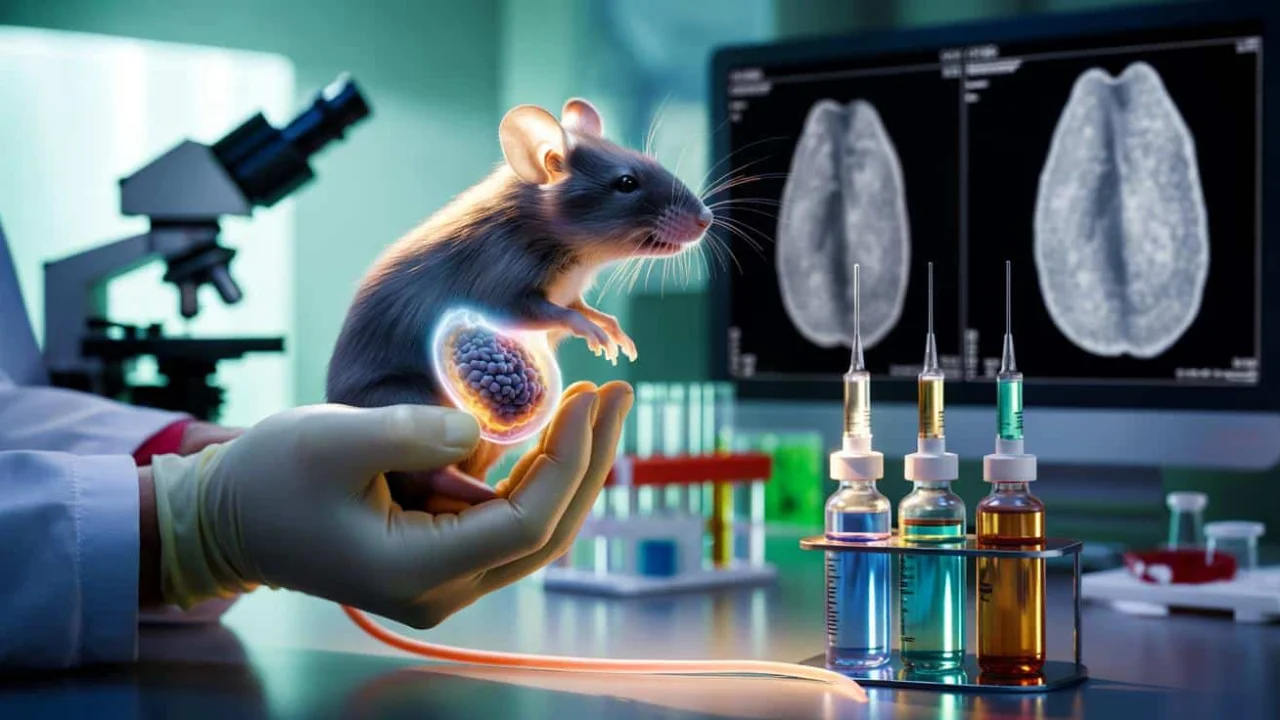
A breakthrough study from the Spanish National Cancer Research Centre has achieved what many thought impossible—completely eliminating pancreatic cancer in mice using a revolutionary triple-drug approach. Even more remarkable, the tumors stayed gone for months without returning.

Why Pancreatic Cancer Has Been Medicine’s Toughest Enemy
Pancreatic cancer earns its reputation as one of the deadliest cancers for good reason. The numbers tell a sobering story that every family facing this diagnosis knows too well.
Only 13% of patients survive five years after diagnosis in wealthy countries. When the disease reaches advanced stages, that number plummets to nearly 1%. These statistics haven’t budged much in decades, despite billions spent on research.

The pancreas itself presents unique challenges. Tucked deep behind the stomach and intestines, it’s like a hidden fortress where tumors can grow undetected for years. By the time symptoms like jaundice or severe abdominal pain appear, the cancer has often spread beyond surgical reach.
“Pancreatic cancer’s ability to route around blocked pathways has made it one of oncology’s toughest opponents,” explains Dr. Carmen Guerra, the study’s senior author.

Traditional chemotherapy faces an uphill battle. These treatments damage healthy cells alongside cancerous ones, causing brutal side effects. Worse yet, pancreatic tumors seem to possess an almost supernatural ability to adapt, rewiring themselves to bypass whatever treatment doctors throw at them.
The Triple-Drug Strategy That’s Changing Everything
The Spanish research team focused their attack on KRAS, a gene that’s mutated in nearly every case of pancreatic ductal adenocarcinoma—the most common and aggressive form of pancreatic cancer.

Think of KRAS as a cellular accelerator pedal. Normally, it controls when cells should grow and when they should stop. In pancreatic cancer, this gene gets stuck in the “on” position, forcing cells to divide endlessly until they form tumors.
For decades, scientists called KRAS “undruggable” because of its complex, slippery structure. But the CNIO team discovered something crucial: attacking KRAS alone isn’t enough.
“When one route is shut off, pancreatic cancer often opens another door to keep growing,” Guerra told researchers. This insight led to their game-changing approach.
| Treatment Approach | Target | Result in Mice |
|---|---|---|
| Single drug therapy | One pathway | Temporary shrinkage, then regrowth |
| Dual drug therapy | Two pathways | Better control, some resistance |
| Triple drug therapy | Three pathways simultaneously | Complete tumor elimination, no recurrence |
The breakthrough came when researchers realized they needed to block multiple escape routes simultaneously. Their triple-drug combination targets three critical pathways that pancreatic cancer cells use to survive and grow:
- KRAS signaling pathway
- DNA damage response mechanisms
- Metabolic processes that feed tumor growth
By hitting all three targets at once, the treatment doesn’t just slow cancer growth—it completely eliminates it. Even more impressive, the tumors showed no signs of returning for months after treatment ended.
The mice in the study showed no obvious signs of toxicity, suggesting the treatment might be gentler on healthy tissues than current chemotherapy regimens.
What This Could Mean for Patients and Families
While the results are still limited to laboratory studies, the implications could be transformative for the 60,000 Americans diagnosed with pancreatic cancer each year.
Current standard treatments offer limited hope. Surgery works only when the cancer is caught extremely early, which happens in fewer than 20% of cases. Chemotherapy can extend life by months, but rarely by years, and comes with severe side effects that can devastate quality of life.
“We’re seeing something we’ve never achieved before—complete tumor elimination without apparent toxicity,” notes Dr. Guerra. “This gives us a roadmap for how we might finally turn pancreatic cancer from a death sentence into a manageable disease.”
The next crucial step involves human clinical trials. These typically take several years to complete, but the compelling mouse data could accelerate the timeline for testing in patients.
Pharmaceutical companies are already taking notice. The combination approach represents a new paradigm that could apply beyond pancreatic cancer to other KRAS-driven tumors, including certain lung and colorectal cancers.
For families currently battling pancreatic cancer, this research offers something precious: the realistic possibility that future patients won’t face the same devastating odds.
The study also validates a broader shift in cancer treatment philosophy. Instead of trying to find single “magic bullets,” researchers are increasingly focusing on combination therapies that attack cancer from multiple angles simultaneously.
“Cancer is like a city with many roads leading in and out,” explains one oncologist familiar with the research. “Block one road, and traffic finds another route. But block enough roads simultaneously, and you can shut down the whole system.”
The Spanish team is now working to optimize their drug combination and prepare for human trials. They’re also investigating whether the approach could prevent pancreatic cancer in high-risk patients, potentially offering protection before tumors even form.
FAQs
When will this treatment be available to patients?
Human clinical trials typically take 3-5 years to complete, so the treatment likely won’t be widely available until the late 2020s at earliest.
Does this work for all types of pancreatic cancer?
The research focused on pancreatic ductal adenocarcinoma, which accounts for about 95% of all pancreatic cancers.
Are there side effects from this triple-drug approach?
The mice showed no obvious toxicity, but human trials will be needed to fully understand potential side effects in people.
Could this treatment help other cancers too?
Potentially yes—many other cancers also have KRAS mutations, including some lung and colorectal cancers.
How is this different from current treatments?
Current treatments typically target single pathways, allowing cancer to adapt and grow resistant. This approach blocks multiple pathways simultaneously.
What should current patients do with this information?
Patients should discuss all available treatment options with their oncologists while staying informed about clinical trials that might become available.
About the Author