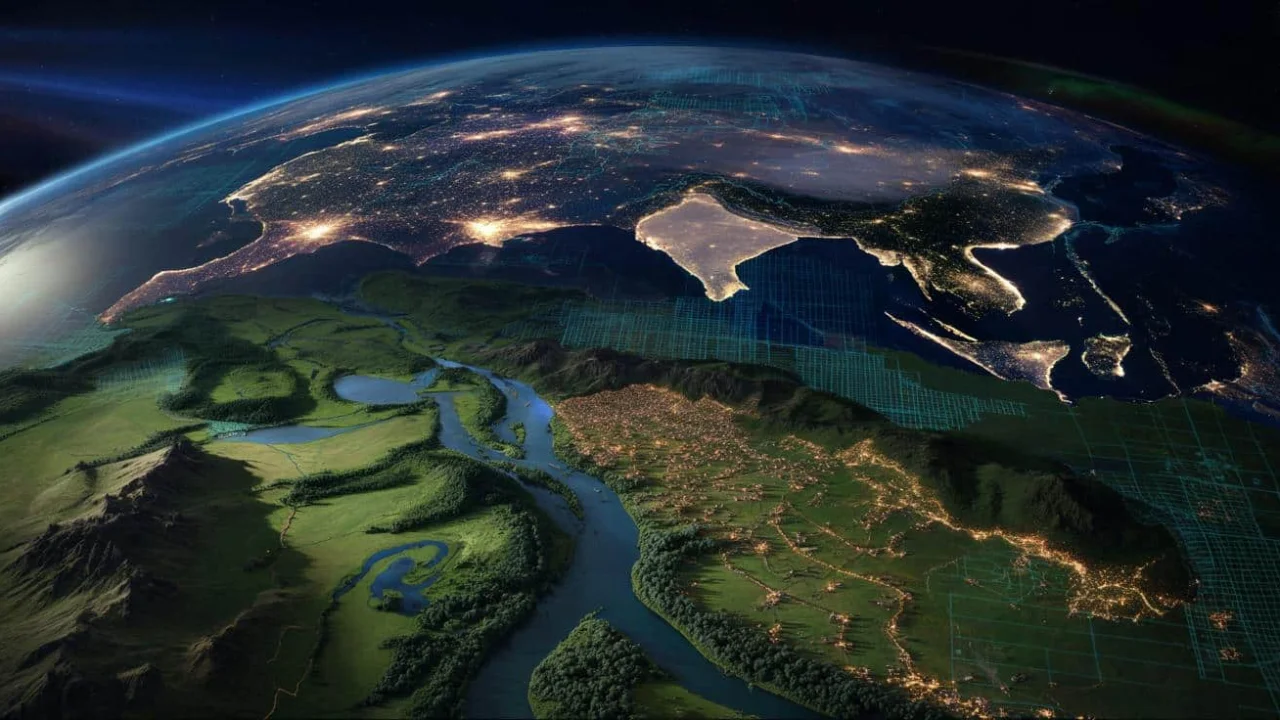
Maria Santos thought she knew exactly how many people lived in her valley in rural Brazil. As the local health worker, she’d been counting families for years—documenting births, tracking migrations, updating her handwritten records. When the government announced plans for a new hydroelectric dam, she figured the official population count would match hers pretty closely.

She was wrong by nearly 400 people.
The dam developers’ meticulous door-to-door survey revealed entire extended families, seasonal workers, and informal settlements that had somehow slipped through every official census for decades. Maria’s experience wasn’t unique—it was part of a much larger problem that scientists are now calling one of the biggest miscalculations in modern demographic history.

The Numbers Don’t Add Up
We’ve all seen that famous figure: 8.2 billion people on Earth. It’s plastered across news reports, cited in climate discussions, and used to calculate everything from food security to carbon emissions. But what if that number is wrong?
New research suggests our global population might be significantly miscalculated, particularly when it comes to rural communities that traditional census methods consistently miss. The implications stretch far beyond academic curiosity—they could fundamentally reshape how we plan for water resources, energy infrastructure, and climate adaptation.

Josias Láng-Ritter and his team at Aalto University in Finland have uncovered what might be the largest systematic population undercount in modern history. Their findings, published in Nature Communications, reveal that rural populations have been underestimated by a staggering 53 to 84 percent in major datasets used worldwide.
“We’re not talking about a small statistical error here,” explains Dr. Sarah Chen, a demographic researcher not involved in the study. “This represents millions of people who have essentially been invisible to planners and policymakers for decades.”

How Dams Exposed the Hidden Truth
The discovery came from an unlikely source: dam construction projects. When developers build large dams, they must relocate entire communities and pay compensation to displaced residents. This requires incredibly detailed, on-the-ground population counts—some of the most accurate rural demographic data available.
Here’s what the research revealed when comparing dam relocation data to official population estimates:

| Region | Official Estimate | Actual Count | Undercount Percentage |
|---|---|---|---|
| Sub-Saharan Africa | 2.1 million | 3.9 million | 84% |
| Southeast Asia | 1.8 million | 2.9 million | 61% |
| Latin America | 1.2 million | 1.9 million | 58% |
| South Asia | 3.1 million | 4.7 million | 53% |
The patterns were remarkably consistent across different continents and time periods. Rural communities, particularly those in remote areas, informal settlements, and regions with limited government presence, were systematically missed by traditional counting methods.
“Dam projects force you to find every single person because you have to compensate them,” notes Láng-Ritter. “There’s a legal and financial incentive for absolute accuracy that doesn’t exist in regular census work.”
Several factors contribute to these massive undercounts:
- Limited transportation to reach remote communities
- Insufficient funding for comprehensive rural surveys
- Language barriers with indigenous populations
- Seasonal migration patterns that census timing misses
- Informal settlements without official recognition
- Geographic barriers like mountains, forests, and wetlands
What This Means for Our Planet’s Future
If the global population is significantly miscalculated, the ripple effects touch nearly every aspect of human planning and resource management. Countries base their infrastructure investments, environmental policies, and international aid requests on population data that might be fundamentally flawed.
Water resource planning represents one of the most immediate concerns. Rural communities often lack access to centralized water systems, relying instead on wells, rivers, and local sources. If there are tens of millions more people in rural areas than previously thought, current water stress calculations could be dangerously underestimated.
Climate adaptation strategies face similar challenges. Rural populations are often most vulnerable to extreme weather, crop failures, and environmental changes. “If we’re planning climate resilience for 100 million people but there are actually 150 million, our preparations will fall short when they’re needed most,” warns climate adaptation specialist Dr. James Rodriguez.
Energy infrastructure planning also relies heavily on population distribution data. Rural electrification programs, renewable energy projects, and grid expansion plans all depend on accurate demographic information to determine where investments will have the greatest impact.
The economic implications extend beyond individual countries. International development organizations use population data to allocate billions in aid and assistance. The World Bank, United Nations agencies, and bilateral aid programs could be systematically under-serving regions with hidden populations.
Food security assessments present another critical area where miscalculated populations matter. Agricultural planning, food distribution networks, and emergency response preparations all assume certain population densities and distributions. Undercounted rural populations could mean existing food systems are more strained than previously understood.
“We might be looking at a situation where rural areas are experiencing more pressure on resources than anyone realized,” explains agricultural economist Dr. Linda Patel. “This could explain some of the unexpectedly rapid environmental degradation we’re seeing in certain regions.”
The research also raises questions about urban migration patterns. If rural populations are larger than estimated, the scale of rural-to-urban migration might be different than current models suggest. This could affect everything from urban planning to labor market projections.
Healthcare delivery systems face particular challenges. Rural health programs are typically designed based on official population figures. Significantly higher actual populations could mean existing healthcare infrastructure is more overwhelmed than statistics suggest, potentially explaining persistent health disparities in remote areas.
Moving forward, the research suggests we need fundamentally new approaches to population counting. Traditional census methods, designed for urban and easily accessible areas, may be inadequate for today’s complex demographic realities.
Satellite imagery combined with artificial intelligence offers promising alternatives. These technologies can identify settlements, track changes over time, and estimate populations without requiring physical access to every location. However, ground-truthing remains essential for accuracy.
“The dam data shows us what’s possible when you have strong incentives for accuracy,” concludes Dr. Chen. “We need to find ways to create those same incentives for regular population monitoring.”
FAQs
How much higher could the real global population be?
While the study doesn’t provide a specific global figure, rural undercounts of 53-84% could mean tens of millions more people than currently estimated, particularly in developing countries.
Why are dam projects more accurate at counting people?
Dam developers must pay compensation to every displaced person, creating legal and financial incentives for precise door-to-door counting that regular censuses lack.
Which regions are most affected by population miscalculations?
Sub-Saharan Africa shows the highest undercount rates at 84%, followed by Southeast Asia, Latin America, and South Asia, all showing significant rural population undercounts.
How does this affect climate change planning?
Miscalculated populations could mean climate adaptation strategies are inadequately scaled, particularly for rural communities most vulnerable to environmental changes.
What new methods could improve population counting?
Satellite imagery combined with AI analysis offers promising alternatives, though ground-level verification remains crucial for accuracy.
Does this mean the 8.2 billion global figure is wrong?
The research suggests current figures may underestimate rural populations significantly, though it doesn’t provide a revised global total.
About the Author
