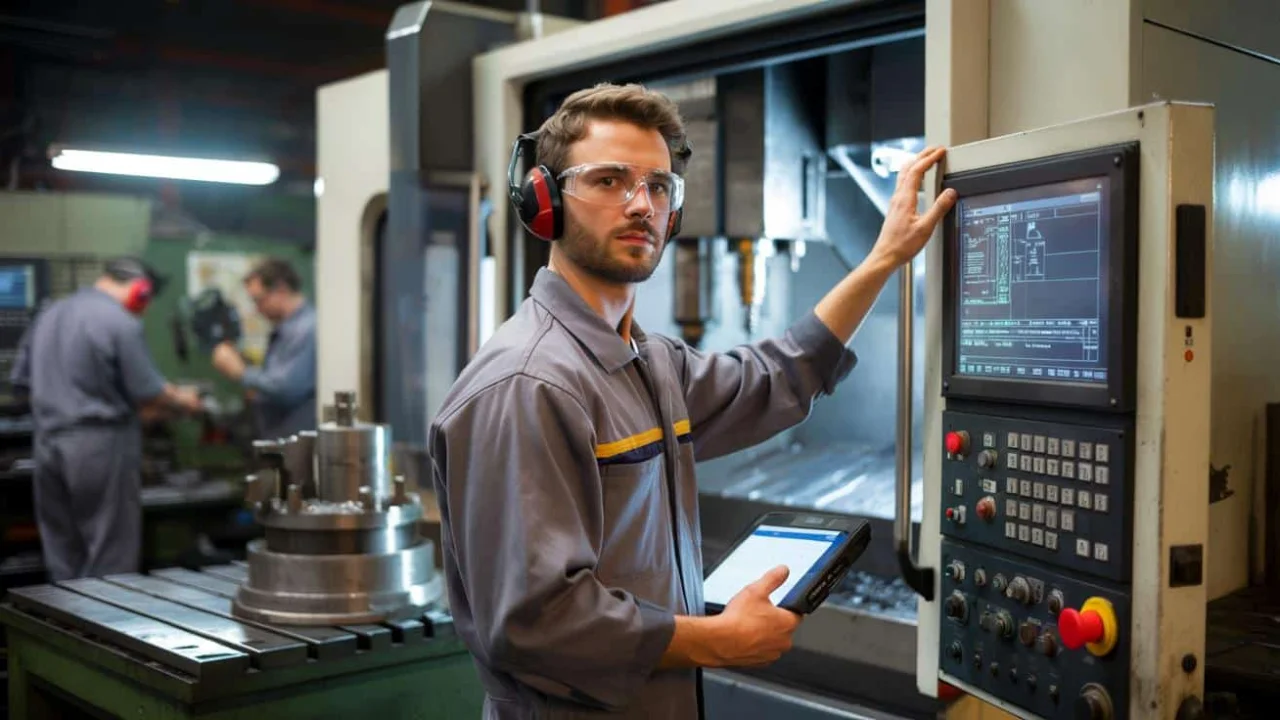
The first time I realized my job could actually pay more was on a Tuesday night, standing in front of the break room vending machine. My colleague Luis was scrolling through his phone, grumbling about grocery prices again, when his pay notification popped up on the screen. Same factory, same shift pattern as mine, but his take-home was a solid third higher than what I’d seen on my own stub that morning.

I stared at those numbers, half curious, half insulted. “What exactly are you doing that I’m not?” I asked, pointing at his phone.
Luis shrugged like it was obvious. “I specialized, man. CNC setup, maintenance certifications, troubleshooting. They actually need me for stuff.” That night, walking back to my station, the familiar hum of the production floor sounded different somehow. Those machines weren’t just running parts—they were printing money for the people who knew how to speak their language.

How Machine Operator Specialization Changes Everything
For years, I thought being a machine operator meant staying in your lane. Load the parts, watch the digital readouts, clear the occasional jam, fill out production sheets. The work felt honest but predictable, and so did the paycheck. I was just another set of hands keeping the line moving.
But there’s a quiet hierarchy in every factory that nobody talks about openly. Some operators fix minor breakdowns without radioing maintenance. Others switch between different machine programs like they’re changing TV channels. These are the people supervisors call by name over the intercom. They’re the ones who never struggle to get overtime hours.

The wake-up call came during a Friday afternoon breakdown on our main CNC line. Production screeched to a halt, the plant manager appeared on the floor, and you could feel the pressure building. I stood there feeling completely useless while two operators I’d assumed were “same level” as me calmly opened control panels and started diagnosing the problem.
“Sounds like the spindle bearing,” one said, checking error codes. “Temperature’s spiking on axis two,” the other confirmed. They weren’t panicking or waiting for someone else to fix it. When maintenance arrived, they worked as equals, not as helpers. Production restarted within an hour.

A week later, both operators had new job titles and pay increases. Same building, same shift, completely different league. That scene taught me more about career growth than any employee handbook ever could.
The Skills That Actually Pay More
Machine operator specialization isn’t about becoming an engineer overnight. It’s about developing specific technical skills that make you indispensable. Here’s what actually moves the needle on your paycheck:
- CNC Programming and Setup: Learning to modify programs, set tool offsets, and handle complex setups
- Preventive Maintenance: Understanding lubrication schedules, belt tensions, and component replacement
- Quality Control Systems: Mastering measurement tools, statistical process control, and inspection procedures
- Multi-Machine Operation: Running several different types of equipment efficiently
- Troubleshooting Electronics: Reading electrical diagrams, testing sensors, and diagnosing control system issues
- Safety Certifications: Lockout/tagout procedures, confined space entry, and equipment-specific safety training
“The operators who invest in specialized training typically see 20-30% pay increases within two years,” explains Maria Rodriguez, a manufacturing workforce development coordinator. “Companies will pay premium wages to avoid production downtime.”
The earning potential varies significantly based on your specialization level and industry:
| Operator Level | Average Hourly Rate | Key Skills |
|---|---|---|
| Basic Operator | $16-20 | Loading, unloading, basic quality checks |
| Setup Operator | $22-28 | Machine setup, tool changes, minor adjustments |
| Lead/Senior Operator | $28-35 | Programming, troubleshooting, training others |
| Maintenance Operator | $32-40 | Electrical, mechanical, preventive maintenance |
“The biggest mistake I see is operators waiting for the company to train them,” notes James Chen, a plant operations manager with 15 years experience. “The ones who get ahead take initiative and learn on their own time.”
What This Means for Your Career and Paycheck
Machine operator specialization creates a completely different career trajectory. Instead of being replaceable, you become the person they call when things get complicated. Your schedule becomes more flexible because you’re harder to replace. Overtime opportunities increase because specialized operators are in shorter supply.
The financial impact goes beyond just hourly wages. Specialized operators often get:
- Shift differentials for covering complex equipment during off-hours
- Call-in pay for emergency repairs and breakdowns
- Training stipends when teaching other operators
- Performance bonuses tied to equipment uptime and efficiency
- Faster promotion paths to supervisor or technician roles
But the changes aren’t just financial. Your relationship with management shifts completely. Instead of being managed, you become consulted. When they’re planning new equipment purchases or layout changes, your input carries weight because you understand the practical realities.
“Specialized operators become key stakeholders in production decisions,” explains Sarah Mitchell, a manufacturing consultant. “They’re not just following instructions anymore—they’re solving problems and improving processes.”
The job security aspect can’t be overstated either. During economic downturns or restructuring, companies protect their specialized operators. These are the people who keep critical equipment running and train new hires. They’re the last to be laid off and the first to be recalled.
Some operators worry that specialization means working harder for the same money. That’s backwards thinking. Specialization means working smarter, not harder. You’re using your brain more than your back, and companies pay significantly more for problem-solving skills than for physical labor.
The learning curve isn’t as steep as most people imagine. Many specialized skills build on basic operator knowledge you already have. The difference is taking that next step—asking questions when maintenance works on your machine, volunteering for setup training, or studying equipment manuals during downtime.
“I started by just paying attention during maintenance calls,” recalls David Park, now a lead CNC operator earning $34 per hour. “Instead of walking away, I’d watch and ask questions. Six months later, I was fixing minor issues myself.”
The opportunity cost of not specializing is enormous. Every year you stay at basic operator level, you’re potentially leaving thousands of dollars on the table. Meanwhile, your specialized colleagues are building skills that compound over time, leading to exponentially better opportunities.
FAQs
How long does it take to develop specialized machine operator skills?
Most operators see significant skill development within 6-12 months of focused learning, with full specialization typically taking 1-2 years.
Do I need formal education to specialize as a machine operator?
While community college courses help, many specialized operators learn through on-the-job training, manufacturer certifications, and self-study.
Which specialization offers the highest pay increase?
CNC programming and setup, followed by maintenance skills, typically offer the largest pay bumps for machine operators.
Will specializing make me work longer hours?
Specialized operators often have more control over their schedules and may work fewer total hours while earning more per hour.
What if my current company doesn’t value specialization?
Specialized skills make you highly marketable to other manufacturers who will pay premium wages for experienced operators.
Is machine operator specialization worth it for older workers?
Absolutely—specialization can extend careers by shifting from physically demanding basic operation to more technical, higher-paying roles.
About the Author