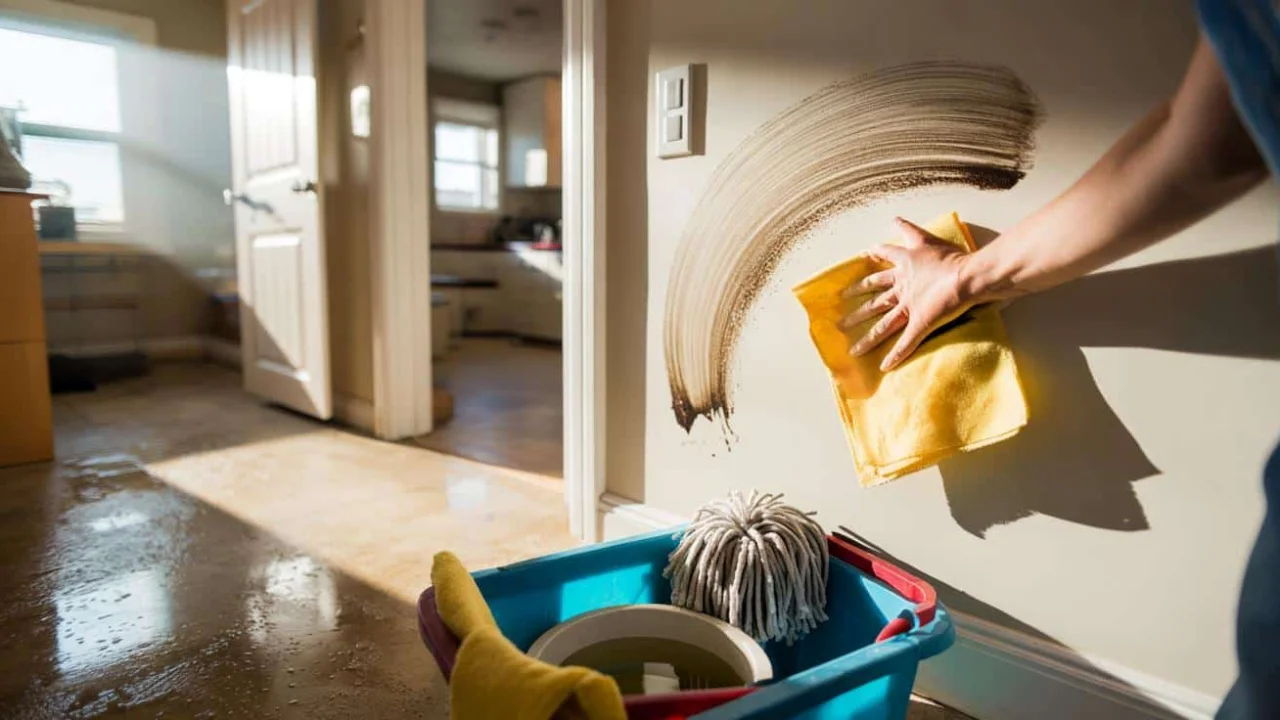
Last Tuesday morning, I stood in my kitchen feeling proud of my weekend cleaning marathon. The whole house smelled like lavender disinfectant, and I’d even organized the junk drawer. Then my neighbor knocked on the door, apologizing for the emergency but desperate to borrow paper towels for a coffee spill.

As she walked through my “spotless” hallway, she paused and gently pointed to a streak on the wall. “Oh, you missed a spot there.” I looked where she was pointing and felt my stomach drop. There was a brownish smear right at shoulder height – exactly where I’d been wiping with my trusty cleaning cloth just hours earlier.
That’s when it hit me: my cleaning tools weren’t cleaning at all. They were spreading dirt around like a twisted game of hide-and-seek, and I’d been playing it for months without realizing.

The dirty truth about “clean” tools
Once you see it, you can’t unsee it. That sponge you’ve been using for weeks isn’t just “broken in” – it’s a bacteria playground. The mop that smells slightly sour isn’t adding character to your cleaning routine; it’s depositing funk on every surface it touches.
Dr. Sarah Mitchell, a microbiologist from the University of Arizona, explains it simply: “Every time you use a contaminated cleaning tool, you’re essentially finger-painting with germs and grime across your surfaces.”

The problem isn’t that we’re lazy cleaners. Most of us are actually trying really hard. The issue is that we’ve developed habits that work against us. We dip the same mop in increasingly murky water, room after room. We rinse sponges under cold water for three seconds and call them clean. We use the same cloth for mirrors, counters, and toilets.
Here’s what really opened my eyes: I started paying attention to my cleaning water. After “cleaning” just my kitchen and living room, the bucket looked like chocolate milk. Yet I kept dunking my mop in it, wringing it out, and spreading that contaminated mixture on my bathroom floor.

Which tools are the worst offenders?
Not all cleaning tools are created equal when it comes to spreading dirt around. Some are practically designed to become germ highways, while others can stay relatively clean with proper care.
| Cleaning Tool | Contamination Risk | Why It Spreads Dirt | Clean-Up Frequency |
|---|---|---|---|
| Kitchen sponges | Very High | Absorbs and holds bacteria, food particles | Replace every 2-3 days |
| String mops | High | Difficult to rinse thoroughly | Wash after each use |
| Cleaning cloths | Medium | Cross-contamination between surfaces | Wash in hot water weekly |
| Vacuum filters | Medium | Clogs reduce suction, spreads dust | Clean monthly |
| Toilet brushes | High | Obvious reasons | Replace every 3-6 months |
The biggest culprits are sponges and mops. Kitchen sponges are particularly nasty because they stay damp, creating perfect conditions for bacterial growth. “A used kitchen sponge can harbor more bacteria per square inch than a toilet seat,” notes cleaning expert Maria Rodriguez, who’s consulted for major cleaning product companies for over 15 years.

Here are the most common ways cleaning tools spread dirt:
- Using the same cloth for multiple surfaces without rinsing
- Mopping with increasingly dirty water
- Not letting tools dry completely between uses
- Storing wet tools in closed spaces
- Using expired or worn-out cleaning products
- Cross-contaminating between bathroom and kitchen tools
The real-world impact of dirty cleaning tools
This isn’t just about aesthetics or feeling gross. When cleaning tools spread dirt instead of removing it, real problems follow. Families with small children or elderly members face higher risks of illness from bacteria and allergens that get redistributed rather than eliminated.
Take my friend Jessica’s experience. She couldn’t figure out why her toddler kept getting stomach bugs every few weeks. The pediatrician suggested looking at household hygiene practices. Turns out, Jessica was using the same sponge for dishes and countertops – for over a month. Once she switched to fresh sponges every few days and separate tools for different areas, the stomach issues stopped.
Professional cleaner Mark Thompson, who’s worked in commercial cleaning for 12 years, puts it bluntly: “I’ve seen offices where the cleaning crew made things dirtier by using contaminated tools. Spreading flu viruses, making allergies worse, even causing skin irritation. It’s more common than people think.”
The financial impact adds up too. When you’re not actually cleaning, you’re wasting money on cleaning products that can’t overcome dirty tools. You might end up calling professional cleaners, replacing furniture that gets stained, or dealing with health issues that could have been prevented.
Here’s what changed my routine completely:
- I started using two buckets for mopping – one with cleaning solution, one with rinse water
- Kitchen sponges get tossed every three days, no exceptions
- Different colored cloths for different rooms (blue for bathrooms, yellow for kitchen, white for everything else)
- Cleaning cloths go straight into hot water wash after each use
- I actually time how long I rinse tools – at least 30 seconds under hot water
The difference was immediate and embarrassing. Surfaces that I thought were clean suddenly looked actually clean. That sticky feeling on bathroom floors disappeared. The weird smell in my kitchen that I’d blamed on old pipes? Gone.
“The hardest part is changing habits you’ve done automatically for years,” explains organizational psychologist Dr. Jennifer Walsh. “But once people see the difference, they usually can’t go back to the old way.”
Now I understand why professional cleaning services go through so many supplies. They’re not wasteful – they’re preventing the exact problem I’d been creating for months. Fresh tools, clean water, and proper technique make cleaning actually work instead of just moving dirt around in circles.
FAQs
How often should I replace my kitchen sponges?
Replace kitchen sponges every 2-3 days, or immediately if they start smelling or look discolored. Daily use makes them bacterial breeding grounds quickly.
Can I just rinse my cleaning cloth and keep using it?
A quick rinse isn’t enough to remove bacteria and soil particles. Wash cleaning cloths in hot water after each use, or at minimum, use separate cloths for different areas.
What’s the two-bucket method for mopping?
Use one bucket with your cleaning solution and another with clean rinse water. Dip your mop in the cleaning bucket, mop the area, then rinse in the clean water before repeating.
How do I know if my cleaning tools are spreading dirt?
Look for streaks on walls at the height you clean, film on surfaces you just wiped, or that sticky feeling on floors right after mopping. These are classic signs of contaminated tools.
Is it worth buying expensive cleaning tools?
Quality matters more than price. Microfiber cloths, for example, are more effective and can be washed many times. But even expensive tools need proper cleaning and replacement when they’re worn out.
What’s the biggest mistake people make with cleaning tools?
Using the same tool for everything without cleaning it between uses. Your toilet brush should never touch your kitchen counter, and your dish sponge shouldn’t clean your bathroom sink.
About the Author
