Sarah stared at her fuel gauge in disbelief. Her five-year-old hybrid sedan was supposed to be efficient, but with petrol prices climbing again, even her “eco-friendly” car was draining her wallet faster than expected. She’d been eyeing newer hybrids, but they all seemed to promise the same incremental improvements—better by a few miles per gallon, maybe a touch more responsive, but nothing revolutionary.
What Sarah doesn’t know yet is that Honda is about to completely rewrite the hybrid playbook. The Japanese automaker isn’t just tweaking their existing formula—they’re starting from scratch with a groundbreaking approach that could make her current hybrid look like yesterday’s technology.
Honda’s new hybrid platform represents the biggest leap forward in hybrid technology we’ve seen in years, and it’s coming sooner than you might think.

Why Honda’s New Platform Changes Everything
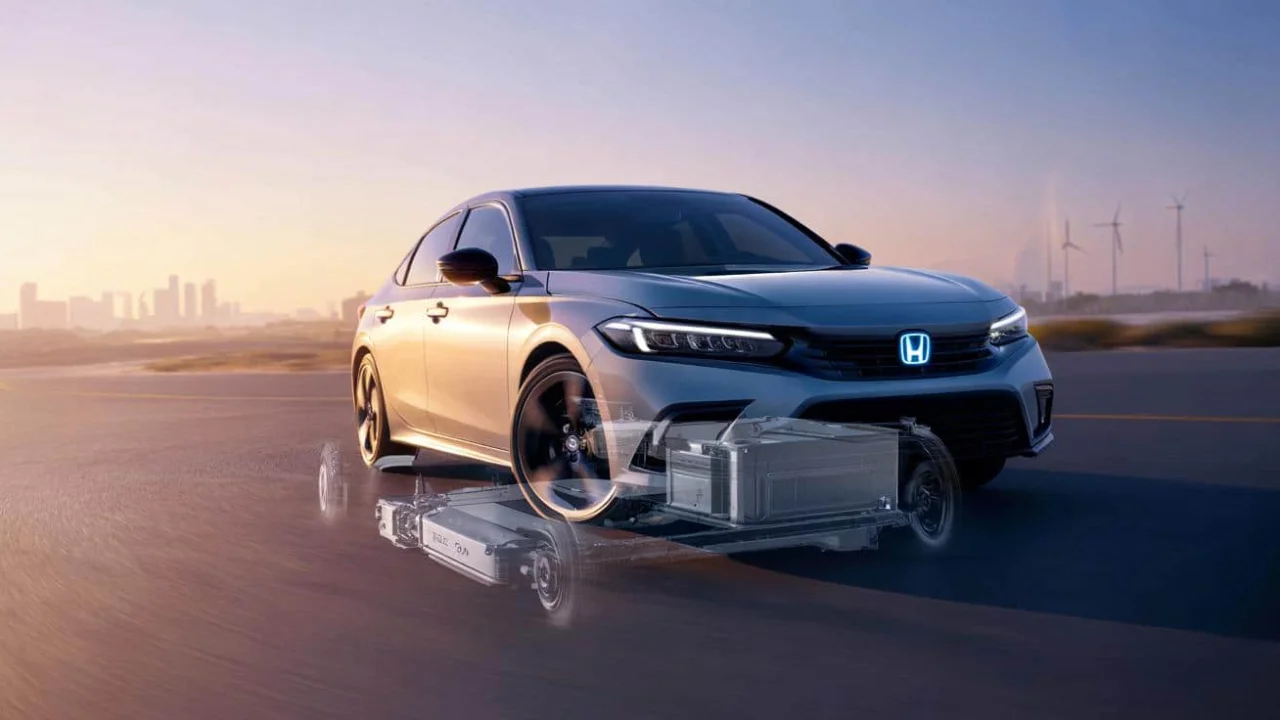
Honda is quietly preparing a revolution that begins with the 2026 Civic, but the implications stretch far beyond one model. The company has developed what they’re calling a “Global Small Modular” platform—essentially a clean-sheet design built specifically for electrified powertrains rather than adapted from conventional petrol engines.
Here’s what makes this Honda hybrid platform genuinely different: instead of shoehorning hybrid components into an existing chassis, engineers designed everything around the battery pack and electric motors from day one. The battery sits centered in the floor, the track is wider, and every mounting point has been optimized for the unique demands of hybrid power.

“We’re not just making the existing car lighter—we’re fundamentally changing how it drives and feels,” explains one Honda engineer familiar with the project. “When you center the battery in the floor and redistribute weight properly, the whole character of the car transforms.”
This isn’t just about fuel economy, though that’s certainly part of it. Honda is targeting a staggering 90-kilogram weight reduction compared to today’s equivalent hybrid Civic, all while maintaining the equipment levels and safety features buyers expect. That’s like removing an entire passenger from the car.

The Technical Breakthrough Behind the Numbers
Losing 90 kilograms from a modern car sounds simple until you consider what today’s vehicles carry. Buyers want large infotainment screens, comprehensive safety systems, premium audio, and substantial crash protection. Honda’s engineers had to get creative:
| Component Area | Weight Saving Method | Estimated Reduction |
|---|---|---|
| Chassis Structure | High-strength steel in key areas | ~25 kg |
| Hybrid Hardware | Compact motors and inverters | ~20 kg |
| Wiring & Electronics | Reduced duplication, smart routing | ~15 kg |
| Seating System | Lighter frames, optimized structure | ~12 kg |
| Miscellaneous | Various small improvements | ~18 kg |
The hybrid powertrain itself receives significant updates. Honda’s proven e:HEV system—which pairs a 2.0-liter naturally aspirated engine with an electric motor—evolves with higher compression ratios and reduced internal friction. The cooling system becomes more efficient, and revised software manages power delivery more intelligently.

“The target is sub-4.5 liters per 100 kilometers on the WLTP cycle,” notes an industry analyst tracking Honda’s development. “That’s genuinely impressive for a family-sized car without a plug-in capability.”
But efficiency gains mean nothing if the car becomes boring to drive. Honda’s weight reduction strategy specifically targets improving the driving experience:
- Better weight distribution creates more neutral handling
- Reduced mass at the front end improves steering response
- The structural battery pack adds chassis rigidity
- Lower overall weight enhances acceleration and braking
The platform will eventually support hybrid, plug-in hybrid, and full-electric versions across multiple body styles. Think five-door hatch for Europe, sedan variants for Asia and North America, and potentially sportier derivatives down the line.
What This Means for Real Drivers
Beyond the impressive technical specifications, Honda’s new hybrid platform addresses several pain points that current hybrid owners face daily. The weight reduction directly translates to better real-world performance—not just on paper, but in the kind of situations where current hybrids sometimes feel sluggish.
Merging onto highways becomes more confident. The electric motor provides immediate torque, but now it doesn’t have to work against as much mass. City driving becomes more efficient as the lighter car requires less energy to accelerate from stops. Even highway cruising improves as the engine doesn’t work as hard to maintain speed.
“Current hybrid drivers often complain about that disconnected feeling, especially during acceleration,” explains an automotive journalist who’s driven prototypes. “Honda’s new approach should feel much more integrated and responsive.”
The platform’s modular nature means improvements won’t be limited to the Civic. Honda plans to extend this technology across their compact and mid-size lineup, potentially revolutionizing models like the Accord and CR-V as well.
For buyers, this represents a genuine choice between incremental improvements from other manufacturers and Honda’s more radical approach. The 2026 launch timeline means these benefits arrive relatively soon, not in some distant future.
Pricing remains unconfirmed, but Honda’s track record suggests they’ll position the new hybrid competitively against current alternatives. The question becomes whether buyers will appreciate the more substantial changes over familiar incremental updates from competitors.
The environmental impact extends beyond just fuel efficiency. Lighter cars require less energy to manufacture and transport. The modular platform approach also reduces development costs and complexity, potentially making advanced hybrid technology more accessible across Honda’s range.
As Sarah and millions of other drivers evaluate their next vehicle purchase, Honda’s new hybrid platform offers something genuinely different—not just better numbers on a spec sheet, but a fundamentally reimagined approach to what a hybrid car can be.
FAQs
When will Honda’s new hybrid platform be available?
The technology debuts with the 2026 Civic, with other models following in subsequent years.
How much weight does the new platform actually save?
Honda targets approximately 90 kilograms of weight reduction compared to current equivalent hybrid models.
Will this new platform work with plug-in hybrids too?
Yes, the platform is designed to accommodate hybrid, plug-in hybrid, and eventually full-electric powertrains.
Does the weight reduction compromise safety features?
No, Honda maintains all current safety equipment and crash protection standards while achieving the weight savings through more efficient engineering.
What fuel economy improvements can buyers expect?
Honda is targeting sub-4.5 liters per 100 kilometers on the WLTP cycle, representing a significant improvement over current models.
Which other Honda models will use this platform?
While starting with the Civic, Honda plans to extend this modular platform across their compact and potentially mid-size vehicle lineup.
About the Author
