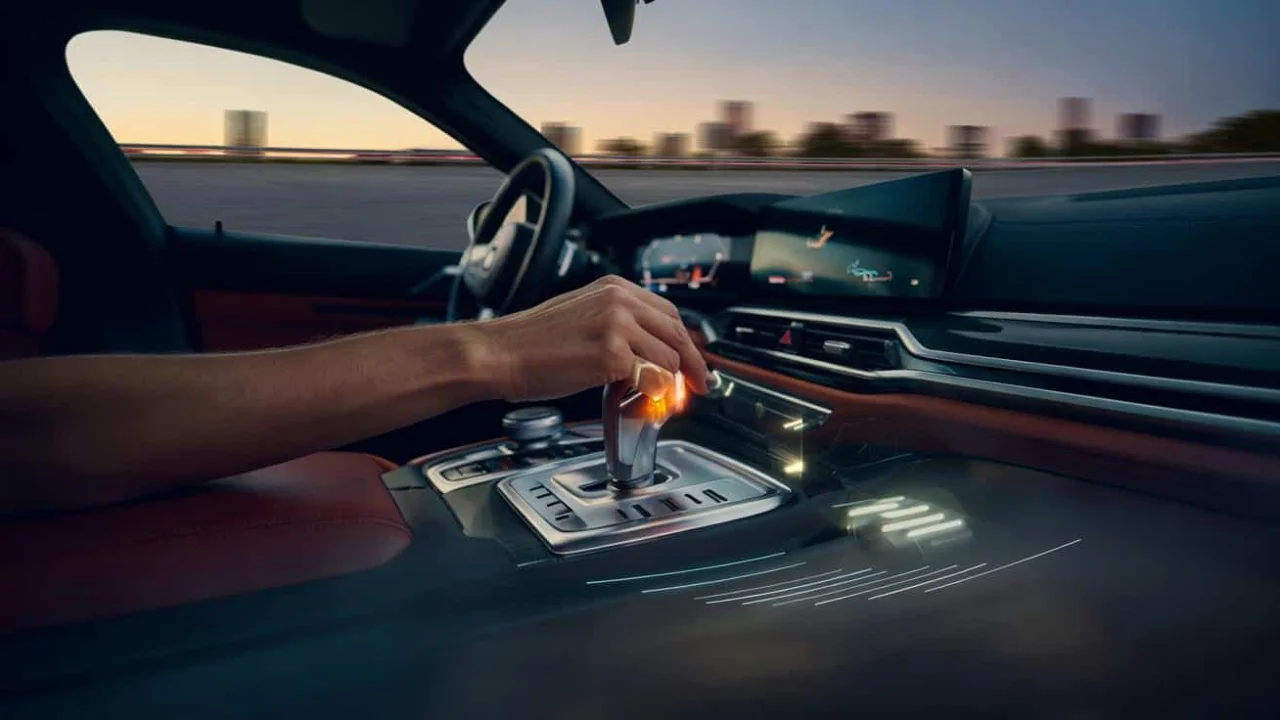
Sarah pressed the clutch pedal and yanked the gear lever toward second, but something felt wrong. The engine screamed as she lifted her foot too quickly, and a horrible grinding noise filled her BMW M3. She’d just cost herself a weekend at the track and probably a few hundred dollars in repairs.

Stories like this happen every day to driving enthusiasts who love manual transmissions but occasionally make costly mistakes. Even experienced drivers sometimes miss-shift under pressure, leading to damaged synchros, blown clutches, or worse.
Now BMW thinks it has found the perfect solution: a revolutionary manual gearbox that keeps all the fun of shifting yourself while quietly preventing the mistakes that destroy engines and transmissions.

Why BMW’s Smart Manual Could Change Everything
While most automakers are abandoning manual transmissions entirely, BMW is taking a completely different approach. Instead of giving up on the three-pedal experience, they’re making it smarter and more forgiving.
The BMW manual gearbox innovation uses electronic systems as an invisible safety net. You still control every gear change, but the car quietly refuses moves that could damage expensive components.

“We’re not trying to replace the driver’s skill,” explains a BMW development engineer. “We’re just making sure that a moment of distraction or inexperience doesn’t result in a catastrophic failure.”
This isn’t about turning a manual into a disguised automatic. BMW’s system preserves the mechanical connection between driver and drivetrain while adding layers of protection that work behind the scenes.

The foundation already exists in current BMW M cars, which offer auto rev-matching on downshifts. But engineers are now expanding this concept into something far more comprehensive and intelligent.
How BMW’s Revolutionary System Actually Works
The heart of BMW’s smart manual gearbox lies in an extensive sensor network that monitors everything happening in real-time. These sensors track dozens of variables simultaneously to build a complete picture of what the car and driver are doing.

Here’s what the system monitors constantly:
- Gear lever position and movement speed through the shift gate
- Clutch pedal travel and precise engagement point
- Engine RPM and current load conditions
- Vehicle speed and individual wheel rotation rates
- Transmission fluid and clutch temperatures
- Accelerator pedal position and rate of change
All this data flows into a dedicated control unit that calculates which gear changes are safe at any given moment. The computer works fast enough to intervene before damage occurs.
| Traditional Manual | BMW Smart Manual |
|---|---|
| Driver controls everything | Driver controls with electronic oversight |
| Mistakes cause immediate damage | System prevents harmful shifts |
| No rev-matching assistance | Automatic rev-matching available |
| Clutch wear from poor technique | System optimizes clutch engagement |
| Money-shift risk always present | Computer blocks dangerous downshifts |
When the system detects a potentially harmful shift attempt, it doesn’t take control away from the driver. Instead, it subtly resists the gear change or temporarily modifies engine power to prevent damage.
“The beauty is that most drivers won’t even notice the system working,” notes an automotive engineer familiar with the project. “It feels like you’re just becoming a better driver.”
The BMW manual gearbox also learns your driving patterns over time. It can distinguish between aggressive track driving and gentle street cruising, adjusting its intervention thresholds accordingly.
What This Means for Driving Enthusiasts
BMW’s intelligent manual transmission could reshape how we think about performance driving. For the first time, you could enjoy the pure engagement of a manual gearbox without constantly worrying about expensive mistakes.
Track day participants stand to benefit enormously. The system would prevent costly money-shifts during intense driving sessions, where adrenaline and concentration lapses often lead to disasters.
New drivers learning on manual transmissions would also find this technology invaluable. The system could help them develop proper shifting technique without the fear of breaking something during the learning process.
“This could actually save the manual transmission,” observes a veteran automotive journalist. “By making manuals more approachable and less risky, BMW might convince more people to choose the stick shift option.”
The technology also promises to extend transmission lifespan significantly. By preventing the harsh shifts and over-revs that normally wear out clutches and synchros, owners could see their manual gearboxes lasting much longer than traditional units.
Cost implications look positive too. While the initial system might add some expense to new cars, the reduced maintenance and repair costs could more than offset the upfront investment.
BMW plans to introduce this technology gradually, starting with their M performance cars before potentially expanding to other models. The company sees this as a way to differentiate their manual offerings in a market where most competitors are simply giving up.
For purists worried about electronic interference, BMW is reportedly planning multiple settings. Drivers could choose full protection for daily driving, reduced intervention for track use, or even a “trust me” mode that provides minimal electronic oversight.
The broader automotive industry is watching BMW’s approach carefully. If successful, other manufacturers might adopt similar technologies rather than abandoning manual transmissions entirely.
“BMW is proving that innovation doesn’t always mean elimination,” concludes another industry expert. “Sometimes the best solution is making existing technology smarter rather than replacing it completely.”
FAQs
Will BMW’s smart manual feel different from a regular manual transmission?
The system is designed to be nearly invisible during normal driving, so most drivers won’t notice any difference in feel or operation.
Can drivers turn off the electronic protection systems?
BMW plans to offer multiple settings, including options for reduced intervention or minimal electronic oversight for experienced drivers.
When will this technology be available in BMW cars?
BMW expects to introduce the system gradually, starting with M performance models before expanding to other manual-equipped vehicles.
Does the smart manual transmission cost more than a regular manual?
While initial costs may be higher, the reduced maintenance and repair expenses could offset the upfront investment over time.
Will other car manufacturers adopt similar technology?
The automotive industry is closely watching BMW’s approach, and successful implementation could inspire other brands to develop their own smart manual systems.
Does this system work on both street driving and track use?
Yes, the system adapts to different driving conditions and can distinguish between gentle street driving and aggressive track sessions.
About the Author