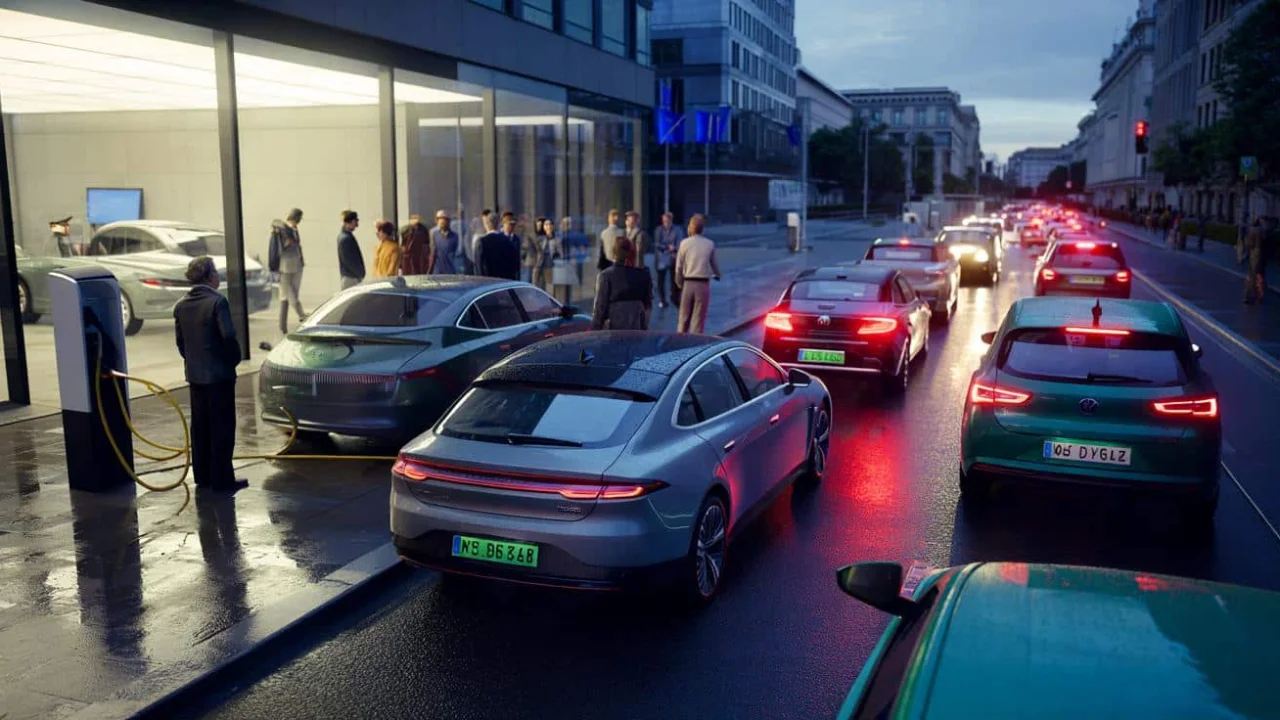
Maria Fernández remembers the exact moment she decided against buying an electric car. Standing at a charging station in rural Spain last summer, watching other drivers wait forty minutes for a turn, she calculated the math. Her old diesel could make the 600-kilometer drive to her parents’ house in one go. The electric alternative would need two stops, adding hours to her journey.

“I wanted to do the right thing for the environment,” she says, “but I also needed a car that actually worked for my life.” Maria’s story captures why Europe is suddenly having second thoughts about its ambitious electric car mandate 2035.
What seemed like a done deal just two years ago is now sparking heated debates in Brussels. The promise of a gasoline-free future by 2035 is running into the messy reality of everyday life.

When Green Dreams Meet Real-World Problems
The European Union’s electric car mandate 2035 was supposed to be the flagship policy of the continent’s climate strategy. The rule was simple and bold: no new petrol or diesel cars sold after that date, period.
But cracks are showing in that certainty. Italy, Poland, and Hungary are leading a growing rebellion, arguing that the all-electric approach ignores economic realities that millions of families face every day.

“People are not ready to switch en masse to battery-only cars, and national governments know it could cost them at the ballot box,” explains automotive policy analyst Henrik Müller. His research shows that public support for the mandate drops significantly when voters learn about the practical challenges.
The opposition isn’t just coming from traditionally car-loving countries. Even Germany, home to BMW and Mercedes, is quietly expressing concerns about the rigid timeline.

These governments point to three major obstacles that the original electric car mandate 2035 didn’t adequately address. First, the upfront cost remains prohibitive for average households. While luxury electric models grab headlines, affordable options that match the price and range of conventional cars remain scarce.
Second, charging infrastructure outside major cities tells a frustrating story. Rural areas and smaller towns often have sparse networks, making long-distance travel a strategic challenge rather than a simple journey.

Third, range anxiety persists despite technological improvements. Many drivers still worry about being stranded, especially during cold weather when battery performance drops.
The Numbers Behind the Resistance
Recent data reveals why the electric car mandate 2035 is facing pushback across Europe. The statistics paint a picture that’s more complex than the original optimistic projections.
| Country | Electric Car Market Share 2024 | Public Charging Points per 100km | Average EV Price vs Conventional |
|---|---|---|---|
| Germany | 18.4% | 52 | +€8,500 |
| France | 16.8% | 48 | +€7,200 |
| Italy | 8.2% | 31 | +€9,100 |
| Poland | 4.1% | 18 | +€10,800 |
| Spain | 11.3% | 35 | +€8,900 |
These figures tell a story of uneven progress. While some markets are advancing rapidly, others lag significantly behind the targets needed to make the electric car mandate 2035 viable.
Car manufacturers are also recalibrating their strategies. Several major European automakers have quietly delayed battery plant projects or scaled back their electric vehicle production targets.
“The market demand simply isn’t matching the forecasts we made during the post-pandemic boom,” admits a senior executive at a major German automaker, speaking on condition of anonymity. “We’re having to be more realistic about timelines.”
Key challenges facing the industry include:
- Supply chain constraints for critical battery materials
- Higher than expected production costs
- Consumer resistance to premium pricing
- Slower charging infrastructure rollout
- Competition from Chinese manufacturers
The shift in sentiment is particularly striking given how confident European leaders sounded when they first announced the electric car mandate 2035. Back then, rising fuel prices and generous subsidies created perfect conditions for electric vehicle adoption.
What This Means for Drivers and the Future
The growing resistance to the electric car mandate 2035 will have real consequences for millions of European drivers, carmakers, and the broader fight against climate change.
For consumers, the uncertainty creates a difficult decision point. Should they wait for better electric options, or buy a conventional car while they still can? Many are choosing to delay purchases altogether, creating a market slowdown that’s hurting both traditional and electric vehicle sales.
“I’m stuck in limbo,” says Thomas Wagner, a construction worker from Austria. “I need a new truck for my business, but I can’t afford electric, and I don’t know if diesel will be banned soon.”
Carmakers face their own dilemma. Massive investments in electric technology can’t be easily reversed, but consumer demand isn’t materializing as quickly as hoped. Some companies are hedging their bets by keeping conventional engine development alive longer than originally planned.
Environmental groups worry that any weakening of the electric car mandate 2035 could derail Europe’s climate goals. Transportation accounts for roughly a quarter of the continent’s carbon emissions, and passenger cars represent a significant portion of that total.
“Every delay in the transition means more emissions and less chance of meeting our climate targets,” warns Dr. Sarah Matthews, a transportation policy expert at the European Environmental Bureau.
However, pragmatic voices argue that a forced transition could backfire politically. If the mandate becomes too unpopular, future governments might scrap it entirely rather than modify it.
The compromise solutions being discussed include allowing synthetic fuels for combustion engines, extending support for plug-in hybrids, or creating different timelines for different vehicle categories.
Some countries are pushing for a “technology neutral” approach that would focus on carbon emissions rather than dictating specific technologies. Under this model, any vehicle that meets strict emission standards could be sold, whether it’s electric, hydrogen-powered, or runs on synthetic fuels.
The debate over the electric car mandate 2035 reflects a broader challenge facing Europe: how to balance environmental ambitions with economic and social realities. The continent’s leaders are learning that transforming entire industries requires more than just setting deadlines.
As the discussions continue in Brussels, one thing is clear: the road to an electric future will be bumpier and more complex than anyone originally imagined. The question isn’t whether Europe will eventually transition away from conventional cars, but how quickly that transition can happen without leaving millions of drivers behind.
FAQs
What is the European electric car mandate 2035?
It’s a law requiring all new cars sold in the EU to be emissions-free by 2035, effectively banning new petrol and diesel car sales.
Which countries are opposing the mandate?
Italy, Poland, and Hungary are leading the opposition, with several other countries expressing concerns privately.
Why are people resisting electric cars?
Main concerns include high prices, limited charging infrastructure, range anxiety, and longer charging times compared to refueling.
Could the 2035 deadline be changed?
Possibly, though it would require agreement from EU member states and could face strong resistance from environmental groups.
What alternatives are being discussed?
Options include allowing synthetic fuels, extending hybrid vehicle sales, or creating different timelines for different types of vehicles.
How will this affect car prices?
Uncertainty about the mandate could keep both electric and conventional car prices volatile as manufacturers adjust their strategies.
About the Author