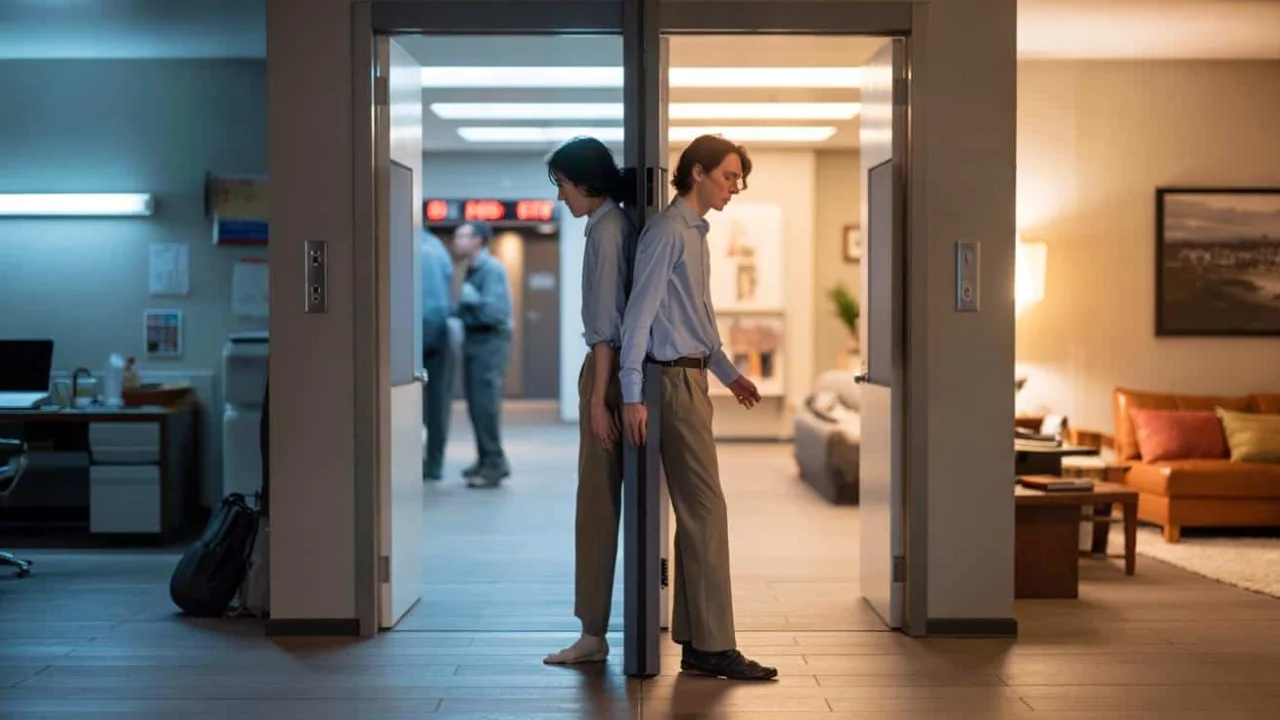
Sarah rushed from her home office to the kitchen, phone still pressed to her ear from a difficult client call. Her 8-year-old daughter was sitting at the counter with homework spread out, looking up expectantly for help with math problems. Without thinking, Sarah snapped, “Not now, I’m dealing with something important.” The little girl’s face fell, and Sarah immediately felt terrible. The stress from that phone call had followed her like a shadow, poisoning what should have been a sweet moment with her child.

We’ve all been there. One room holds frustration, the next holds someone we love, but somehow the frustration makes the journey too. What if there was a simple way to leave the tension behind at the doorway?
It turns out there is, and it takes just three seconds.
Why We Carry Emotional Baggage From Space to Space
Think about your last stressful day. You probably moved between rooms carrying invisible weight from each previous interaction. That tense email follows you to lunch. The difficult meeting shadows you into the break room. By evening, you’re layered with emotional residue from a dozen different spaces and conversations.
“Our nervous systems don’t have reset buttons,” explains Dr. Rebecca Martinez, a workplace wellness consultant. “When we rush between environments, we’re essentially dragging our stress response along like luggage.”

This phenomenon happens because our brains are wired to maintain continuity. The emotional state that kept us alert during a challenging presentation doesn’t automatically switch off when we walk to the cafeteria. Without conscious intervention, those elevated stress hormones keep circulating, affecting how we interact in the next space.
At home, this creates a domino effect. You walk from a frustrating work call directly into family time, bringing that tension with you. Your partner asks about dinner, and suddenly you’re irritated by a perfectly reasonable question. Your child wants to show you their drawing, but you’re still mentally arguing with your boss.

Environmental psychologists call these transitions “threshold moments” – brief opportunities to shift our internal state as we move between physical spaces. Most people waste these moments, but they’re actually powerful reset opportunities.
The Three-Second Room Transition Technique That Changes Everything
The solution is surprisingly simple. Room transition techniques don’t require meditation training or complex breathing exercises. Here’s what actually works:

- Stop at the doorway – Don’t rush through. Plant your feet.
- Take one deep breath – Inhale for three counts, exhale for four.
- Notice your body – Are your shoulders tight? Jaw clenched?
- Set an intention – Decide how you want to show up in this new space.
- Cross the threshold mindfully – Step forward with purpose.
“I started doing the doorway pause after particularly stressful meetings,” says workplace coach Michael Chen. “My team noticed the difference immediately. I wasn’t bringing that meeting energy into our brainstorming sessions anymore.”
This technique works because it interrupts the automatic stress transfer. That brief pause gives your nervous system time to downregulate. The conscious breathing activates your parasympathetic nervous system – your body’s natural calming response.
| Situation | Old Pattern | With Doorway Pause |
|---|---|---|
| Difficult work call to family dinner | Snappy, distracted | Present, engaged |
| Stressful commute to home | Irritated with family | Genuinely glad to be home |
| Heated meeting to next appointment | Carries tension forward | Fresh start with new energy |
| Bad news to social gathering | Mood affects everyone | Compartmentalized emotions |
The beauty of room transition techniques lies in their simplicity. You don’t need special training or equipment. Every doorway becomes a potential reset button for your emotional state.
How This Simple Shift Transforms Relationships and Work Performance
When people start practicing intentional room transitions, the ripple effects are remarkable. Families report fewer arguments that start “out of nowhere.” Colleagues notice improved meeting dynamics. Even customer service interactions improve when employees use doorway pauses between difficult calls.
“My wife said she could feel the difference before I even spoke,” shares marketing executive Lisa Thompson. “I’d come home from tough days, but instead of bringing that energy inside, I was actually present for our evening together.”
Children are particularly sensitive to these energy shifts. They can sense when a parent has mentally “arrived” versus when they’re physically present but emotionally somewhere else. The doorway pause helps create genuine presence, not just proximity.
At work, this technique prevents emotional contamination between meetings. Instead of carrying frustration from a budget discussion into a creative brainstorming session, you arrive with the mental state that serves the new situation.
The compound effect builds over time. Each conscious transition reduces overall stress accumulation. By the end of the day, you haven’t collected and carried eight hours’ worth of tension. You’ve processed and released it in small doses throughout the day.
“People think stress management has to be complicated,” notes stress researcher Dr. Amanda Foster. “Sometimes the most powerful interventions are the simplest ones. Three seconds of intentionality can change your entire day.”
The technique works equally well for positive transitions. Before entering a celebration or pleasant social gathering, the doorway pause helps you fully shift into appreciation and joy rather than remaining stuck in whatever mindset you had before.
Some people find it helpful to create visual or physical cues. Touching the doorframe, straightening your shoulders, or briefly closing your eyes can signal to your brain that you’re making an intentional transition.
The goal isn’t to suppress emotions or pretend everything is fine. It’s about choosing which emotions serve the space you’re entering. Sometimes you do need to bring concerns from one room to another – but now it’s a conscious choice rather than automatic emotional spillover.
FAQs
How long does it take to make doorway pausing a habit?
Most people see results immediately, but it takes about two weeks of consistent practice to make it automatic.
Does this work if other people are around?
Absolutely. A brief pause at a doorway looks natural and professional. No one will question a three-second moment of composure.
What if I forget to do the doorway pause?
Start with just one high-stress transition per day, like coming home from work. Once that becomes natural, add other doorways.
Can children learn room transition techniques?
Yes, kids often pick this up faster than adults. Teach them to “shake off” one room before entering another.
Does this technique work for virtual meetings too?
Definitely. Take a doorway pause before joining video calls, or create a similar ritual like closing your eyes for three seconds before clicking “join.”
What if the doorway pause makes me more aware of my stress?
That awareness is actually helpful. Once you notice tension, you can address it rather than unconsciously spreading it to others.
About the Author