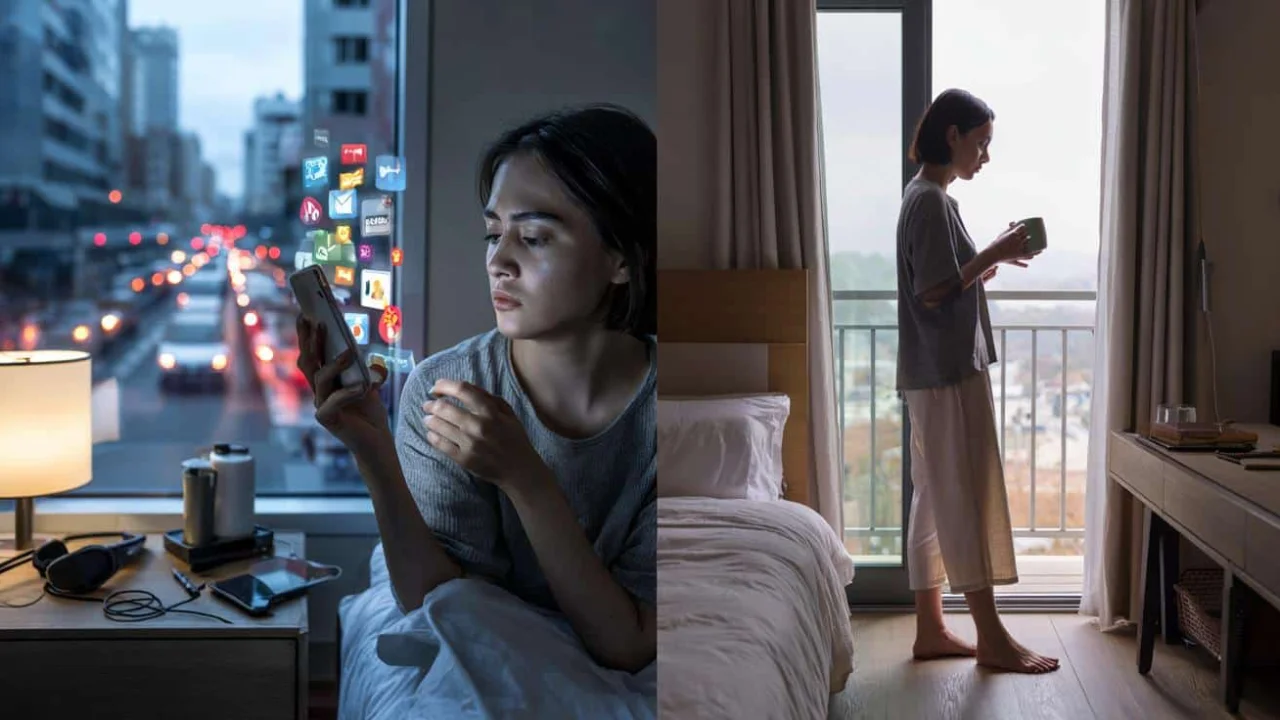
Maria wakes up at 6:30 AM and immediately reaches for her phone. Before her feet hit the floor, she’s already scrolling through 47 unread messages, three missed calls, and a calendar notification reminding her about the dentist appointment she forgot to reschedule. Her chest tightens. The day hasn’t even started, but her body already feels like it’s running a marathon.

By lunchtime, she realizes she hasn’t taken a single breath that wasn’t accompanied by checking something, responding to someone, or mentally rehearsing her next task. Her shoulders are permanently hunched forward, her jaw aches from clenching, and even choosing what to eat feels overwhelming. Sound familiar?
This is bodily overload in action, and there’s one surprisingly simple adjustment that can help reset your entire nervous system.

Why Your Body Feels Like It’s Drowning in Daily Life
Bodily overload isn’t about being physically exhausted from exercise or manual labor. It’s that suffocating feeling when your nervous system has been overstimulated to the point where everything feels too much. Your clothes feel scratchy, conversations feel draining, and even deciding what to watch on Netflix becomes an impossible task.
“Most people think they need to push through this feeling, but that’s exactly the opposite of what their body needs,” explains Dr. Sarah Chen, a neuropsychologist who specializes in stress responses. “When we’re in constant input mode, our nervous system never gets a chance to process and reset.”

The problem isn’t that we’re lazy or weak. It’s that modern life has eliminated almost every moment of true emptiness from our days. We wake up to notifications, eat while scrolling, walk while listening to podcasts, and fall asleep to background TV. Our brains are processing information every waking second.
Think about it: when was the last time you sat somewhere without any input? No phone, no music, no conversation, no mental to-do list running in the background. If you can’t remember, your nervous system is probably screaming for a break.

The One Small Change That Makes a Massive Difference
The adjustment that helps reduce bodily overload is deceptively simple: create intentional gaps of nothingness throughout your day. Not meditation, not breathing exercises, not mindfulness apps. Just pure, empty space where your brain gets to stop processing.
Here’s how it works in practice:

- Morning Buffer: Spend the first 10 minutes of your day without any input – no phone, no news, no music
- Transition Gaps: Take 60 seconds of complete silence between major activities
- Single-Tasking Windows: Do one thing at a time for specific periods throughout the day
- Evening Wind-Down: Create 15 minutes of input-free time before bed
“I started leaving my phone in another room for just 20 minutes each morning,” says Jennifer, a 41-year-old teacher. “Within a week, I noticed my shoulders weren’t permanently glued to my ears anymore.”
| Time of Day | Gap Duration | What to Avoid | Expected Benefit |
|---|---|---|---|
| Morning (first hour) | 10-15 minutes | Phone, news, emails | Calmer nervous system start |
| Mid-morning | 2-3 minutes | Multitasking | Reduced mental fog |
| Lunch break | 5-10 minutes | Screen time while eating | Better digestion, less afternoon crash |
| Evening commute | Entire journey | Podcasts, music, calls | Mental transition from work |
| Before bed | 15-20 minutes | All screens and stimulation | Improved sleep quality |
What Happens When You Actually Give Your Body Space
The effects of reducing bodily overload aren’t just psychological – they’re measurably physical. When your nervous system gets regular breaks from input, several things happen almost immediately.
Your cortisol levels start to normalize. That constant low-grade stress hormone that keeps your muscles tense and your mind racing finally gets a chance to drop. Many people notice their jaw unclenching and their breathing deepening within days.
“The first time I tried eating lunch without looking at my phone, I actually tasted my food,” laughs Marcus, a 29-year-old software developer. “I know that sounds ridiculous, but I realized I’d been mechanically consuming meals for months without actually experiencing them.”
Your decision-making capacity improves dramatically. When your brain isn’t constantly processing background information, it has more resources available for the choices that actually matter. That afternoon decision fatigue starts to fade.
Sleep quality often improves within the first week. Your mind isn’t trying to process the day’s information overload as you’re falling asleep, so you actually get restorative rest instead of that restless, dream-heavy sleep that leaves you tired in the morning.
Perhaps most importantly, you start to feel like yourself again. That underlying anxiety that everything is too much begins to lift. You remember what it feels like to be present in your own body instead of constantly trying to escape from overwhelming sensations.
“After three weeks of building in these gaps, my wife asked me what was different,” shares David, a 38-year-old father of two. “She said I seemed more available, even when we were just sitting together watching TV. I wasn’t fidgeting or mentally somewhere else.”
The key is starting smaller than you think you need to. Most people try to create hour-long meditation sessions and give up after two days. Instead, focus on tiny pockets of nothingness. Two minutes of sitting in your car before going into the grocery store. Thirty seconds of standing still after hanging up a work call. Walking to the mailbox without headphones.
Your body will tell you when it’s working. That tight feeling in your chest starts to loosen. Your shoulders drop away from your ears. Food starts tasting like something again instead of just fuel to get through the next task.
This isn’t about becoming a minimalist or rejecting technology. It’s about giving your nervous system permission to catch up with the pace of your life. When you reduce bodily overload through strategic emptiness, everything else becomes more manageable – not because your circumstances changed, but because your capacity to handle them expanded.
FAQs
How long does it take to feel the effects of reducing bodily overload?
Most people notice physical changes like reduced muscle tension within 3-5 days, and improved sleep quality within the first week.
What if I feel anxious during these empty moments?
That’s completely normal and actually a sign that your nervous system needs these breaks. Start with very short periods and gradually increase as the anxiety lessens.
Can I listen to calming music during these gaps?
For maximum benefit, try complete silence. Even peaceful music is still input that your brain has to process.
What’s the difference between this and meditation?
Meditation often involves active techniques or focused attention. These gaps are about complete mental passivity – no effort or technique required.
How do I remember to create these gaps throughout the day?
Link them to existing habits. Take a gap after finishing your morning coffee, before starting your car, or right after closing your laptop at the end of the workday.
What if my job requires constant availability?
Even 60 seconds between tasks can help. You’d be surprised how much relief your nervous system can get from tiny moments of emptiness scattered throughout a busy day.
About the Author