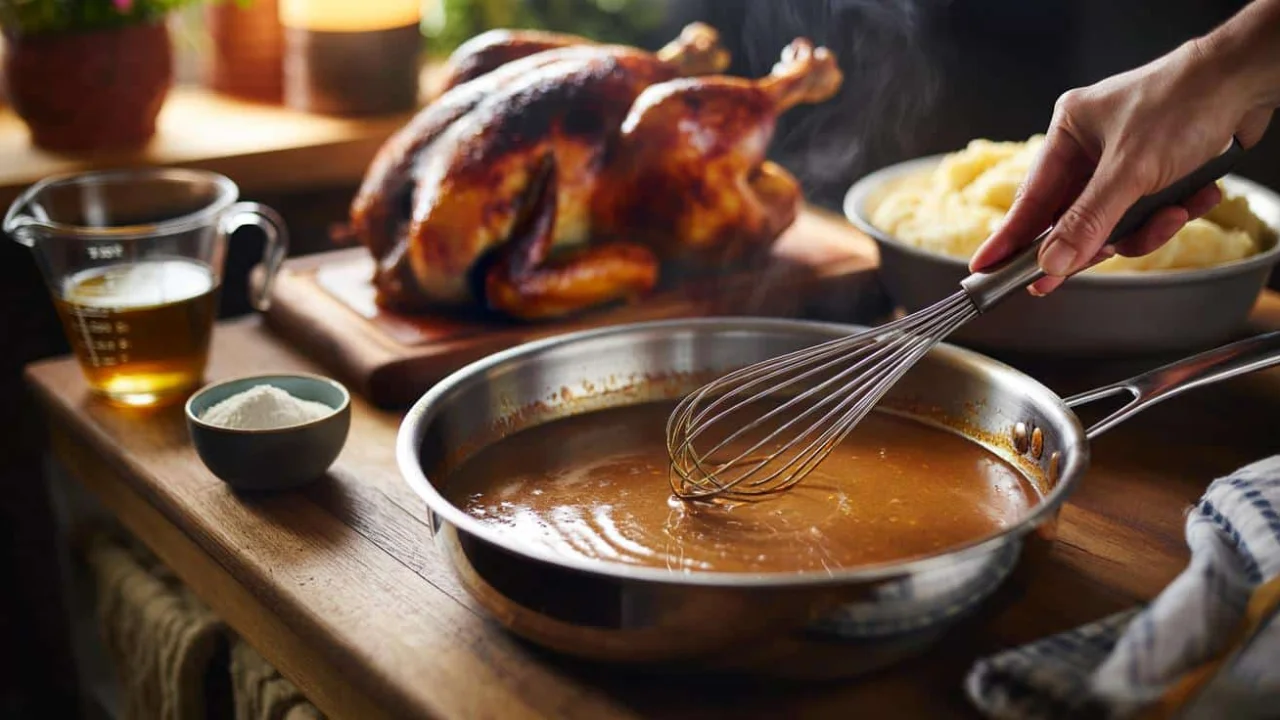
Last Tuesday night, I stared at the messiest roasting pan I’d seen in months. Bits of crispy chicken skin stuck to the bottom like glue, while a puddle of golden fat pooled in one corner. My first instinct was to fill it with hot soapy water and call it a night.

But something stopped me. Maybe it was the way those caramelized drippings caught the kitchen light, or how the whole pan still smelled like Sunday dinner at my grandmother’s house. Instead of reaching for the dish soap, I grabbed a wooden spoon and decided to try something that had intimidated me for years: making real homemade gravy from scratch.
What happened next felt like pure kitchen magic. After whisking flour into those drippings and slowly adding stock, I watched lumpy, suspicious-looking paste transform into the smoothest, most flavorful gravy I’d ever made. All from ingredients most people scrape into the trash.
Why pan drippings create the best homemade gravy
Those messy bits left behind after roasting meat aren’t just kitchen debris—they’re concentrated flavor bombs waiting to be transformed. Professional chefs call these browned bits “fond,” and they’re the secret to restaurant-quality gravy at home.
“Pan drippings contain all the proteins and sugars that have caramelized during cooking,” explains culinary instructor Sarah Mitchell. “When you deglaze that pan, you’re capturing flavors that took hours to develop.”
The fat in those drippings serves another crucial purpose. It coats flour particles as you whisk them together, preventing the dreaded lumps that plague so many homemade gravy attempts. This creates what French cooks call a roux—the foundation that will thicken your gravy without any grittiness.
Making homemade gravy this way also means you’re getting the exact flavor profile of whatever meat you just cooked. Roasted chicken drippings make chicken gravy that tastes like chicken, not the generic brown sauce you get from packets.
The step-by-step process that guarantees smooth results
Creating perfect homemade gravy from pan drippings doesn’t require any special equipment or advanced techniques. The key lies in understanding the process and taking your time with each step.
| Step | Action | Time | What to Watch For |
|---|---|---|---|
| 1 | Heat drippings in pan | 1-2 minutes | Fat should be warm but not smoking |
| 2 | Whisk in flour | 2-3 minutes | Mixture should bubble and smell nutty |
| 3 | Add liquid gradually | 5-8 minutes | Whisk constantly to prevent lumps |
| 4 | Simmer and season | 3-5 minutes | Gravy should coat the back of a spoon |
The most common mistake people make is rushing the liquid addition. Professional chef Marcus Rodriguez puts it simply: “Add your stock like you’re making friends with it—slowly, with lots of attention.”

Here’s exactly what works:
- Start with 2-3 tablespoons of drippings and equal amount of flour
- Cook the flour mixture until it smells toasty, about 2-3 minutes
- Add warm liquid (stock, broth, or even water) one splash at a time
- Whisk continuously until each addition is fully incorporated
- Season with salt, pepper, and any herbs that complement your meat
The texture should gradually change from thick paste to flowing sauce. If it gets too thick, add more liquid. Too thin? Let it simmer a bit longer to reduce.
How this transforms your everyday cooking
Making homemade gravy from pan drippings does more than just add sauce to your plate—it completely changes how you think about cooking. Suddenly, every roasted meal becomes an opportunity to create something special.
“Once people realize how easy this is, they start seeing potential everywhere,” says home cooking instructor Lisa Park. “Turkey drippings for Thanksgiving, pork drippings for weekend dinners, even the fond from seared steaks.”
The confidence boost is real too. There’s something deeply satisfying about transforming what looks like a mess into liquid gold. It’s the kind of skill that makes you feel like an actual cook, not just someone who follows recipes.
Your family will notice the difference immediately. Homemade gravy made from real drippings has a depth of flavor that store-bought versions can’t match. It tastes like the meat you just cooked, but concentrated and silky smooth.
Plus, you’re using every bit of what you paid for. Those drippings represent flavor that developed over hours of roasting. Throwing them away is like tossing liquid gold down the drain.
The technique works with virtually any roasted meat. Chicken drippings make classic poultry gravy. Beef drippings create rich, dark sauces perfect for mashed potatoes. Even pork drippings can be turned into creamy gravy that elevates simple weeknight meals.
Best of all, once you’ve mastered the basic technique, you can start experimenting. Add a splash of wine while deglazing the pan. Whisk in fresh herbs or a dollop of cream. The foundation stays the same, but the possibilities multiply.
“The first time I made perfect gravy from scratch, I felt like I’d unlocked a secret,” admits home cook Janet Williams. “Now I never waste those drippings, and my family thinks I’m some kind of gravy genius.”
FAQs
What if my gravy turns out lumpy despite following the steps?
Strain it through a fine-mesh sieve or use an immersion blender to smooth it out. Next time, add liquid even more gradually.
Can I make gravy if there isn’t much fat in my pan drippings?
Add a tablespoon of butter to supplement the fat before adding flour. You need enough fat to coat the flour properly.
How do I know when my roux is cooked enough?
It should smell nutty and toasted, not raw and floury. This usually takes 2-3 minutes of constant stirring over medium heat.
What liquid works best for homemade gravy?
Warm stock or broth gives the best flavor, but even warm water mixed with the drippings creates delicious gravy.
Can I make gravy ahead of time?
Yes, but you’ll need to reheat it gently and whisk in a little extra liquid as it tends to thicken when cooled.
Why does my gravy sometimes taste too salty?
Pan drippings concentrate the salt from seasoning your meat. Taste before adding any additional salt, and dilute with unsalted liquid if needed.
About the Author