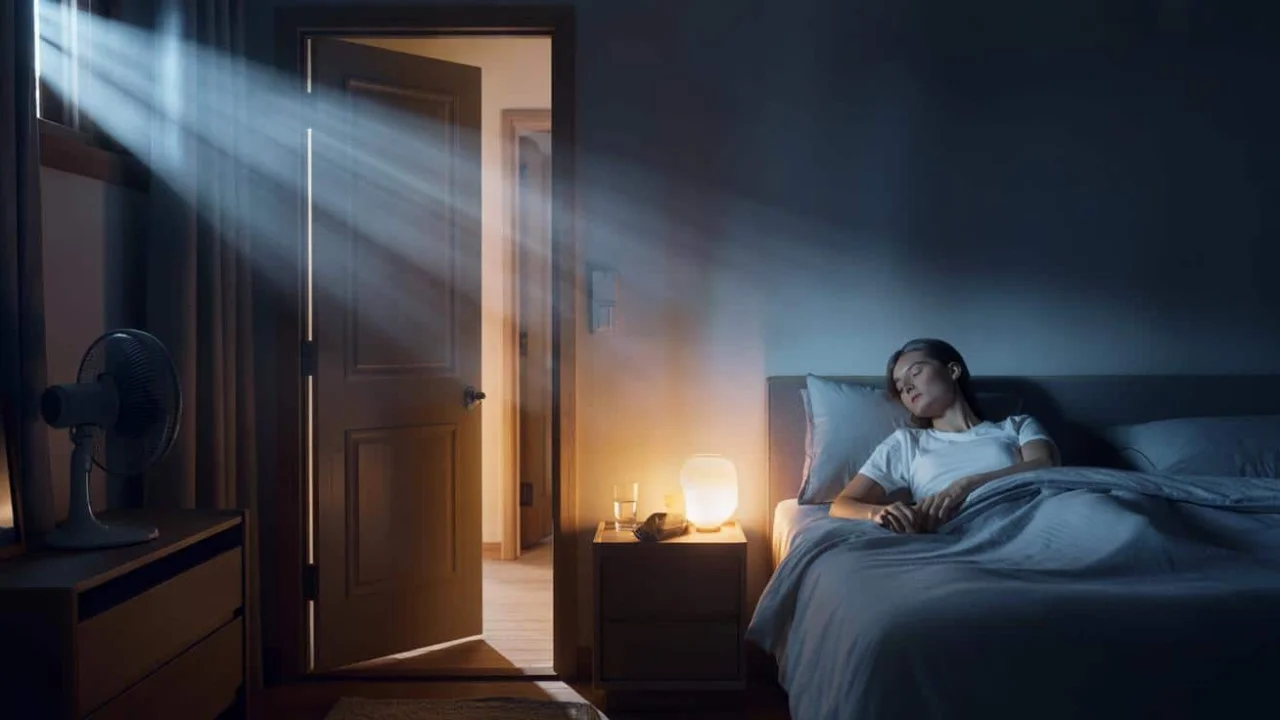
Sarah had tried everything. White noise machines, blackout curtains, expensive mattresses, even meditation apps that promised to quiet her racing mind. But every morning, she’d wake up feeling like she’d been hit by a truck, despite getting her full eight hours. Her bedroom was perfect – temperature controlled, pitch black, completely silent. So why did she feel worse after sleep than before it?

One particularly restless night, her cat knocked the bedroom door slightly open. Sarah was too tired to get up and close it. That morning, something felt different. Her head was clearer, her energy higher. She dismissed it as coincidence until it happened again the next night, and the next.
Sometimes the simplest solutions hide in plain sight. Sarah’s breakthrough wasn’t about buying more sleep gadgets – it was about opening a door.

Why keeping your bedroom door open during sleep changes everything
When you seal yourself into a bedroom for eight hours, you’re essentially creating a closed ecosystem. Every breath you take removes oxygen and adds carbon dioxide to the air around you. Your partner’s breathing, pets, even houseplants contribute to this invisible chemical shift that happens while you sleep.
Dr. Michael Chen, a sleep researcher at Stanford, explains: “Most people focus on temperature and noise when optimizing their bedroom, but they completely ignore air quality. Poor ventilation can sabotage even the most carefully designed sleep environment.”

Research from the Netherlands studied college students sleeping in small dorm rooms. When doors and windows stayed closed all night, carbon dioxide levels soared past 2,000 parts per million – well above the 1,000 ppm threshold where sleep quality starts to deteriorate. But when students left their bedroom door open during sleep, CO₂ levels dropped significantly and sleep tracking data showed marked improvement.
The difference wasn’t subtle. Students reported feeling more rested, performed better on cognitive tests the next day, and spent more time in deep sleep phases. The only change? An open door allowing fresh air to circulate.

The hidden costs of sleeping in stagnant air
High carbon dioxide levels don’t just make you feel groggy – they actively disrupt your sleep architecture. As CO₂ builds up throughout the night, your brain receives signals that oxygen availability is declining. This triggers more frequent micro-awakenings and prevents you from cycling properly through restorative deep sleep stages.
Here’s what happens when you sleep with your bedroom door open versus closed:

| Door Closed | Door Open |
|---|---|
| CO₂ levels: 1,500-2,500+ ppm | CO₂ levels: 800-1,200 ppm |
| More frequent wake-ups | Fewer sleep disruptions |
| Lighter sleep overall | More deep sleep phases |
| Morning grogginess common | Clearer morning cognition |
| Stale, warm air feeling | Fresher air circulation |
“The impact on sleep quality can be dramatic,” notes Dr. Lisa Rodriguez, a pulmonologist who studies indoor air quality. “Even healthy adults notice the difference when they improve bedroom ventilation. It’s one of the easiest sleep optimizations that most people never try.”
Beyond sleep quality, poor bedroom ventilation affects:
- Next-day cognitive performance and reaction time
- Mood and emotional regulation
- Morning headaches and that “thick-headed” feeling
- Long-term sleep debt accumulation
- Overall energy levels throughout the day
Simple strategies to improve bedroom airflow tonight
The easiest solution is opening your bedroom door just a crack – about 2-4 inches is usually sufficient. This small gap allows air to circulate between your bedroom and the rest of your home, diluting CO₂ buildup without major temperature changes.
If privacy or noise concerns make you hesitant about an open door, try these alternatives:
- Install a ceiling fan to improve air circulation within the room
- Crack a window slightly, even just an inch
- Use a door vent or install ventilation grilles
- Position a small fan to pull air under the door gap
- Consider upgrading to a bedroom with better natural ventilation
Temperature concerns often keep people from trying this approach, but proper airflow actually helps regulate bedroom temperature more efficiently. Moving air feels cooler and prevents hot spots from building up during the night.
Environmental scientist Dr. James Park explains: “Good ventilation doesn’t mean your room gets cold – it means the air stays fresh and comfortable. Most people are surprised how little temperature change occurs with improved airflow.”
Parents worry about noise from the hallway, but the benefits often outweigh minor sound increases. Many find that better sleep quality makes them less sensitive to small noises anyway.
Start with just one night of sleeping with your bedroom door open and pay attention to how you feel the next morning. Track your energy levels, mood, and any changes in morning grogginess. Many people notice improvements immediately, while others see gradual benefits over several nights.
For couples sharing a bedroom, this simple change can benefit both partners simultaneously. Better air quality improves sleep for everyone in the room, and many couples report reduced nighttime restlessness and fewer disruptions from their partner’s movements.
The bedroom door open sleep approach works particularly well in homes with central heating and cooling systems, where air already circulates throughout the house. Even in smaller apartments, the improved airflow between rooms makes a noticeable difference in overnight air quality.
Remember, quality sleep isn’t just about the hours you spend in bed – it’s about the environment supporting truly restorative rest. Sometimes the most effective solutions are the simplest ones hiding right in front of us.
FAQs
How much should I open my bedroom door for better sleep?
Just 2-4 inches is usually enough to improve airflow significantly without major privacy or temperature concerns.
Will opening my bedroom door make the room too cold?
Most people find minimal temperature change, and improved airflow actually helps regulate temperature more efficiently throughout the night.
What if I’m worried about noise from other parts of the house?
Start with just cracking the door slightly and see how it affects you – many people find better sleep quality makes them less sensitive to minor sounds.
How quickly will I notice improvements in my sleep?
Some people feel more rested after just one night, while others notice gradual improvements over a week of better bedroom ventilation.
Are there alternatives if I can’t leave my bedroom door open?
Yes – try cracking a window, using a ceiling fan, or installing door vents to improve air circulation in your bedroom.
Does this work in small apartments or studio spaces?
Even in smaller spaces, any improvement in air circulation helps reduce CO₂ buildup and can enhance sleep quality.
About the Author
