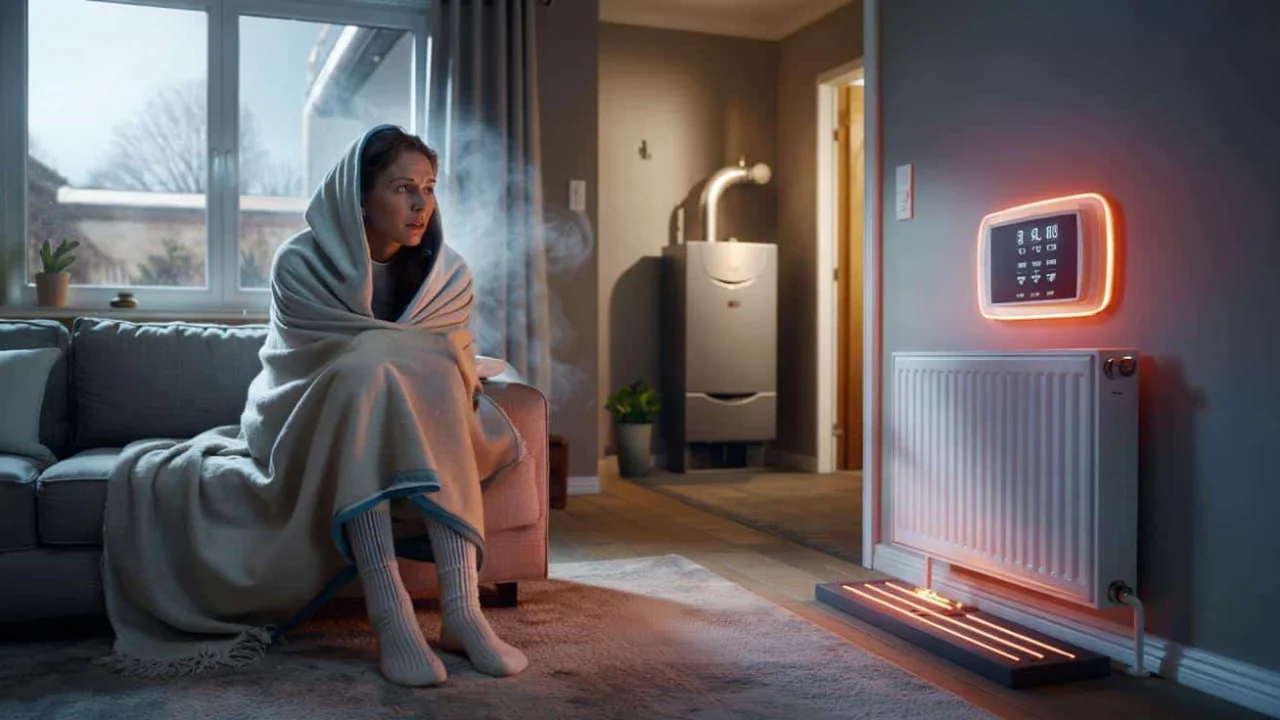
Sarah stared at her heating bill in disbelief. £180 for January alone. She’d cranked the thermostat up to 23°C most days, yet still found herself wearing two jumpers while working from her dining table. The radiators were burning hot to touch, the boiler worked overtime, but somehow the cold seemed to seep through every surface.

Her neighbor mentioned the same problem over the fence. “I’m practically living in my dressing gown,” she laughed, though neither found it particularly funny when the energy bills arrived.
This frustrating cycle affects millions of households each winter. You turn up the heat, watch the numbers climb, but never quite feel warm. The problem isn’t always your boiler or heating system—sometimes it’s your house itself fighting against you.

The hidden reasons your home won’t warm up
Home heating problems go far deeper than a faulty thermostat. Your house might be technically heated while still feeling like an icebox, and there are specific reasons why this happens.
Heat doesn’t just warm air—it warms surfaces. If your walls, windows, and floors stay cold, they’ll suck warmth right out of your body through radiation. You could have the air temperature at 22°C, but if you’re sitting next to a freezing exterior wall, you’ll still feel chilly.

“Most people think heating is just about air temperature,” says thermal comfort specialist Dr. James Mitchell. “But our bodies lose heat to cold surfaces around us. It’s like sitting next to an open fridge door—the air might be warm, but you feel cold.”
Poor insulation is the biggest culprit. Homes built before 1980 often have minimal wall insulation, single-pane windows, and gaps that let heat escape faster than your system can replace it. You’re essentially trying to fill a bucket with holes in the bottom.

But insulation isn’t the only issue. Drafts, uneven heat distribution, and even humidity levels play crucial roles in how warm you actually feel versus what your thermostat reads.
The main causes of persistent cold in heated homes
Understanding why your home stays cold despite a working heating system helps identify the real problem. Here are the most common issues:

- Poor wall insulation: Heat escapes through uninsulated external walls, especially in older properties
- Single-pane windows: Glass conducts heat away from your body even when room air is warm
- Air leaks: Gaps around doors, windows, and floorboards create drafts that make you feel colder
- Cold floors: Uninsulated floors, especially over garages or crawl spaces, radiate cold upward
- Uneven heating: Radiators not properly balanced or blocked by furniture create hot and cold spots
- Low humidity: Dry winter air makes you feel colder at the same temperature
Building surveyor Lisa Thompson explains: “I see homes where people have spent thousands on new boilers but ignored basic insulation. The boiler works perfectly—it’s just heating the outdoors through the walls.”
| Problem Area | Heat Loss Percentage | Typical Cost to Fix |
|---|---|---|
| Uninsulated walls | 35% | £2,000-£8,000 |
| Single-pane windows | 25% | £3,000-£15,000 |
| Roof/loft | 25% | £300-£1,500 |
| Floors | 10% | £800-£3,000 |
| Doors and drafts | 5% | £50-£500 |
The good news? You don’t need to fix everything at once. Some problems have quick, affordable solutions that make an immediate difference to comfort levels.
Who’s most affected and what you can do about it
This problem hits certain groups particularly hard. Older adults feel the cold more intensely and spend more time at home. Families with young children need consistently warm temperatures. People working from home suddenly notice cold spots they previously ignored during brief evening hours.
Renters face additional challenges since they can’t make major structural improvements. However, temporary solutions like thermal curtains, door draft excluders, and area rugs can help reduce heat loss without permanent modifications.
Energy consultant Mark Stevens suggests a systematic approach: “Start with the cheapest fixes first. Seal obvious drafts, add thick curtains, ensure radiators aren’t blocked by furniture. These might solve 50% of your comfort issues for under £200.”
For homeowners, prioritizing improvements based on impact makes sense. Loft insulation typically pays for itself within two years and can be installed in a day. Wall insulation costs more but eliminates the biggest source of heat loss in most homes.
Smart heating controls can also help by maintaining consistent temperatures room by room, rather than relying on a single thermostat in the hallway to control your entire home.
The key insight many homeowners miss is that comfort and efficiency work together. A properly insulated home feels warmer at lower temperatures, meaning you can actually turn the thermostat down while feeling more comfortable. The initial investment in insulation often pays for itself through reduced heating bills within 3-5 years.
Professional energy assessments can identify your home’s specific weak points. Many local councils offer subsidized assessments or grants for insulation improvements, particularly for older properties or lower-income households.
Remember, feeling cold at home despite high heating bills isn’t something you have to accept. With the right improvements, your home can feel genuinely warm and cozy—not just technically heated.
FAQs
Why do I feel cold even when my thermostat reads 20°C?
Cold walls, windows, and floors radiate coolness toward your body, making you feel chilly despite warm air temperature.
What’s the cheapest way to make my home feel warmer?
Start with draft-proofing around doors and windows, adding thick curtains, and ensuring furniture doesn’t block radiators.
Is it worth upgrading single-pane windows?
Yes, but it’s expensive. Double or triple glazing can reduce heat loss by up to 50% through windows, though payback takes 10-15 years.
How much should I expect to spend on proper insulation?
Loft insulation costs £300-£1,500, while cavity wall insulation ranges from £2,000-£4,000 for a typical home.
Can humidity affect how warm I feel?
Absolutely. Dry winter air makes you feel colder at the same temperature. Adding houseplants or a humidifier can help.
Should I get a professional energy assessment?
Yes, especially for older homes. Many councils offer subsidized assessments that identify exactly where you’re losing heat.
About the Author