Sarah stared at her kitchen counter in disbelief. The USB drive containing her presentation for tomorrow’s big meeting had been right there next to her coffee mug twenty minutes ago. Now it had vanished into thin air, along with her backup earbuds and the tiny screwdriver she needed to fix her glasses.

She frantically searched through the pile of mail, lifted couch cushions, and even checked the refrigerator. Sound familiar? If you’ve ever spent precious minutes hunting for keys, earrings, or charging cables that seem to disappear the moment you need them most, you’re not alone.
The truth is, most people lose small items not because they’re forgetful, but because their homes aren’t designed to store small objects effectively. Once you understand why this happens, you can finally break the cycle of constant searching and frustration.

Why Small Items Disappear in Every Home
Walk through any typical household and you’ll see the same storage disasters repeated in every room. Kitchen counters cluttered with loose change, random screws, and expired coupons. Bathroom drawers overflowing with single earrings, hair ties, and mystery pills that nobody remembers taking.
The bedroom dresser becomes a graveyard for charging cables, business cards, and that important flash drive you “put somewhere safe.” Meanwhile, the junk drawer in the hallway holds everything from batteries to rubber bands, all tangled together in one chaotic mess.

“Most people treat small objects like an afterthought,” explains home organization expert Maria Rodriguez. “They create elaborate systems for clothes and dishes, but tiny items just get tossed wherever there’s space.”
Small objects get lost because they lack designated homes. When something doesn’t have a specific place to belong, it ends up in temporary locations that quickly become permanent hiding spots. Your keys migrate from the counter to your jacket pocket to the bottom of your purse, never establishing a consistent location.

The problem compounds when multiple family members contribute to the chaos. One person’s paperclip becomes mixed with another person’s hair elastic, creating an archaeological dig site that nobody wants to sort through.
Smart Storage Solutions That Actually Work
The key to keeping track of small items is creating specific, visible storage systems that make sense for your daily routines. Here are the most effective strategies that professional organizers swear by:

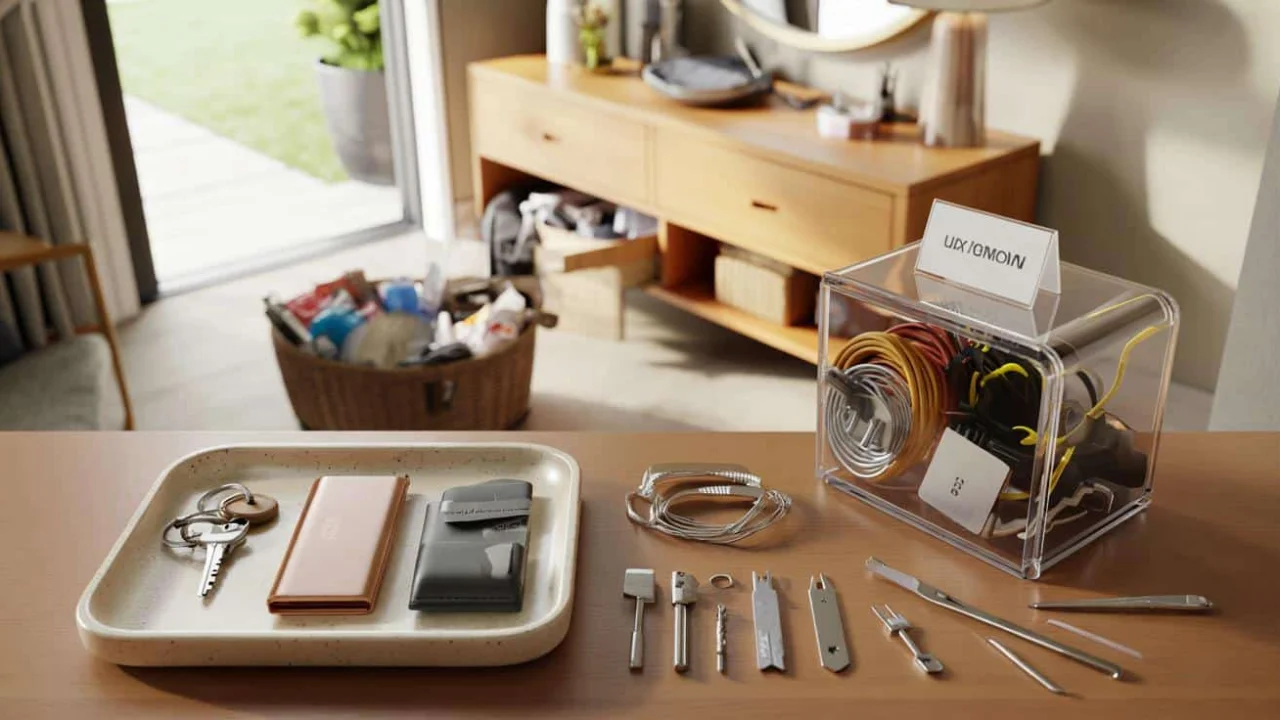
- Designated landing zones: Create specific spots near entrances for keys, sunglasses, and wallet
- Clear containers: Use transparent boxes so you can see contents at a glance
- Compartmentalized drawers: Install dividers to separate different types of items
- Magnetic strips: Perfect for metal items like tweezers, nail clippers, and small tools
- Wall-mounted organizers: Keep frequently used items visible and accessible
- Labeled storage: Even small containers benefit from clear labeling
Interior designer James Chen recommends the “one-touch rule” for small item storage: “If you can’t put something away with one simple motion, you probably won’t do it consistently.”
| Item Type | Best Storage Solution | Location |
|---|---|---|
| Keys & Wallet | Shallow tray or hooks | Entry table or by door |
| Jewelry | Compartmentalized box | Bedroom dresser |
| Charging cables | Cable organizer box | Nightstand or desk |
| Hair accessories | Clear drawer dividers | Bathroom vanity |
| Office supplies | Desktop organizer | Work area |
| Medications | Weekly pill organizer | Kitchen or bathroom |
The magic happens when you match storage solutions to your natural habits. If you always drop your keys on the kitchen counter, put a decorative bowl there instead of trying to train yourself to hang them by the door.
How Better Organization Changes Your Daily Life
People who successfully store small objects report surprising benefits beyond just finding things faster. The constant low-level stress of misplaced items disappears, replaced by a sense of control and calm.
“I used to spend at least ten minutes every morning looking for something,” shares working mother Jennifer Walsh. “Now everything has its place, and my mornings actually start peacefully.”
The ripple effects extend to entire households. When everyone knows where to find and return small items, family arguments about lost belongings decrease dramatically. Children learn organizational skills naturally when they see consistent systems in action.
Professional productivity consultant David Kim notes that proper small item storage can save the average person 40 minutes per week. “That might not sound like much, but it adds up to over 30 hours per year – almost a full work week.”
The psychological benefits are equally significant. When your environment feels controlled and predictable, your mind can focus on more important tasks instead of constantly tracking scattered belongings.
Better storage also saves money. You stop buying duplicate items because you can’t find the originals. No more emergency trips to buy new earbuds or phone chargers when the old ones are buried somewhere in your home.
The transformation doesn’t happen overnight, but most people notice improvements within the first week of implementing organized storage systems. The key is starting small with just one category of items, then expanding the system as new habits form.
Remember, the goal isn’t perfection – it’s creating systems that work with your lifestyle, not against it. When you store small objects thoughtfully, you’re not just organizing things; you’re designing a life with less stress and more time for what truly matters.
FAQs
What’s the biggest mistake people make when trying to store small objects?
They try to organize everything at once instead of focusing on one category at a time, which leads to overwhelm and abandoned systems.
How often should I reorganize my small item storage areas?
Review and adjust your systems every 3-6 months, or whenever you notice items starting to accumulate in the wrong places.
Do expensive organizing products work better than simple solutions?
Not necessarily – many effective storage solutions use basic containers and dividers that cost less than fancy organizing systems.
What should I do with small items I rarely use but can’t throw away?
Store them in clearly labeled containers in less accessible areas like high shelves or storage closets, separate from daily-use items.
How can I get my family members to use the new storage systems?
Make the systems as simple as possible and place storage containers exactly where people naturally tend to put things down.
What’s the best way to start organizing if I’m completely overwhelmed?
Begin with just one small area like your entryway table or bathroom counter, and focus on creating homes for your five most frequently misplaced items.
About the Author