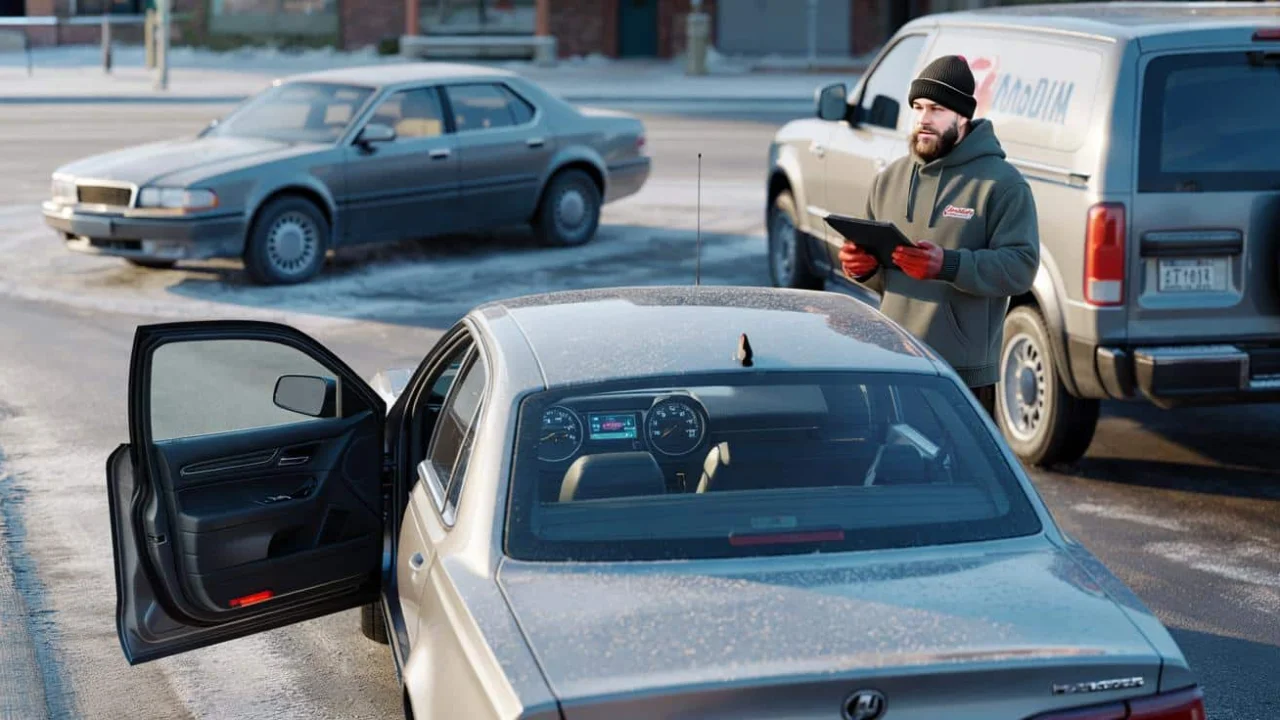
Sarah had been running on fumes for three days, watching her gas gauge hover dangerously close to empty. “I’ll fill up tomorrow,” she kept telling herself as she rushed between work, grocery shopping, and her daughter’s soccer practice. Then Tuesday morning arrived with a brutal 12-degree wake-up call.

Her Honda Civic cranked and cranked but wouldn’t catch. The engine turned over weakly, then nothing. Sarah sat in her driveway, already late for work, staring at that nearly empty fuel gauge with growing dread. When the tow truck arrived an hour later, the driver took one look at her dashboard and nodded knowingly. “Fuel line freeze,” he said simply. “Happens every winter when folks let their tanks run too low.”
That $200 towing bill and missed workday could have been prevented with one simple habit that auto technicians have been quietly advocating for years.

What Really Happens When Fuel Lines Freeze
Fuel line freeze doesn’t mean your gasoline turns into a solid block of ice. Modern gasoline contains additives that prevent it from freezing at typical winter temperatures. The real problem is water, and it’s more common than most drivers realize.
“People think their gas tank is sealed tight, but moisture finds its way in,” explains Mike Rodriguez, a certified automotive technician with 15 years of experience. “Every time you open that gas cap, humid air gets in. Temperature changes create condensation on the tank walls. Even the fuel itself contains trace amounts of water.”

When your tank runs low, there’s more empty space filled with air. Temperature swings cause that air to expand and contract, creating condensation that drips down into your remaining fuel. Water is heavier than gasoline, so it settles at the bottom of the tank where your fuel pickup tube and lines are located.
On a freezing night, that small amount of water can turn to ice crystals that block fuel flow. Your engine gets starved of fuel, even though you technically have gas in the tank. The car cranks but won’t start, leaving you stranded on the coldest morning of the year.

The Half-Tank Strategy That Prevents Expensive Problems
Auto technicians have developed a simple rule they wish every driver would follow: keep your fuel tank above half when temperatures drop below freezing. This isn’t just paranoid overthinking—it’s practical physics.
“A fuller tank leaves less room for air, which means less space for condensation to form,” says Jennifer Chen, lead technician at a busy repair shop in Chicago. “Plus, more fuel means any small amount of water gets diluted instead of concentrated.”

Here’s what happens when you maintain higher fuel levels during cold weather:
- Less air space reduces condensation formation
- More fuel dilutes any existing moisture
- Fuel additives work more effectively with higher concentrations
- Your fuel pump stays cooler and lasts longer when submerged
- You have backup fuel if you get stuck in traffic during bad weather
| Tank Level | Freeze Risk | Technician Notes |
|---|---|---|
| Above 3/4 full | Very Low | Ideal for extended cold snaps |
| 1/2 to 3/4 full | Low | Safe range for typical winter driving |
| 1/4 to 1/2 full | Moderate | Refill soon if temps dropping |
| Below 1/4 full | High | Strong risk of fuel line freeze |
Who Gets Hit Hardest by Fuel Line Problems
Certain drivers face higher risks when winter temperatures plummet. Understanding these patterns can help you avoid becoming another tow truck statistic.
Older vehicles, especially those with more than 100,000 miles, are particularly vulnerable. Their fuel systems may have accumulated more moisture over time, and seals around the gas cap might not be as tight. Compact cars and economy vehicles also show up frequently in repair shops during cold snaps, partly because their owners often stretch every dollar and run tanks lower.
“I see the same pattern every January,” notes Tom Williams, who runs an independent auto shop in Minnesota. “It’s usually someone driving an older sedan or compact SUV who’s been putting off filling up. They’ll come in on a flatbed, frustrated because the car was running perfectly fine the day before.”
Urban drivers who make short trips face additional risks. Stop-and-go driving with frequent engine cooling creates more temperature fluctuations in the fuel system. Rural drivers who might get stuck in weather emergencies can’t afford to run on empty either.
The financial impact goes beyond towing fees. Fuel line freeze can damage fuel pumps, require system cleaning, and in severe cases, necessitate fuel line replacement. What starts as trying to save $20 by delaying a fill-up can quickly become a $400 repair bill.
Prevention costs significantly less than repair. A bottle of fuel-line antifreeze costs about $3 and can provide extra protection, but it’s not a substitute for maintaining adequate fuel levels. “Those additives help, but they can’t work miracles if you’re running on vapor,” explains Rodriguez. “The best protection is just keeping enough gas in the tank so water doesn’t become concentrated.”
Smart winter driving means adjusting habits before the temperature drops. When the weather forecast shows overnight lows below freezing, that’s your cue to top off the tank. Your morning routine will thank you when your car starts immediately instead of leaving you stranded in a frosty parking lot.
FAQs
How much gas should I keep in my tank during winter?
Auto technicians recommend keeping your tank above half-full when temperatures drop below freezing to prevent fuel line freeze.
Can fuel-line antifreeze products prevent freezing completely?
These additives help but aren’t foolproof. They work best when combined with maintaining adequate fuel levels, not as a substitute for keeping your tank full.
What temperature causes fuel lines to freeze?
Water in fuel lines can freeze at 32°F, but the risk increases significantly when temperatures drop into the teens or single digits.
How do I know if my fuel lines are frozen?
Your car will crank normally but won’t start, even with gas in the tank. The engine may sputter briefly but can’t maintain running.
Are newer cars less likely to have fuel line freeze problems?
Modern vehicles have better fuel system sealing, but they’re not immune. The physics of water condensation and freezing still apply regardless of vehicle age.
How much does it cost to fix frozen fuel lines?
Towing and basic thawing can cost $150-300, but if the freeze damages your fuel pump or requires system cleaning, repairs can reach $400-600.
About the Author