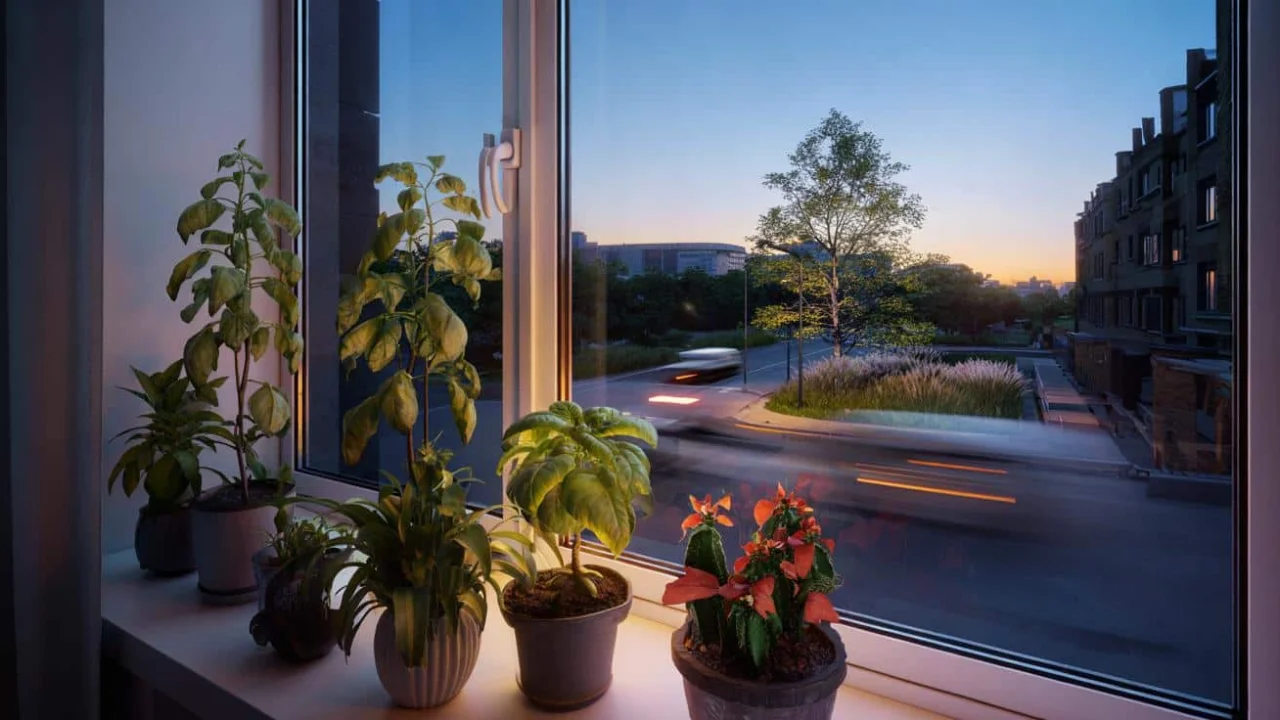
Sarah first noticed something was off with her herb garden on a Tuesday morning in late August. The same basil plants that had been practically leaping out of their pots just weeks earlier now seemed… tired. Not sick, not dying, just quietly resigned. She checked the soil moisture, adjusted the watering schedule, even moved the pots to catch more morning sun. Nothing had changed in her care routine, yet everything felt different.

What Sarah didn’t realize was that her plants were responding to one of nature’s most subtle yet powerful signals. While she busied herself with fertilizers and watering cans, her herbs were listening to something far more fundamental: the gradual shortening of daylight hours. This quiet environmental cue was telling them, in a language older than human civilization, that it was time to slow down.
It’s a phenomenon playing out in gardens, windowsills, and wild spaces across the Northern Hemisphere right now. And most of us walk right past it without noticing.

The Secret Language of Light and Shadow
Plant environmental cues come in many forms, but none is quite as elegant as photoperiodism – the way plants measure day length to time their life cycles. Scientists have discovered that this isn’t just about getting enough light to photosynthesize. Plants are actually counting hours of darkness, using this information like an internal calendar to know when to grow, bloom, fruit, or prepare for winter.
“Plants don’t experience time the way we do,” explains Dr. Elena Rodriguez, a plant physiologist at Cornell University. “They’re not watching clocks. Instead, they’re incredibly sensitive to the ratio of light to dark periods, and they use this information to make critical survival decisions.”

The mechanism is surprisingly sophisticated. Deep within plant cells, specialized proteins called phytochromes act like molecular light switches. These proteins change shape depending on whether they’re exposed to red or far-red light wavelengths. As days grow shorter, the balance shifts, triggering a cascade of genetic responses that can transform a plant’s entire behavior.
Think about it: without any external calendar or weather forecast, a maple tree somehow “knows” to start changing its leaf color in September rather than July. A chrysanthemum begins forming flower buds precisely when autumn days reach a certain length. This timing has to be nearly perfect – too early and the plant wastes energy, too late and it might not complete its reproductive cycle before harsh weather arrives.

How Plants Decode Environmental Messages
Understanding plant environmental cues reveals a complex communication system that operates on multiple levels. Here’s how different signals work together to guide plant behavior:
| Environmental Cue | What Plants Detect | Typical Response |
|---|---|---|
| Photoperiod | Hours of daylight vs. darkness | Flowering, dormancy preparation |
| Temperature | Daily and seasonal temperature changes | Growth rate adjustment, cold hardening |
| Light Quality | Red/far-red light ratios | Stem elongation, leaf development |
| Moisture Levels | Soil and air humidity | Root growth, leaf size regulation |
| Chemical Signals | Nutrients, neighboring plant compounds | Competition responses, defense mechanisms |
The most remarkable aspect of plant environmental cues is their precision. Research has shown that some plants can detect daylight changes as small as 15 minutes. This sensitivity allows them to respond to seasonal shifts weeks before humans typically notice them.

Key factors that influence how plants interpret these signals include:
- Previous environmental history (what the plant experienced in recent weeks)
- Genetic programming specific to each species
- Current stress levels from drought, disease, or competition
- Age and developmental stage of the plant
- Local microclimate conditions
“The sophistication of plant environmental sensing rivals anything we’ve developed technologically,” notes Dr. James Chen, a researcher studying plant circadian rhythms at UC Berkeley. “They’re essentially running multiple environmental monitoring programs simultaneously, cross-referencing data to make optimal survival decisions.”
Why This Matters More Than You Think
These plant environmental cues aren’t just fascinating biological trivia – they’re becoming increasingly critical as climate patterns shift worldwide. As global warming disrupts traditional seasonal timing, many plants are receiving mixed signals that can throw off their carefully calibrated life cycles.
Spring flowers blooming too early only to be killed by late frosts. Fruit trees flowering before pollinators are active. Migratory birds arriving to find their food sources haven’t emerged yet. These timing mismatches, scientists call them “phenological mismatches,” are cascading through ecosystems in ways we’re only beginning to understand.
For gardeners and farmers, understanding these cues offers practical advantages. Instead of fighting against natural plant rhythms, we can work with them:
- Time plantings to align with natural photoperiod responses
- Use supplemental lighting strategically to extend growing seasons
- Choose varieties adapted to local light patterns
- Predict when plants will naturally slow growth and adjust care accordingly
Urban planners are also taking note. Cities with extensive tree canopies are discovering that understanding photoperiod responses helps them select species that will thrive under specific light conditions created by buildings and street layouts.
Dr. Maria Santos, who studies urban plant ecology, observes: “Plants in cities face unique challenges with artificial lighting and reflected heat from concrete. The more we understand how they read environmental cues, the better we can design green spaces that actually support plant health rather than stress them.”
Perhaps most importantly, these discoveries are changing how we think about plant intelligence. Far from being passive organisms that simply react to immediate conditions, plants emerge as sophisticated information processors, constantly gathering and analyzing environmental data to make complex predictions about future conditions.
The next time you notice your houseplants looking a little tired as summer wanes, remember: they’re not being lazy. They’re demonstrating millions of years of evolutionary wisdom, reading environmental signals with a precision that puts our weather apps to shame. In a world where we often feel disconnected from natural rhythms, plants remain perfectly tuned to the subtle symphony of seasonal change.
FAQs
How quickly do plants respond to changing day length?
Most plants begin responding within days of detecting consistent changes in photoperiod, though visible effects may take weeks to appear.
Can artificial light interfere with plant environmental cues?
Yes, street lights and indoor lighting can confuse plants’ photoperiod detection, sometimes preventing dormancy or delaying flowering.
Do all plants use the same environmental cues?
No, different plant species have evolved to prioritize different environmental signals based on their native habitats and survival strategies.
Why don’t my indoor plants follow seasonal patterns?
Indoor plants often receive consistent artificial light and temperature, which can override their natural response to changing day length.
Can plants adapt to new environmental cue patterns?
Some adaptation is possible over multiple generations, but sudden climate changes often happen too quickly for evolutionary adaptation to keep pace.
How do plant environmental cues affect crop timing?
Farmers use knowledge of photoperiod sensitivity to time plantings and predict harvest windows, especially for day-length sensitive crops like soybeans and onions.
About the Author
