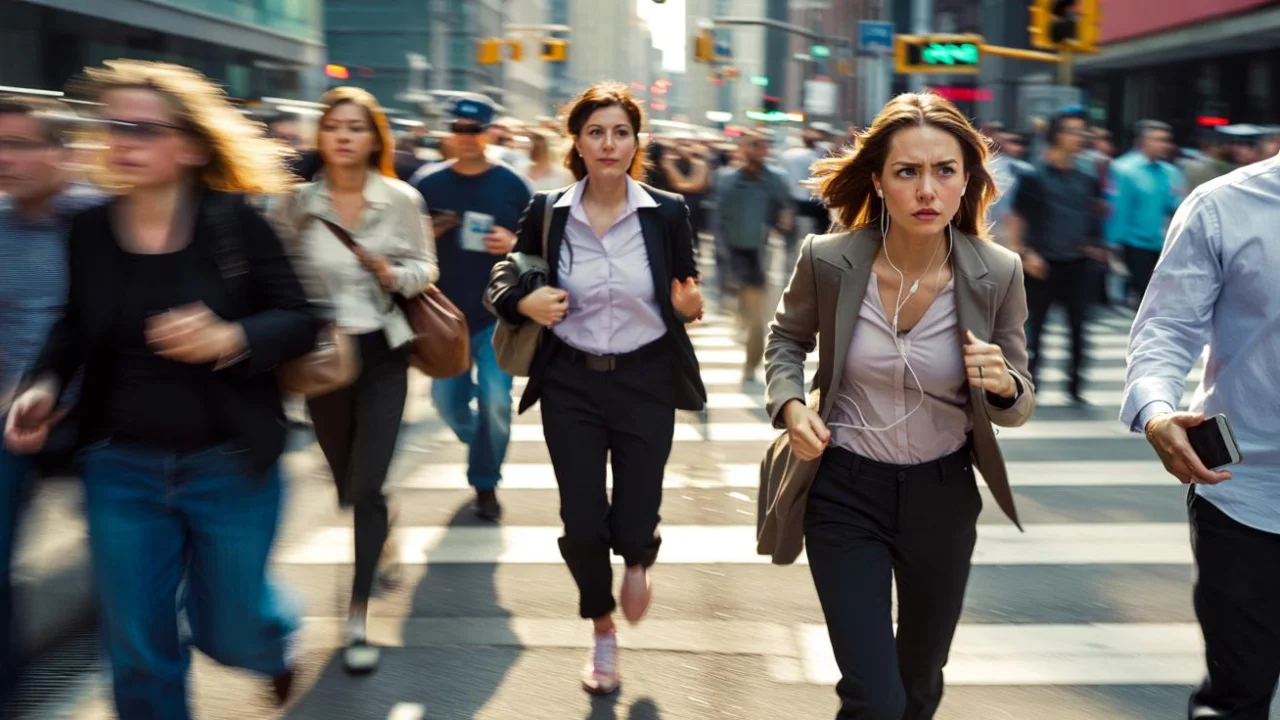
Sarah stepped onto the crowded downtown sidewalk, her heels clicking against the pavement like a rapid-fire drumbeat. She wove through the morning commuters with practiced precision, jaw clenched, shoulders raised, eyes fixed on some invisible finish line blocks ahead. Her smartwatch buzzed approvingly—another 2,000 steps in ten minutes.

Behind her, a colleague struggled to keep up, slightly out of breath. “How do you walk so fast every day?” he panted. Sarah smiled, feeling that familiar rush of pride. She was the healthy one, the productive one, the person who got things done.
But that evening, as she sat in her doctor’s office discussing her chronic headaches and racing heart, a different picture began to emerge. “Tell me about your daily routine,” the doctor asked gently. Sarah found herself describing a life lived at maximum speed—even when there was nowhere urgent to go.

The Hidden Truth Behind Our Fast-Walking Culture
We’ve built an entire mythology around fast walkers. They’re the people who have their lives together, the ones crushing their fitness goals, the productivity champions who make the rest of us feel slightly inadequate. Social media celebrates them, step counters reward them, and we secretly wish we had their energy.
But emerging research and clinical observations are painting a very different picture. Many of those brisk, purposeful strides aren’t signs of health and vitality—they’re physical manifestations of chronic anxiety and nervous system dysregulation.

“What we’re seeing is that many fast walkers are essentially in a constant state of sympathetic nervous system activation,” explains Dr. Jennifer Martinez, a behavioral health specialist. “Their bodies have learned to exist in fight-or-flight mode, and walking becomes an unconscious way of trying to outrun their internal stress.”
The confusion is understandable. Fast walking does burn more calories and can improve cardiovascular health when it’s intentional exercise. But when it becomes your default mode of movement—when you can’t slow down even during leisurely activities—it often signals something entirely different.

The Science Behind Anxiety-Driven Movement
The connection between walking speed and mental state runs deeper than most people realize. When we’re anxious, our bodies prepare for action whether we need it or not. This ancient survival mechanism floods our system with stress hormones and creates an almost irresistible urge to move.
Here are the key indicators that fast walking might be anxiety-driven rather than health-driven:

- Inability to slow down – Even during relaxed outings or when not running late
- Physical tension – Tight jaw, raised shoulders, clenched fists while walking
- Mental racing – Mind jumping between tasks and worries during walks
- Irritation with slower walkers – Feeling frustrated when forced to match others’ pace
- Walking as escape – Using fast walking to avoid sitting with uncomfortable emotions
- Post-walk restlessness – Still feeling wound up even after reaching your destination
Research from anxiety treatment centers shows a clear pattern: people with generalized anxiety disorder often exhibit what clinicians call “psychomotor agitation”—an internal restlessness that translates into constant movement, including rapid walking.
| Health-Driven Fast Walking | Anxiety-Driven Fast Walking |
|---|---|
| Can easily slow down when needed | Feels uncomfortable at slower paces |
| Body feels relaxed during movement | Carries physical tension throughout walk |
| Mind can focus on surroundings | Lost in anxious thoughts while walking |
| Feels energized after walking | Still feels restless or wound up |
| Walks fast by choice for fitness | Walks fast compulsively as coping mechanism |
“The biggest difference is choice,” notes Dr. Michael Chen, a movement therapist who works with anxiety patients. “Healthy fast walkers can downshift when the situation calls for it. Anxiety-driven fast walkers often feel genuinely uncomfortable or even panicked when forced to slow down.”
Breaking Free from the Speed Trap
Recognizing anxiety-driven walking patterns is the first step toward creating healthier movement habits. But for many fast walkers, the idea of slowing down feels impossible—or even lazy.
The key is understanding that intentional, mindful walking actually requires more mental strength than anxious rushing. When you slow your pace deliberately, you’re forcing your nervous system to downregulate, which can feel intensely uncomfortable at first.
Here’s what actually helps:
- Start with body awareness – Notice your shoulders, jaw, and breathing while walking
- Practice the “tourist test” – Walk like you’re exploring a new city for pleasure
- Use breathing as your metronome – Sync your steps to slower, deeper breaths
- Challenge the urgency thoughts – Ask yourself what would really happen if you arrived two minutes later
- Celebrate micro-slowdowns – Acknowledge small moments when you successfully reduce your pace
Many people discover that when they finally learn to walk at a comfortable pace, their overall anxiety levels drop significantly. Sleep improves. Headaches decrease. The constant sense of rushing through life begins to fade.
“I realized I hadn’t actually looked at the trees on my street in years,” shares Maria, a former fast walker who worked with a therapist to address her anxiety. “I was always staring at the sidewalk three steps ahead, planning my next move. Now I see birds, flowers, neighbors I’d never noticed. It sounds small, but it changed everything.”
The transition isn’t easy. Anxiety-driven fast walkers often feel guilty or unproductive when they slow down. They worry about being late, looking lazy, or losing their edge. But these fears usually prove unfounded. Most discover they arrive at destinations feeling calmer and more present, which actually improves their performance and relationships.
The next time you find yourself rushing down the sidewalk, pause for a moment. Check in with your body. Are you walking fast because you’re late, or because stopping feels impossible? Are you moving toward something, or running away from the discomfort inside your own skin?
Sometimes the healthiest thing you can do is slow down, even when everything in your nervous system screams that you need to speed up. Your body—and your mind—might thank you for it.
FAQs
How can I tell if my fast walking is anxiety-driven or healthy?
Pay attention to whether you can easily slow down when needed and if your body feels tense while walking. Healthy fast walking is a choice; anxiety-driven walking feels compulsive.
Will slowing down my walking pace make me less fit?
Not necessarily. Mindful, relaxed walking can still provide excellent health benefits, and reducing chronic stress often improves overall fitness and energy levels.
What’s the best way to start walking slower without feeling anxious?
Begin with very short distances and focus on your breathing. Practice the “tourist mindset”—walk like you’re exploring somewhere new and interesting.
Can fast walking actually be making my anxiety worse?
Yes, if it’s reinforcing your body’s fight-or-flight response. Constantly rushing can keep your nervous system in a heightened state of alert.
How long does it take to change anxious walking patterns?
Most people notice some improvement within a few weeks of conscious practice, but fully retraining your nervous system can take several months.
Should I see a therapist if I can’t slow down my walking pace?
If you feel genuinely distressed when forced to walk slowly, or if fast walking is part of broader anxiety symptoms, talking to a mental health professional can be very helpful.
About the Author