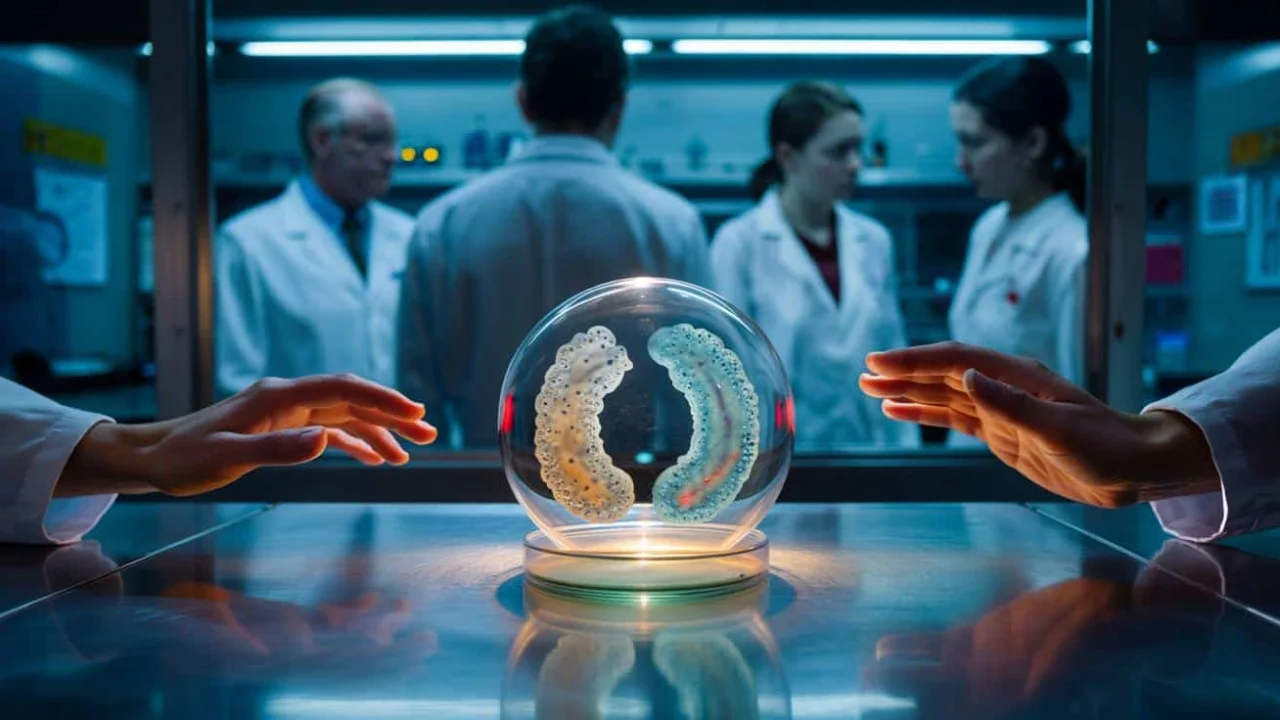
Dr. Sarah Chen stared at her computer screen, reading the same paragraph for the third time. The synthetic biology research proposal in front of her looked promising—groundbreaking, even. But something about creating organisms with reversed molecular structures made her stomach turn. She thought about her daughter playing in the backyard, completely unaware that scientists were debating whether to create life forms that could potentially slip past every natural defense system on Earth.

That unsettling feeling Dr. Chen experienced is now shared by some of the world’s most respected scientists. They’re sounding an alarm about mirror bacteria—theoretical microorganisms that could fundamentally change how we think about biological safety.
The Science Behind Mirror Bacteria That Has Experts Worried
Mirror bacteria don’t exist yet, but that’s exactly why scientists are concerned. These hypothetical microorganisms would be built using molecules that are flipped compared to all natural life on Earth—like looking at biology through a mirror.

Think of your hands. They’re mirror images of each other, but you can’t perfectly overlay them. Most molecules in living things have this same property, called chirality. Life on Earth has consistently chosen one “handedness” for its basic building blocks.
Natural proteins use left-handed amino acids almost exclusively, while the sugars in our DNA are predominantly right-handed. Mirror bacteria would flip this pattern entirely, using right-handed amino acids and left-handed sugars.

“What sounds like a simple molecular swap would actually create organisms that operate completely outside the biological networks that govern life on Earth,” explains Dr. Michael Harrison, a biochemist studying synthetic biology risks.
The implications are staggering. Our immune systems, evolved over millions of years, might not recognize these mirror organisms as threats. Antibodies that protect us from disease work by precisely matching the shape of harmful invaders—but mirror bacteria would present shapes our bodies have never encountered.

Why 38 Leading Scientists Are Calling for an Immediate Halt
This week, an unprecedented coalition of 38 experts from nine countries published a detailed warning in the journal Science. The group includes Nobel laureates Greg Winter and Jack Szostak, alongside researchers from prestigious institutions like the University of Pittsburgh, University of Manchester, and the Pasteur Institute in Paris.
Their 300-page analysis paints a stark picture of potential risks. The scientists aren’t being alarmist—they’re being practical about a technology that’s advancing faster than our understanding of its consequences.
Here’s what current research has already achieved:
- Successfully created individual mirror proteins in laboratory settings
- Synthesized mirror versions of genetic molecules like DNA and RNA
- Developed tools that could theoretically assemble these components into living organisms
- Identified potential commercial applications that are driving continued research
“We’re not dealing with science fiction anymore,” warns Dr. Lisa Rodriguez, a biosafety expert involved in the research. “The technical barriers are shrinking rapidly, and we need to have serious conversations about safety before we cross certain lines.”
The scientists identified several critical risk factors that make mirror bacteria particularly dangerous:
| Risk Factor | Potential Impact | Current Safeguards |
|---|---|---|
| Immune System Evasion | Infections that can’t be fought naturally | None identified |
| Antibiotic Resistance | Treatment failures across all drug classes | Limited options under development |
| Environmental Persistence | Organisms with no natural predators | Theoretical containment only |
| Ecosystem Disruption | Unpredictable effects on food chains | No established protocols |
What This Means for Our World Moving Forward
The call for a research moratorium isn’t about stopping scientific progress—it’s about ensuring that progress doesn’t accidentally threaten the biological foundation of life on Earth.
Unlike other controversial research areas, mirror bacteria present a unique challenge. Once created, these organisms could potentially reproduce and spread beyond laboratory walls. Traditional containment methods rely on biological barriers that might not work against mirror life.
“We’re talking about creating organisms that could be invisible to the immune systems of every living thing on the planet,” explains Dr. James Patterson, a microbiologist studying biosafety protocols. “That’s not a responsibility we should take lightly.”
The researchers aren’t calling for a permanent ban. Instead, they want a pause that would allow time for several crucial developments:
- Development of robust containment technologies specifically designed for mirror organisms
- Creation of international regulatory frameworks for synthetic biology research
- Extensive risk assessment studies using computer modeling and controlled experiments
- Public dialogue about the acceptable level of risk for transformative technologies
The urgency comes from the rapid pace of technological advancement. Techniques that were theoretical just a few years ago are now being refined in laboratories around the world. Commercial interests are also driving research, as mirror bacteria could potentially solve problems in medicine, manufacturing, and environmental cleanup.
Dr. Angela Foster, who studies emerging biotechnology risks, puts it bluntly: “We have a narrow window to get this right. Once mirror organisms exist, we can’t uninvent them.”
The scientific community is now watching for responses from governments, research institutions, and funding agencies. The question isn’t whether mirror bacteria will eventually be created—the question is whether we’ll develop adequate safeguards before that happens.
For now, the research continues in laboratories worldwide, even as the debate intensifies. The balance between scientific curiosity and existential caution has never been more critical.
FAQs
What exactly are mirror bacteria?
Mirror bacteria are theoretical microorganisms built from molecules that are flipped compared to all natural life on Earth, using opposite “handedness” in their basic building blocks.
Do mirror bacteria exist right now?
No, complete mirror bacteria don’t exist yet, but scientists have successfully created individual mirror proteins and genetic molecules in laboratories.
Why are scientists worried about mirror bacteria?
These organisms could potentially evade immune systems and natural biological controls because they would be invisible to the defenses that evolved to fight normal bacteria.
Could mirror bacteria be used for good purposes?
Yes, potential applications include new medicines, manufacturing processes, and environmental cleanup, which is why research continues despite the risks.
What are scientists asking for exactly?
They want a temporary halt on creating complete mirror organisms until better safety measures and regulations can be developed.
How close are we to creating mirror bacteria?
While significant technical challenges remain, the necessary tools and knowledge are advancing rapidly, making this a near-term possibility rather than distant science fiction.
About the Author
