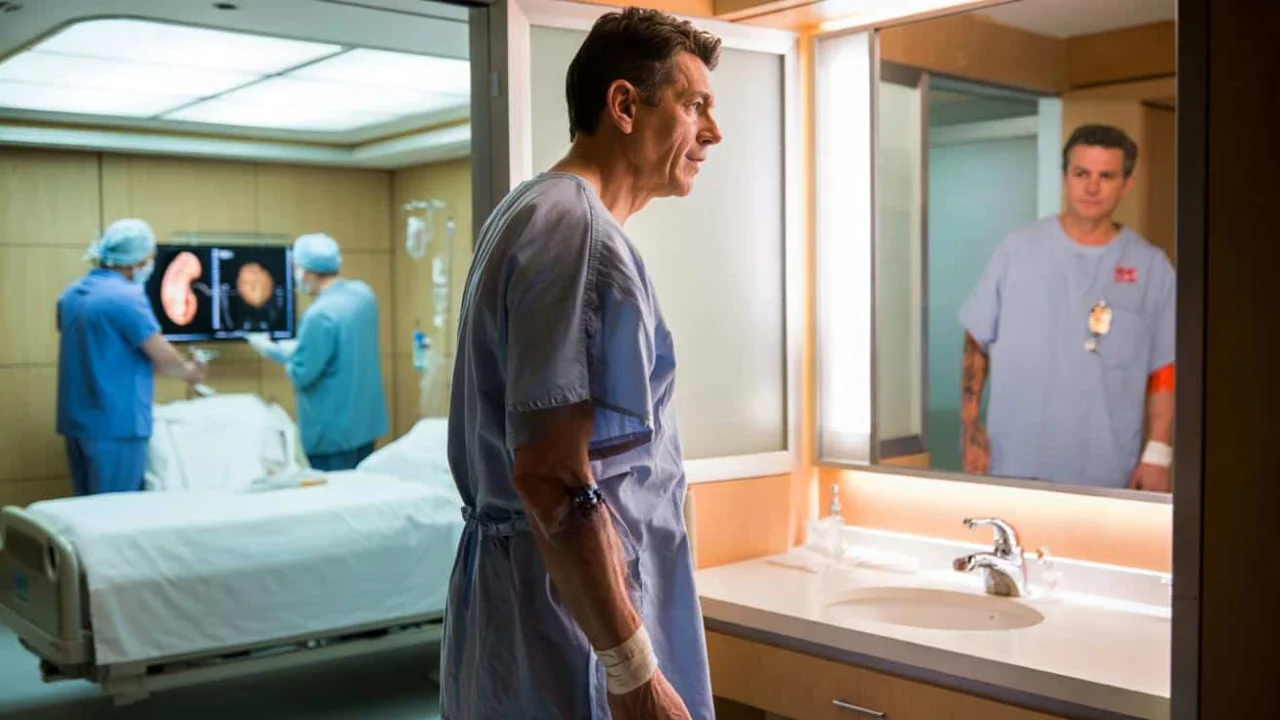
Picture walking into a bathroom for the first time in seven years, knowing you can actually use it. For most of us, this sounds absurd – we take those daily moments for granted. But for Oscar Larrainzar, that simple act became the culmination of a medical breakthrough that doctors once thought impossible.

After cancer took away both his kidneys and most of his bladder at age 41, Oscar spent seven years tethered to dialysis machines and medical bags. Every day was a reminder that his body couldn’t do what others did naturally. Then UCLA surgeons attempted something that had never been done in the United States: a combined kidney bladder transplant.
The surgery worked. Oscar can urinate normally again – something that represents far more than convenience. It’s about dignity, independence, and the kind of medical innovation that changes lives in the most fundamental ways.

When Cancer Takes Away Your Most Basic Functions
Oscar’s journey started with an aggressive cancer that gave doctors no choice. They had to remove both kidneys and nearly his entire bladder to save his life. The surgery was successful, but it left him facing a reality that most people never consider.
Without kidneys, his blood couldn’t filter waste naturally. Three times a week, he sat connected to a dialysis machine for hours while it did the work his organs once performed. The process kept him alive but chained him to a rigid schedule.

The bladder removal created different challenges. Surgeons typically solve this problem in two ways: they either reconstruct a bladder using part of the intestine, or they create a permanent opening that drains urine into an external bag. Both options come with serious drawbacks.
“Patients often face chronic infections, metabolic complications, and constant anxiety about leaks or odors,” explains Dr. Sarah Martinez, a urological surgeon not involved in Oscar’s case. “These solutions work, but they’re far from ideal.”

For seven years, Oscar lived with these compromises. He couldn’t travel spontaneously, couldn’t sleep through the night without worry, and couldn’t escape the daily reminders of his medical condition.
The Surgery That Doctors Said Was Too Dangerous
Bladder transplants have existed in medical textbooks for decades, but they remained theoretical. The pelvis is packed with delicate blood vessels, and connecting a new bladder requires precision that most surgeons considered too risky.

At UCLA Medical Center, however, the urology department runs its own kidney transplant program. This unusual setup meant that kidney specialists and bladder cancer experts worked closely together, sharing techniques and pushing boundaries.
The team realized they could potentially perform a combined kidney bladder transplant using organs from the same donor. This approach would solve both of Oscar’s problems in one operation, but it required surgical skills that had never been tested together.
| Traditional Options | Combined Transplant |
|---|---|
| Intestinal bladder reconstruction | Natural bladder function |
| External urine bags | Normal urination |
| Ongoing dialysis | Kidney function restored |
| Multiple complications | Single recovery process |
“We knew we were entering uncharted territory,” said Dr. James Chen, lead surgeon on Oscar’s case. “But when you see a patient suffering for years with limited options, you have to ask whether the potential benefits justify the risks.”
The surgery took over eight hours. Surgeons had to carefully connect the new kidney’s blood vessels while simultaneously attaching the bladder and reconnecting all the urinary pathways. Every connection had to be perfect.
What This Breakthrough Means for Future Patients
Oscar’s successful recovery opens doors for thousands of patients facing similar situations. Cancer survivors, people with severe bladder dysfunction, and those with genetic conditions could potentially benefit from this approach.
The procedure addresses several patient populations:
- Cancer survivors who lost kidney and bladder function
- Patients with severe birth defects affecting urinary function
- People with traumatic injuries to multiple organs
- Those experiencing complications from previous reconstructive surgeries
But this isn’t a solution for everyone. The surgery requires healthy patients who can handle major surgery and lifelong immunosuppression. Doctors must also find suitable donor organs, which adds another layer of complexity.
“The technical success is impressive, but we need to see long-term results before this becomes standard practice,” notes Dr. Rebecca Thompson, a transplant specialist at Johns Hopkins. “Every new procedure needs time to prove its durability and safety.”
The UCLA team plans to offer the procedure to carefully selected patients while monitoring outcomes. They’re particularly interested in quality of life improvements, which traditional measures don’t always capture.
Oscar’s experience suggests the benefits extend beyond medical metrics. He can work full-time again, travel without extensive planning, and sleep through the night. These changes matter enormously to patients and families.
Insurance coverage remains a question mark. Combined organ transplants often face scrutiny from insurers who classify them as experimental. Advocacy groups are already working to establish coverage pathways for qualified patients.
The success also raises questions about organ allocation. Should combined transplants receive priority when suitable donors become available? These ethical discussions will likely intensify as more medical centers develop similar programs.
“Every medical breakthrough starts with one patient willing to take a chance,” reflects Dr. Martinez. “Oscar’s courage paved the way for others who are still waiting for their normal bathroom routine to return.”
Six months after surgery, Oscar describes the experience as life-changing. He’s back at work, planning vacations, and doing things he hadn’t done in seven years. The combined kidney bladder transplant gave him more than new organs – it gave him his life back.
FAQs
How long does a combined kidney bladder transplant take?
The surgery typically requires 8-10 hours, significantly longer than individual organ transplants due to the complexity of connecting multiple systems.
Are there many patients who could benefit from this procedure?
Thousands of cancer survivors and patients with severe urinary dysfunction could potentially benefit, though strict medical criteria will determine eligibility.
What are the main risks of this surgery?
Beyond typical transplant risks like rejection and infection, patients face complications from connecting complex urinary pathways and managing two transplanted organs simultaneously.
Will insurance cover combined organ transplants?
Coverage varies and many insurers currently classify these as experimental, though advocacy efforts are working to establish coverage pathways.
How long do patients need to recover from this surgery?
Initial hospital stays last several weeks, with full recovery taking 3-6 months depending on individual healing and any complications that arise.
Where can patients get this type of transplant?
Currently, only UCLA Medical Center performs this specific procedure, though other transplant centers may develop similar programs as techniques evolve.
About the Author