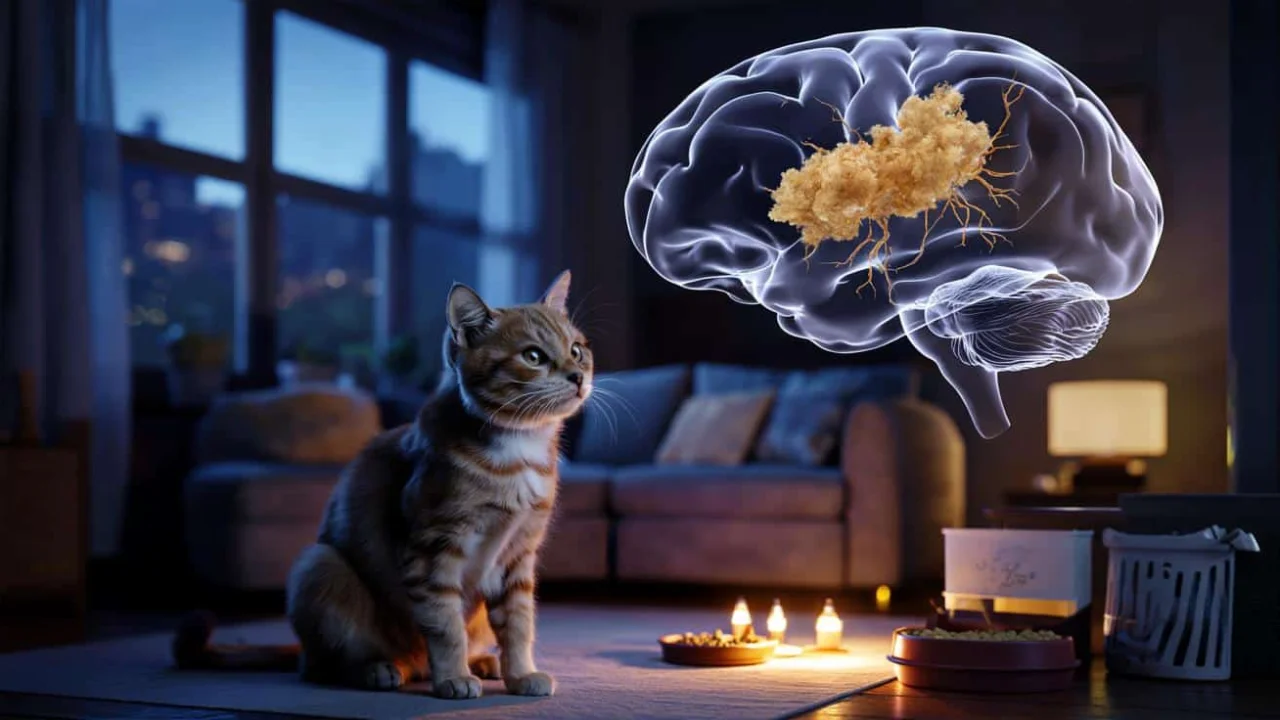
Margaret first noticed something was wrong when her 16-year-old tabby, Whiskers, started crying at 3 AM. Not the usual demanding meow for treats, but a confused, almost desperate wailing that echoed through the house. Then came the wandering – Whiskers would pace the hallway as if searching for something she couldn’t find, sometimes staring blankly at walls she’d walked past thousands of times before.

“I thought she was just being dramatic,” Margaret recalls. “You know how cats can be. But when she stopped using her litter box and seemed to forget where her food bowl was, I knew this wasn’t normal aging.”
Margaret’s experience isn’t unique. Across veterinary clinics worldwide, similar stories unfold daily as cat owners witness their beloved companions slip into a fog of confusion and disorientation. What many don’t realize is that their cats may be suffering from something remarkably similar to human Alzheimer’s disease.

The Science Behind Feline Cognitive Dementia
New groundbreaking research from the University of Edinburgh has revealed that feline cognitive dementia isn’t just behaviorally similar to Alzheimer’s – it’s biologically nearly identical. For the first time, scientists have discovered that aging cat brains develop the same toxic protein deposits that plague human Alzheimer’s patients.
The study examined the brains of elderly cats using advanced microscopy techniques, uncovering a startling truth: nearly half of cats over 15 years old show at least one sign of cognitive decline. But the real breakthrough came when researchers looked inside those aging feline brains.

“What we found was remarkable,” explains Dr. Sarah Mitchell, a veterinary neurologist involved in the research. “The same beta-amyloid protein that clumps together in human Alzheimer’s brains was forming identical deposits in our cats’ brains, particularly in areas responsible for memory and navigation.”
This protein, beta-amyloid, normally gets cleared away by healthy brains. But in both aging cats and humans with Alzheimer’s, it accumulates into sticky plaques that disrupt normal brain function. Even more concerning, these deposits lodge themselves directly in synapses – the critical connection points between brain cells.

Understanding the Signs and Impact
Feline cognitive dementia manifests through a range of behavioral changes that many owners initially dismiss as normal aging. Understanding these signs can help pet owners seek appropriate veterinary care and potentially slow the progression of the disease.
| Early Signs | Advanced Symptoms | Severe Stage |
|---|---|---|
| Occasional confusion Changes in sleep patterns Mild anxiety |
Forgetting litter box location Excessive vocalization Disorientation in familiar spaces |
Complete spatial confusion Loss of recognition Severe behavioral changes |
The behavioral symptoms of feline cognitive dementia include:

- Increased vocalization, especially at night
- Changes in sleep-wake cycles
- Confusion about familiar locations
- Altered interactions with family members
- House soiling despite previously good litter habits
- Increased anxiety or agitation
- Repetitive behaviors or pacing
“The most heartbreaking part is watching a cat who once confidently navigated their territory suddenly seem lost in their own home,” notes Dr. James Rodriguez, a feline specialist. “They might sit in front of their food bowl but appear confused about what to do next.”
Research indicates that cats living in enriched environments with regular mental stimulation may show delayed onset of cognitive symptoms. Interactive toys, puzzle feeders, and consistent routines can help maintain cognitive function longer.
What This Means for Human Medicine
The discovery of Alzheimer’s-like dementia in cats represents more than just veterinary advancement – it opens new pathways for understanding human neurodegenerative diseases. Cats develop this condition naturally as they age, making them invaluable research models for studying how dementia begins and progresses.
Unlike laboratory mice, which must be genetically modified to develop Alzheimer’s-like symptoms, cats naturally develop the disease in ways that closely mirror human experience. This spontaneous development could provide crucial insights into the earliest stages of dementia formation.
“Cats are teaching us something profound about how these diseases start,” explains Dr. Lisa Chen, a neurodegenerative disease researcher. “By studying feline cognitive dementia, we might identify intervention points that could prevent or delay Alzheimer’s in humans.”
The similarities extend beyond just protein deposits. Both cats and humans with dementia show similar patterns of brain tissue loss and inflammatory responses. The progression timeline also mirrors human disease development, with synaptic damage occurring years before obvious symptoms appear.
Current research is exploring whether treatments effective in cats might translate to human therapies. Several pharmaceutical companies are now investigating compounds that could clear beta-amyloid deposits in both species.
For cat owners, this research offers hope for better treatments and management strategies. Veterinarians are developing cognitive assessment tools specifically for cats, similar to those used for human dementia patients. Early intervention with environmental enrichment, dietary supplements, and potential medications could significantly improve quality of life for affected cats.
The research also highlights the importance of regular veterinary check-ups for senior cats. What owners might attribute to “just getting old” could actually be treatable cognitive decline that responds well to early intervention.
“We’re entering an era where we might be able to diagnose and treat feline cognitive dementia much earlier,” says Dr. Rodriguez. “This research gives us the tools to help both our feline patients and potentially contribute to breakthroughs in human medicine.”
FAQs
At what age do cats typically develop cognitive dementia?
Signs usually appear in cats over 11 years old, with nearly half of cats over 15 showing at least one symptom of cognitive decline.
Can feline cognitive dementia be prevented?
While it can’t be completely prevented, environmental enrichment, regular mental stimulation, and consistent veterinary care may help delay onset and slow progression.
How is feline dementia diagnosed?
Veterinarians use behavioral assessments, rule out other medical conditions, and may recommend specialized cognitive testing to diagnose the condition.
Are certain cat breeds more susceptible to cognitive dementia?
Current research suggests all breeds can be affected, though longevity and genetics may play roles in individual susceptibility.
What treatments are available for cats with cognitive dementia?
Treatment focuses on environmental management, dietary supplements, anti-anxiety medications when appropriate, and maintaining consistent routines to reduce confusion.
How does this research help human Alzheimer’s patients?
Cats provide a natural model for studying dementia development, potentially leading to earlier detection methods and new treatments that could benefit both species.
About the Author