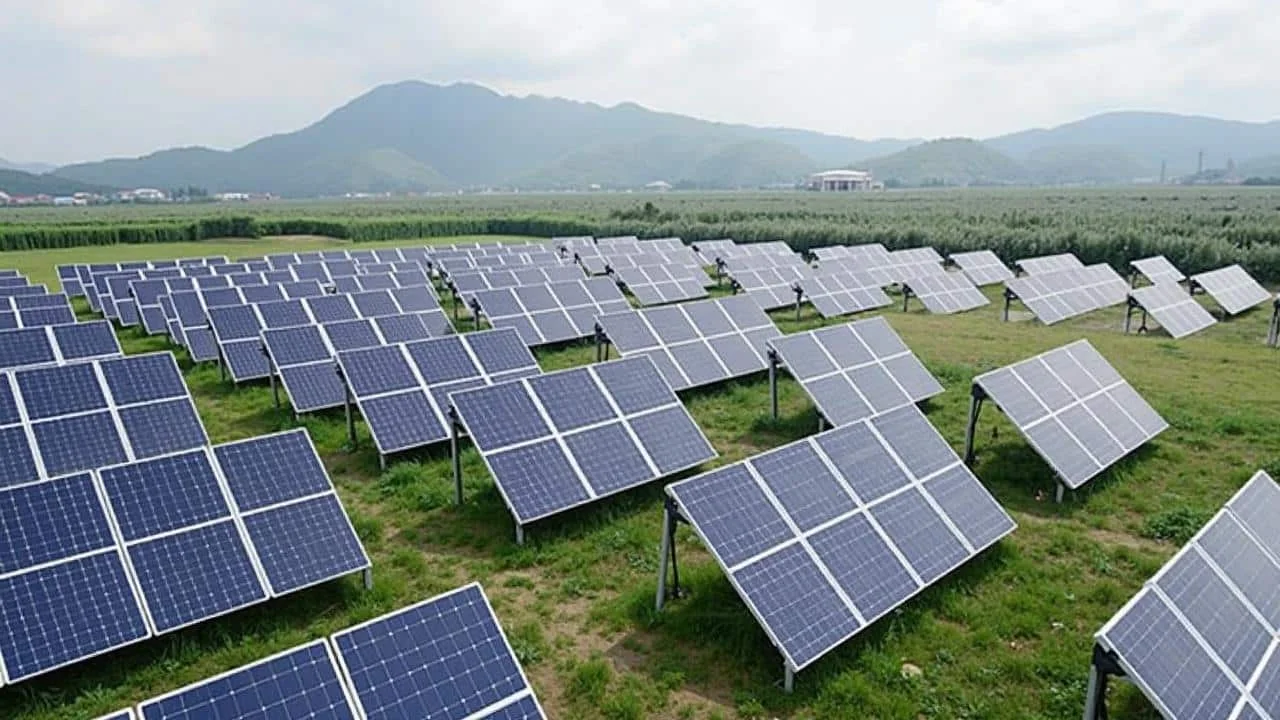
Zhang Wei used to work double shifts at his solar panel factory outside Shanghai. The overtime pay helped him save for his daughter’s college tuition, and he felt proud knowing his work was helping power homes across three continents. Last month, his supervisor pulled him aside with bad news: the factory was cutting production in half. “We’re making too much,” the supervisor said with a tired smile. “Can you believe that?”
Zhang’s story is playing out across China’s solar manufacturing heartland. The country that revolutionized clean energy by making solar panels incredibly cheap has hit an unexpected wall. Its own success is now threatening to destroy the industry it built.
After years of explosive growth, China’s solar panel production has reached a breaking point. The government that once cheered every new factory opening is now quietly encouraging closures. It’s a strange twist in the renewable energy revolution that nobody saw coming.

When Success Becomes the Problem
China’s solar panel production journey reads like a business school case study in both triumph and excess. Over the past decade, Chinese manufacturers didn’t just dominate the global solar market—they completely transformed it. Solar panels that cost thousands of dollars in 2010 now sell for hundreds.
“We built an industry that could supply the entire world twice over,” says Li Chen, a former factory manager in Jiangsu Province. “The problem is, the world doesn’t need that much supply all at once.”

The numbers paint a stark picture. Chinese factories can now produce solar panels with a combined capacity of over 500 gigawatts annually. Global installations in 2024 are expected to reach just 270 gigawatts. That gap represents billions of dollars in stranded assets and thousands of jobs hanging in the balance.
Factory floors that once buzzed with round-the-clock activity now run skeleton shifts. Production lines designed to never stop are gathering dust behind locked gates. Workers who thought they had secure jobs in the booming green economy find themselves facing uncertain futures.

The Real Cost of Rock-Bottom Prices
The price collapse has been breathtaking in its speed and severity. Consider these key developments in China’s solar panel production crisis:
- Solar module prices have dropped 50% in just 18 months
- Many manufacturers now sell panels below production costs
- Industry profit margins have turned negative across the board
- Over 40% of smaller producers face potential bankruptcy by year-end
- Factory utilization rates have fallen to 60% industry-wide

The situation varies dramatically across different types of manufacturers and regions:
| Company Size | Average Profit Margin | Capacity Utilization | Bankruptcy Risk |
| Large (Top 10) | -2% to +1% | 75% | Low |
| Medium (11-50) | -8% to -3% | 55% | Moderate |
| Small (Below 50) | -15% to -10% | 40% | High |
“We’re essentially giving away our products to keep market share,” explains Wang Ming, who runs a mid-sized panel manufacturer in Anhui Province. “Every sale loses money, but stopping production means losing everything.”
The government response has been swift but delicate. Beijing cannot afford to let the entire industry collapse—solar panels are crucial for both domestic clean energy goals and export revenues. But officials also recognize that the current trajectory leads nowhere good.
Instead of direct factory closures, regulators are using indirect pressure. Banks have tightened lending to smaller producers. Environmental inspections have become more frequent and stringent. Tax incentives that once flowed freely are now scrutinized carefully.
Who Gets Hurt When the Green Bubble Bursts
The ripple effects extend far beyond factory gates. Entire cities built their economic futures around solar manufacturing. Local governments that competed aggressively to attract plants now face mass unemployment and stranded infrastructure investments.
Workers like Zhang Wei represent the human cost of industrial overcapacity. Many are skilled technicians in their 40s and 50s who retrained specifically for solar manufacturing jobs. Finding equivalent work in other industries proves challenging, especially in regions where solar was supposed to be the main economic driver.
“My whole town works in solar somehow,” says Chen Li, a quality control inspector whose factory reduced shifts from seven days to three. “The restaurants, the shops, the taxi drivers—we all depend on those factories running full speed.”
The global implications are equally complex. Cheap Chinese solar panels have accelerated renewable energy adoption worldwide, helping countries meet climate goals faster than expected. But the same low prices that benefit consumers come at the cost of innovation and long-term industry health.
“Short-term, everyone loves cheap solar,” notes Dr. Sarah Kim, an energy economist at Beijing University. “Long-term, an industry that can’t make money can’t invest in the next generation of technology.”
European and American manufacturers, already struggling to compete with Chinese prices, now face panels sold at levels they consider impossible. Trade disputes are escalating as Western governments balance climate goals against protecting domestic industries.
The consolidation process has already begun quietly. Smaller manufacturers are either closing voluntarily or being absorbed by larger competitors. Industry analysts predict that half of China’s current solar manufacturers may disappear within two years.
For consumers and climate advocates, this creates a complicated scenario. Cheap solar panels accelerate clean energy adoption, which is urgently needed to combat climate change. But an unhealthy industry structure could slow innovation and create supply chain vulnerabilities.
Beijing’s challenge is managing this transition without triggering mass unemployment or abandoning climate commitments. The solution likely involves supporting the strongest manufacturers while allowing weaker players to exit gracefully.
Zhang Wei still believes in solar energy’s future, even as he updates his resume for the first time in five years. “We built something incredible here,” he says, gesturing toward the rows of blue panels glinting in the afternoon sun. “Now we just need to figure out how to keep it going without destroying ourselves.”
FAQs
Why is China closing solar panel factories when the world needs more clean energy?
China isn’t deliberately closing factories, but overcapacity has made many unprofitable. Too many panels are being produced compared to global demand, crashing prices below sustainable levels.
How much have solar panel prices fallen recently?
Solar panel prices have dropped by approximately 50% in just 18 months, with some modules selling at or below production costs.
What does this mean for people wanting to install solar panels?
Short-term, it means very low prices for consumers. Long-term, industry instability could affect supply chains and slow technological improvements.
Will this affect China’s climate goals?
China will likely maintain domestic solar installation targets, but the industry restructuring may slow the pace of new technology development and deployment.
How many jobs are at risk in China’s solar industry?
Industry estimates suggest hundreds of thousands of jobs could be affected as smaller manufacturers close or merge with larger companies.
Could other countries benefit from Chinese manufacturers closing?
Yes, manufacturers in Europe, the US, and other regions may find it easier to compete as Chinese overcapacity decreases and prices stabilize.
About the Author