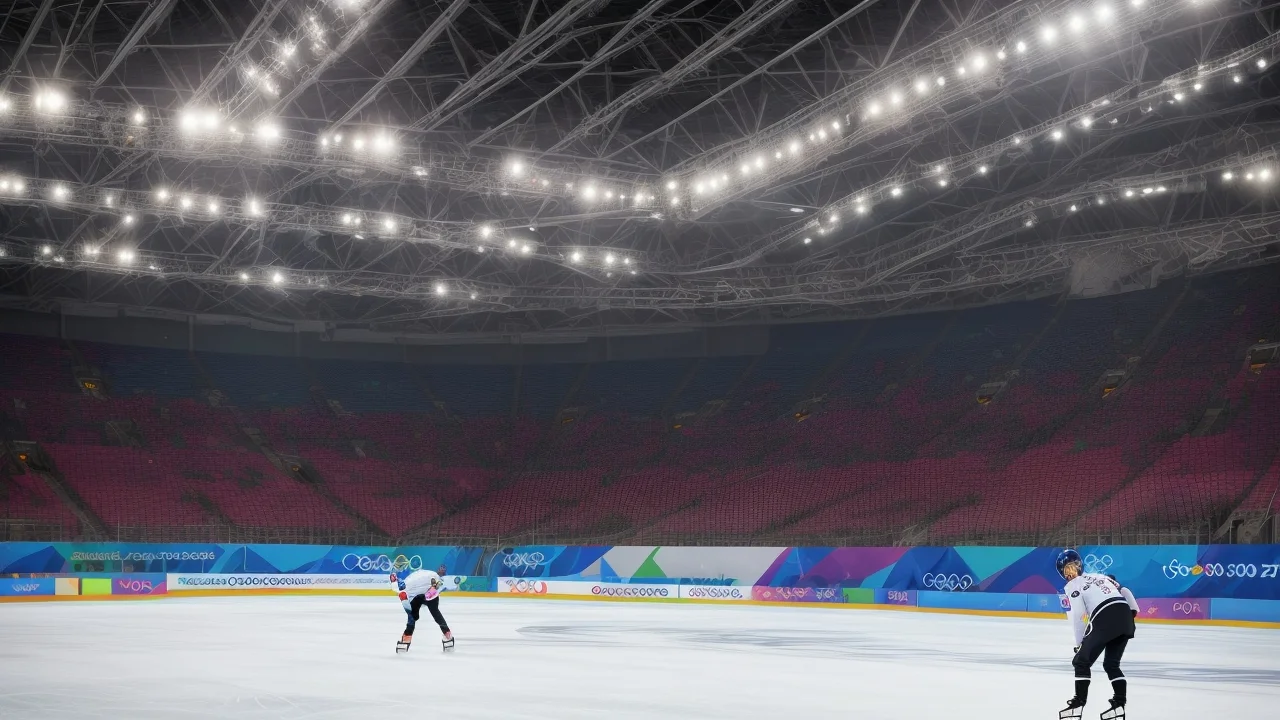
Picture this: you’re 21 years old, standing on Olympic ice with millions watching worldwide. You’ve trained your entire life for this moment. Your nickname is “The Quad God” because you can do things on ice that seem impossible. Then, in the span of four minutes, everything falls apart.
That’s exactly what happened to American figure skater Ilia Malinin at the 2026 Winter Olympics in Milan. The young athlete who had dominated the sport with his incredible quadruple jumps found himself fighting back tears after a performance that will haunt him for years to come.
Sometimes the biggest heartbreaks happen on the world’s biggest stages. And for Malinin, Friday’s men’s figure skating final became one of those moments that reminds us why we love sports – and why they can be so cruel.

When Olympic Dreams Shatter on Ice
Ilia Malinin’s Olympics journey ended in devastating fashion during the men’s figure skating final. The American skater, who entered the free skate portion leading by five points, fell twice during his routine and failed to land a single quad Axel throughout the entire competition.
His final score of 264.49 points landed him in eighth place overall – a shocking result for someone many considered the favorite to win gold. “I blew it,” Malinin told NBC in a raw, emotional interview immediately after his performance.

The young skater’s visible distress told the entire story. This wasn’t just about a bad day at the office. This was about dreams that had been years in the making, crumbling under the pressure of the Olympic spotlight.
“That’s honestly the first thing that came to my mind, there’s no way that just happened,” Malinin said, his voice breaking slightly. “I was preparing the whole season, I felt so confident with my programs, so confident with everything. That happened. I have no words, honestly.”

The Numbers Behind the Heartbreak
The statistics from Malinin’s Olympic performance paint a picture of what could have been versus what actually happened. Here’s how the final standings looked after Friday’s competition:
| Place | Skater | Country | Total Score |
|---|---|---|---|
| 1st (Gold) | Mikhail Shaidorov | Kazakhstan | 291.58 |
| 2nd (Silver) | Yuma Kagiyama | Japan | 280.06 |
| 3rd (Bronze) | Shun Sato | Japan | 274.90 |
| 8th | Ilia Malinin | USA | 264.49 |
The gap between Malinin’s score and the podium was significant – nearly 30 points separated him from bronze medal position. For context, that’s the difference between a clean performance and one filled with major technical errors.
Several key factors contributed to Malinin’s disappointing finish:
- Two major falls during his free skate routine
- Failed to complete his signature quad Axel jumps
- Multiple incomplete elements throughout his performance
- Technical deductions that compounded his scoring problems
- Visible loss of confidence as mistakes mounted
Figure skating coach Maria Rodriguez, who has worked with Olympic athletes for over two decades, explained the mental aspect: “When you’re known as ‘The Quad God’ and those quads aren’t working, it creates a cascade effect. Each mistake makes the next element harder to execute cleanly.”
A Historic Victory Overshadowed by American Heartbreak
While Malinin’s story dominated headlines, Mikhail Shaidorov of Kazakhstan delivered a performance for the ages. His gold medal victory marked Kazakhstan’s first figure skating Olympic gold since 1994, creating a historic moment that might have received more attention under different circumstances.
Shaidorov’s winning score of 291.58 points came from a nearly flawless performance that capitalized on the mistakes made by other top contenders. The 23-year-old skater executed his program with precision and artistry that judges couldn’t ignore.
Japan claimed both silver and bronze medals through Yuma Kagiyama and Shun Sato, respectively. Their consistent performances highlighted what separates Olympic champions from those who struggle under pressure.
“This Olympics has been about who could handle the moment,” said former Olympic champion and current commentator David Chen. “Malinin had all the technical ability in the world, but skating is as much mental as it is physical.”
What This Means for American Figure Skating
Malinin’s unexpected eighth-place finish sends ripples through the figure skating community, particularly in the United States where he was seen as the heir apparent to American skating greatness. His struggles raise questions about preparation methods, pressure management, and the unpredictable nature of Olympic competition.
The immediate impact extends beyond just one athlete’s disappointment. American figure skating had pinned significant hopes on Malinin’s shoulders, especially after his dominant performances throughout the 2025-2026 season leading up to the Olympics.
For Malinin personally, this experience will likely define how he approaches future competitions. At just 21 years old, he has plenty of time to rebound and potentially compete in the 2030 Olympics. However, the psychological impact of such a public failure on sport’s biggest stage cannot be underestimated.
Sports psychologist Dr. Jennifer Walsh, who has worked with Olympic athletes, noted: “These moments either break an athlete or forge them into something stronger. The next few months will be crucial for Ilia’s career trajectory.”
The broader implications for Team USA’s figure skating program will likely prompt some soul-searching. How do you prepare athletes for the unique pressures of Olympic competition? How do you balance technical training with mental preparation?
Looking Beyond the Disappointment
Despite the crushing disappointment, Malinin’s career is far from over. His innovative approach to quadruple jumps has revolutionized men’s figure skating, and one bad performance doesn’t erase years of technical brilliance.
The skating community has rallied around the young athlete, with fellow competitors and coaches offering support. “Everyone has bad days,” said Olympic veteran and three-time medalist Sarah Kim. “What matters is how you bounce back from them.”
Malinin’s journey serves as a reminder that Olympic dreams don’t always unfold as planned. Sometimes the athletes we expect to dominate fall short, while others seize unexpected opportunities to shine.
As the 2026 Winter Olympics continue, Malinin’s story will remain one of the most talked-about narratives – not for the reasons he hoped, but as a powerful reminder of sport’s unpredictable nature and the thin line between triumph and heartbreak.
FAQs
What place did Ilia Malinin finish at the 2026 Olympics?
Malinin finished in eighth place with a total score of 264.49 points after falling twice during his free skate routine.
Why is Ilia Malinin called “The Quad God”?
He earned this nickname due to his exceptional ability to perform quadruple jumps, particularly the extremely difficult quad Axel that he pioneered in competition.
Who won the men’s figure skating gold medal at the 2026 Olympics?
Mikhail Shaidorov of Kazakhstan won gold with a score of 291.58, marking Kazakhstan’s first figure skating Olympic gold since 1994.
Was Malinin expected to win gold at the Olympics?
Yes, he entered the free skate portion in first place by five points and was considered the favorite to win the gold medal.
How old is Ilia Malinin?
Malinin is 21 years old, making him young enough to potentially compete in future Olympic Games.
What went wrong during Malinin’s Olympic performance?
He fell twice during his routine, failed to land any quad Axel jumps throughout the competition, and had multiple incomplete elements that significantly hurt his scoring.
About the Author