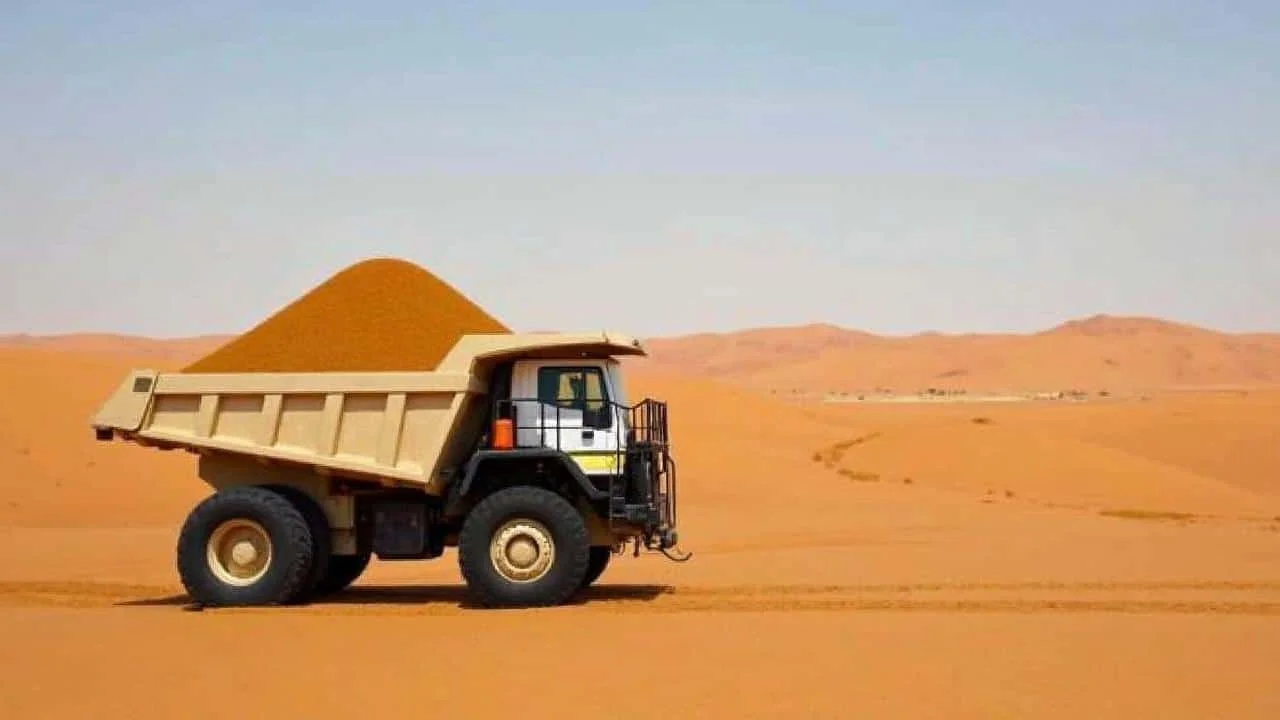
Ahmed walked through the massive construction site in downtown Riyadh, watching enormous trucks dump load after load of sand for the foundation of what would become another gleaming tower. The irony wasn’t lost on him as he squinted through the dust cloud—just 20 kilometers away, the desert stretched endlessly toward the horizon.
“We’re literally surrounded by sand,” he muttered to his colleague, “so why are we importing millions of tons of it from Australia?”
This scene plays out daily across Saudi Arabia and the UAE, where construction crews use foreign sand while standing in the middle of some of the world’s largest deserts. It sounds absurd until you understand the hidden science behind those grains.

The billion-dollar paradox of sand imports
Every year, Saudi Arabia and the United Arab Emirates import millions of tons of sand from countries thousands of kilometers away. Ships loaded with what appears to be the exact same material that fills their landscapes dock at ports in Dubai, Abu Dhabi, and Dammam.
The numbers are staggering. The UAE alone imports over 6 million tons of sand annually, while Saudi Arabia’s sand imports have reached nearly 10 million tons per year. These aren’t small cargo shipments—we’re talking about entire fleets of vessels crossing oceans to deliver something these countries seemingly have in abundance.

“People think it’s crazy when they first hear about it,” explains Dr. Sarah Mitchell, a geological engineer who has worked on construction projects across the Gulf. “But once you understand the difference between desert sand and construction sand, it makes perfect sense.”
The distinction lies in something you can’t see without a microscope: grain shape. Desert sand grains are round and smooth, polished by centuries of wind erosion. Construction sand grains are angular and rough, typically formed by water erosion or rock crushing.
When you mix concrete, those angular edges lock together like puzzle pieces. Round desert grains? They slip and slide, creating weak concrete that can’t support a skyscraper.
Where the sand comes from and how much it costs
The global sand trade has become a multi-billion dollar industry, with the Gulf states as major customers. Here’s where most of their sand imports originate:

- Australia – River sand and quarry sand, primarily from Queensland and New South Wales
- Pakistan – River sand from the Indus River system
- India – Beach sand and river sand from coastal regions
- Bangladesh – River sand from major waterways
- African nations – Including sand from Morocco and South Africa
The economics are revealing when you break down the numbers:
| Country | Annual Sand Imports (Million Tons) | Estimated Cost (USD) | Primary Use |
|---|---|---|---|
| Saudi Arabia | 9.8 | $1.2 billion | Construction, land reclamation |
| UAE | 6.3 | $890 million | Construction, artificial islands |
| Qatar | 2.1 | $310 million | World Cup infrastructure |
| Kuwait | 1.7 | $220 million | Urban development |
“The cost isn’t just about the sand itself,” notes James Rodriguez, a supply chain manager for a major construction firm in Dubai. “You’re paying for extraction, processing, transportation, and handling. By the time it reaches a construction site in Riyadh, that sand has traveled 8,000 kilometers.”
The most expensive sand comes from Australia, where strict environmental regulations and high labor costs drive up prices. Pakistani river sand costs about 40% less but requires more processing to meet Gulf construction standards.
The environmental and economic impact you don’t see
While these sand imports keep the construction boom alive in the Gulf, they’re creating unexpected consequences around the world. River ecosystems in Pakistan and India face increasing pressure from sand mining. Australian quarries expand to meet Middle Eastern demand.
The environmental cost extends beyond extraction sites. Each shipment burns thousands of gallons of marine fuel, contributing to carbon emissions. A single sand cargo ship traveling from Australia to Dubai produces roughly the same emissions as 300 cars driving for a year.
“We’re essentially strip-mining riverbeds in developing countries to build luxury developments in the desert,” explains environmental economist Dr. Maria Santos. “The ecological footprint is enormous, but it’s largely invisible to the end consumers.”
The economic ripple effects reach far beyond construction sites. Local communities near sand extraction sites often lose access to traditional fishing areas when rivers are dredged. Property values along affected waterways can drop significantly.
Some countries have started pushing back. India banned sand exports in 2019, forcing Gulf buyers to find new suppliers. Vietnam restricted sand mining after several islands literally disappeared due to over-extraction.
The Gulf states aren’t blind to these challenges. Saudi Arabia has invested heavily in artificial sand production, using crushed limestone from local quarries. The UAE has launched recycling programs to reuse sand from demolished buildings.
Alternative materials are also gaining traction. Some new construction projects use recycled glass, steel slag, and even plastic waste as concrete aggregates. However, these solutions still represent a tiny fraction of total sand consumption.
“The scale of construction in places like Saudi Arabia and the UAE is just massive,” says construction industry analyst Robert Chen. “Even with recycling and alternatives, they’ll need imported sand for decades to come.”
The irony remains striking: some of the world’s sandiest places depend on foreign sand to build their cities. Desert nations have become major players in a global sand trade that most people never knew existed.
FAQs
Why can’t desert countries use their own sand for construction?
Desert sand grains are too smooth and round to bind properly in concrete, making them unsuitable for construction projects.
How much does imported sand cost compared to local alternatives?
Imported construction sand can cost 3-5 times more than local materials when you factor in transportation and handling.
Which countries supply the most sand to the Gulf states?
Australia, Pakistan, and India are the largest suppliers, providing different types of sand for various construction needs.
Are there environmental concerns with global sand mining?
Yes, excessive sand extraction damages river ecosystems, affects local communities, and contributes to coastal erosion in source countries.
Can artificial sand replace imported sand?
Some projects now use crushed rock and recycled materials, but these alternatives currently meet only a small percentage of total demand.
Will Gulf countries always need to import sand?
Likely yes, unless construction slows dramatically or new technologies make desert sand usable for building, which seems unlikely in the near future.
About the Author
