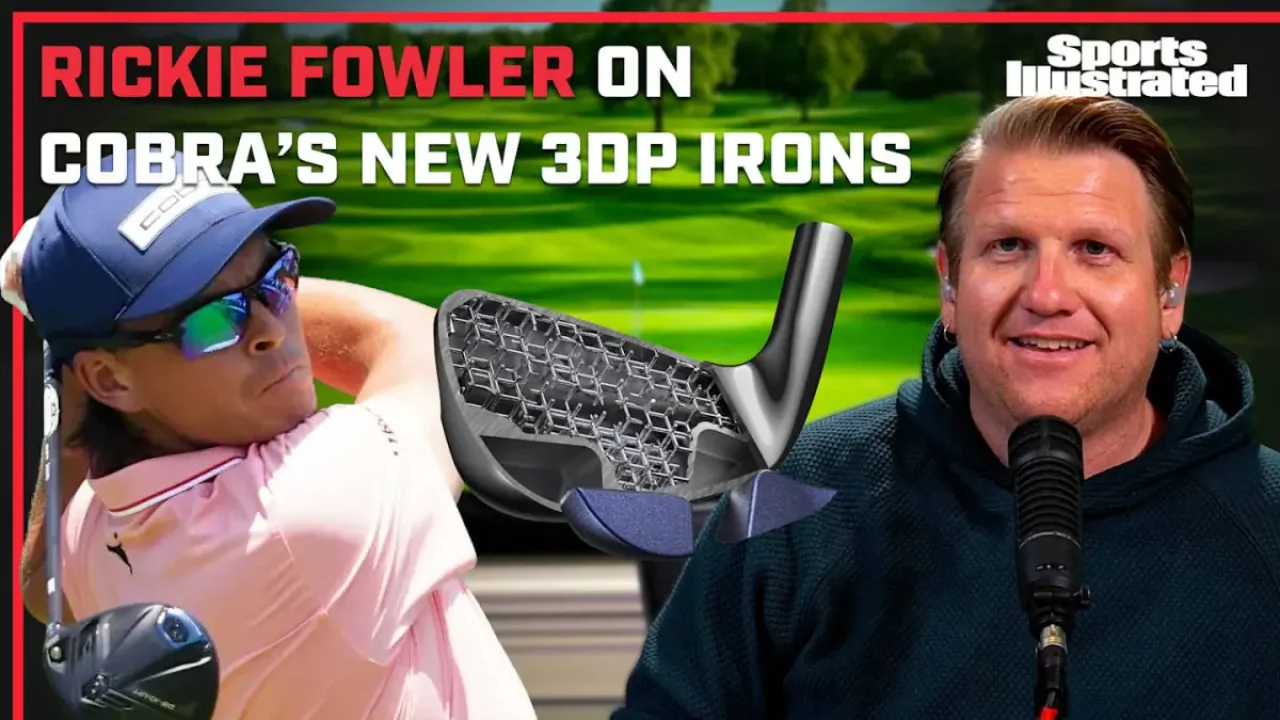
Picture this: you’re standing on the practice tee at your local course, watching a fellow golfer pull out a set of irons that look perfectly normal but were actually built layer by microscopic layer in a high-tech lab. It sounds like science fiction, but it’s happening right now on the PGA Tour.

That golfer could be channeling what Rickie Fowler just did with his game-changing equipment decision. The former Players Championship winner has quietly revolutionized his iron play by putting a full set of 3D printed Cobra irons into his bag—but only after months of exhaustive testing that would make most weekend warriors dizzy.
This isn’t just another tour pro switching equipment for a sponsorship check. Fowler’s move represents a genuine shift in how elite players are approaching golf technology, blending cutting-edge manufacturing with old-school performance demands.

Why Fowler’s 3D Printed Cobra Irons Matter More Than You Think
When most golfers think about new clubs, they imagine getting fitted at their pro shop and walking out with a shiny new set. Fowler’s journey looked nothing like that.
The self-described “golf equipment nerd” spent months cycling through prototypes, measuring everything from ball speed to the acoustic feedback at impact. He wasn’t just testing clubs—he was essentially co-designing them.

“I wanted to know what every tweak did and how each change showed up both on a launch monitor and under pressure,” Fowler explained. “The extra miles on the range were worth it for my game.”
3D printing technology allows manufacturers like Cobra to create internal structures that traditional casting or forging simply can’t achieve. Think of it like building a house where you can position every beam and support exactly where it needs to be, rather than being limited by standard construction methods.

For tour players, this translates into surgical precision over center of gravity placement and mass distribution. Fowler could literally move grams of weight to exactly where his swing needed them most.
The Technical Breakdown: What Makes These Irons Different
Here’s what sets 3D printed Cobra irons apart from traditional clubs:

- Complex internal geometries: Structures that can’t be created through conventional manufacturing
- Precise weight distribution: Every gram can be positioned for optimal performance
- Customized face support: Backing structures tailored to individual swing characteristics
- Sound and feel tuning: Internal features designed to create specific feedback
- Aerodynamic optimization: Shapes that reduce drag without compromising appearance
The testing process revealed just how methodical Fowler’s approach became:
| Testing Phase | Focus Area | Duration |
|---|---|---|
| Initial Prototypes | Basic feel and launch | 2-3 weeks |
| Refinement Rounds | Spin rates and dispersion | 4-6 weeks |
| Course Testing | Real-world performance | 6-8 weeks |
| Final Validation | Competition readiness | 2-3 weeks |
“Many players shy away from extended testing because it’s time-intensive,” noted one equipment expert familiar with the process. “Fowler leaned the other way and treated it like building a Formula 1 car.”
What This Could Mean for Your Game
While most amateur golfers won’t have access to Fowler’s level of customization, his move signals a broader shift in golf equipment that could trickle down to retail level.
Tour adoption often creates a ripple effect. When elite players validate new technology, manufacturers gain confidence to bring similar innovations to everyday golfers. We’ve seen this pattern with adjustable drivers, hollow-body irons, and multiple other technologies that started on tour.
“If Fowler’s move yields the steadier approaches he’s seeking, other pros will give 3D-printed constructions a closer look,” said one industry insider. “The broader signal is clear—players are comfortable blending traditional looks with cutting-edge build methods.”
For weekend golfers, this development highlights something important: modern manufacturing can deliver very targeted benefits, but results still come from proper fitting and patience. Fowler’s path wasn’t a simple equipment swap—he invested months in finding his perfect setup.
The technology could eventually help recreational players achieve:
- More consistent distance gapping between irons
- Better launch conditions for their specific swing speed
- Improved feel and feedback for faster skill development
- Enhanced forgiveness without sacrificing shot-shaping ability
“This isn’t about chasing a quick fix,” Fowler emphasized. “I treated the project as a chance to build a set that answers my specific asks—trajectory control in the wind, consistent gapping, and feedback that keeps my swing keys sharp.”
The timing of Fowler’s switch is also telling. Rather than making the change during the off-season when many pros experiment, he committed to the 3D printed Cobra irons after proving they could handle tournament pressure.
That level of confidence suggests this isn’t just a marketing play or short-term experiment. Fowler genuinely believes these clubs will help him compete at the highest level, potentially inspiring other tour pros to explore similar technology.
As 3D printing becomes more accessible and cost-effective, we might see custom iron fitting become as common as driver adjustments are today. The technology that allowed Fowler to fine-tune every aspect of his iron performance could eventually democratize equipment optimization for golfers at every skill level.
FAQs
How long did Rickie Fowler test the 3D printed Cobra irons?
Fowler spent several months cycling through multiple iterations and testing phases before committing to use them in competition.
What makes 3D printed irons different from traditional clubs?
3D printing allows manufacturers to create complex internal structures and precise weight distribution that conventional casting or forging methods cannot achieve.
Will 3D printed irons be available to amateur golfers?
While tour-level customization may remain exclusive, the technology could eventually trickle down to retail offerings as manufacturing costs decrease.
Why did Fowler choose Cobra for his 3D printed irons?
Cobra has been an early leader in 3D printing technology for golf equipment, allowing them to offer the level of customization Fowler was seeking.
Do 3D printed irons look different from regular irons?
No, Fowler’s 3D printed Cobra irons maintain traditional compact shapes and appearances that better players prefer, with the advanced technology hidden internally.
Could other tour players follow Fowler’s lead with 3D printed equipment?
If Fowler’s performance improves with the new irons, other tour professionals will likely explore similar 3D printed options from various manufacturers.
About the Author