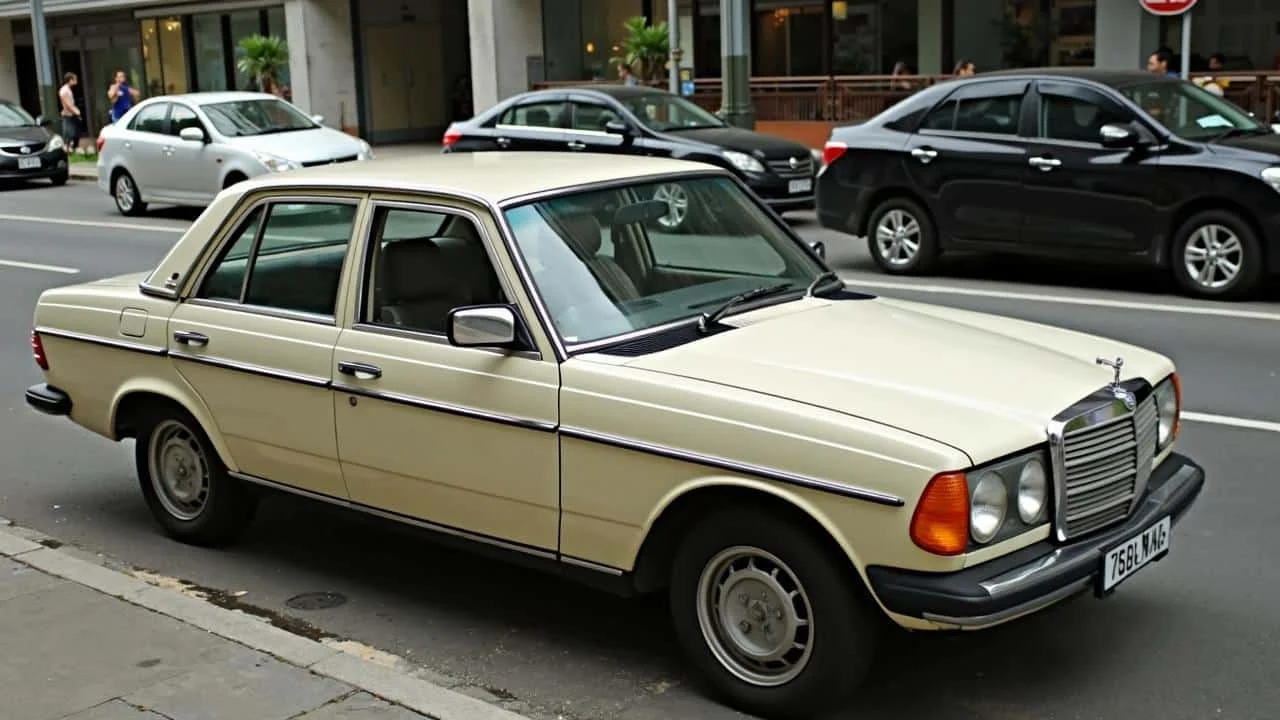
Sarah Chen checks her bank balance one more time before walking into the Toyota showroom. The 28-year-old marketing executive has been saving for three years, skipping overseas holidays and weekend brunches. Today, she’s finally ready to buy her first car—a seven-year-old Corolla with 80,000 kilometers on the clock. The price tag reads S$85,000, roughly what her friends in London paid for their first apartments.

As she signs the paperwork, Sarah’s hands shake slightly. Not from nervousness about the car, but from the realization that she’s just joined an exclusive club. In Singapore, she’s not buying transportation—she’s buying freedom, status, and what many consider the ultimate luxury good.
Welcome to a city where owning any car, regardless of age or condition, puts you in the top tier of society. Where a beat-up Honda commands more respect than a Rolex, and where parking spaces cost more per square foot than some people’s apartments.

Why Singapore car ownership redefines luxury
Step off the plane at Changi Airport and you’ll notice something immediately: the roads aren’t clogged with traffic. Cars glide smoothly between lanes, buses arrive on schedule, and the infamous Southeast Asian horn symphony is mysteriously absent. This automotive paradise comes with a price tag that would make luxury car dealers in other countries weep.
Singapore’s government has engineered the world’s most expensive car ownership system through a combination of import duties, registration fees, and the notorious Certificate of Entitlement (COE). This mandatory permit to own a car can cost more than the vehicle itself, turning even the most modest hatchback into a six-figure investment.

“I’ve seen grown adults cry tears of joy when their COE bid gets accepted,” says automotive consultant Marcus Lim, who has worked in Singapore’s car industry for 15 years. “It’s not about the car anymore—it’s about crossing into a different social class.”
The COE system operates like an auction, with the government releasing only a limited number of permits every month. Buyers bid against each other, driving prices into stratospheric territory. In recent years, a COE for a standard car has cost between S$80,000 to S$100,000—before you even look at a single vehicle.

Breaking down the true cost of owning wheels in Singapore
Understanding Singapore car ownership requires looking beyond the sticker price. Here’s how the costs stack up for a typical Toyota Corolla:
| Cost Component | Amount (S$) | Percentage of Total |
|---|---|---|
| Car Price | 25,000 | 25% |
| Certificate of Entitlement | 90,000 | 45% |
| Additional Registration Fee | 15,000 | 15% |
| Goods and Services Tax | 9,100 | 9% |
| Road Tax (Annual) | 1,200 | 1% |
| Insurance & Misc | 4,700 | 5% |
| Total First Year | 145,000 | 100% |
These numbers explain why car ownership in Singapore has become the ultimate status symbol. The monthly costs don’t stop there:

- Parking fees: S$200-500 per month for residential parking
- Fuel costs: Among the highest in the world at S$2.80+ per liter
- Electronic Road Pricing tolls: S$0.50-6.00 per gantry
- Maintenance and servicing: 30-50% more expensive than regional averages
- Insurance: S$1,500-3,000 annually
“People don’t realize that after buying the car, you’re looking at another S$800-1,200 monthly just to keep it running,” explains financial planner Janet Wong. “That’s more than what many people pay for rent.”
How car ownership divides Singapore society
Walk through any HDB estate and you’ll spot them immediately—the car owners. They’re the ones checking their phones nervously for parking spots, the families loading groceries without worrying about carrying capacity, the parents who don’t need to factor in bus timings for their children’s activities.
The social implications run deeper than convenience. In Singapore’s dating scene, car ownership has become an unspoken criterion. Wedding photographers know to include car shots in their packages. Job interviews sometimes happen over drives rather than coffee meetings.
“My daughter’s teacher assumed we were wealthy because I picked her up in a car,” shares mother of two Lisa Tan. “I had to explain that we eat instant noodles twice a week to afford this 15-year-old Vios.”
The psychological impact extends beyond owners themselves. Families without cars often feel the social pressure acutely, especially during school events or family gatherings. Children notice when their friends’ parents drive while theirs take buses.
Singapore’s efficient public transport system serves as both blessing and reminder. The MRT connects virtually every corner of the island, buses run frequently, and ride-hailing options abound. Yet the convenience comes with subtle social stratification—those who can choose their transport method versus those who cannot.
“Car ownership in Singapore isn’t about getting from Point A to Point B,” observes sociologist Dr. Rachel Koh. “It’s about having the choice to get there on your own terms, when you want, how you want. That choice is what makes it luxurious.”
The government’s policy achieves its intended goal of managing traffic congestion and encouraging public transport use. Roads remain relatively uncrowded, and Singapore boasts one of the world’s most efficient transport networks. However, this success creates an unintended consequence: a clear dividing line between those who can afford personal mobility and those who cannot.
For visitors from countries where car ownership is commonplace, Singapore’s automotive landscape feels surreal. Conversations that would center on car models or features instead focus on COE prices and bidding strategies. Parking lots become displays of serious financial commitment rather than automotive preferences.
The irony isn’t lost on many Singaporeans. In a city where supercars regularly cruise Orchard Road and luxury goods flood high-end shopping districts, the most exclusive item might be that aging Toyota parked in the void deck. Its owner isn’t flaunting wealth—they’re quietly enjoying what has become Singapore’s most understated luxury: the simple freedom to drive.
FAQs
How much does it really cost to own a car in Singapore?
Including the COE, taxes, and registration, a basic new car typically costs S$120,000-200,000, with annual running costs of S$10,000-15,000.
Can foreigners buy cars in Singapore?
Yes, but they need valid work permits or permanent residency, plus the financial means to afford the total costs including COE.
Why doesn’t Singapore just build more roads instead of limiting cars?
Singapore is a small island nation with limited land space. Adding roads would mean reducing housing or green spaces, so controlling car numbers is more practical.
How long does a COE last?
A COE is valid for 10 years. After that, car owners can renew for another 10 years by paying the prevailing quota premium, or scrap their vehicle.
Is it worth owning a car in Singapore with such good public transport?
It depends on personal circumstances and financial situation. Many families find the convenience worth the cost, especially with young children or elderly relatives.
What happens to car prices when COE prices drop?
Total car costs decrease, but COE prices fluctuate based on supply and demand. Lower COE prices often lead to increased demand, which can push prices back up.
About the Author