Imagine discovering that while you were caring for a child you believed to be your family, thousands of miles away a court was quietly signing papers to give that same child to strangers. You had no idea. No lawyer. No chance to speak up.

This isn’t a hypothetical nightmare—it’s exactly what happened to an Afghan family whose world was turned upside down by war, loss, and a legal battle that has now reached its stunning conclusion.
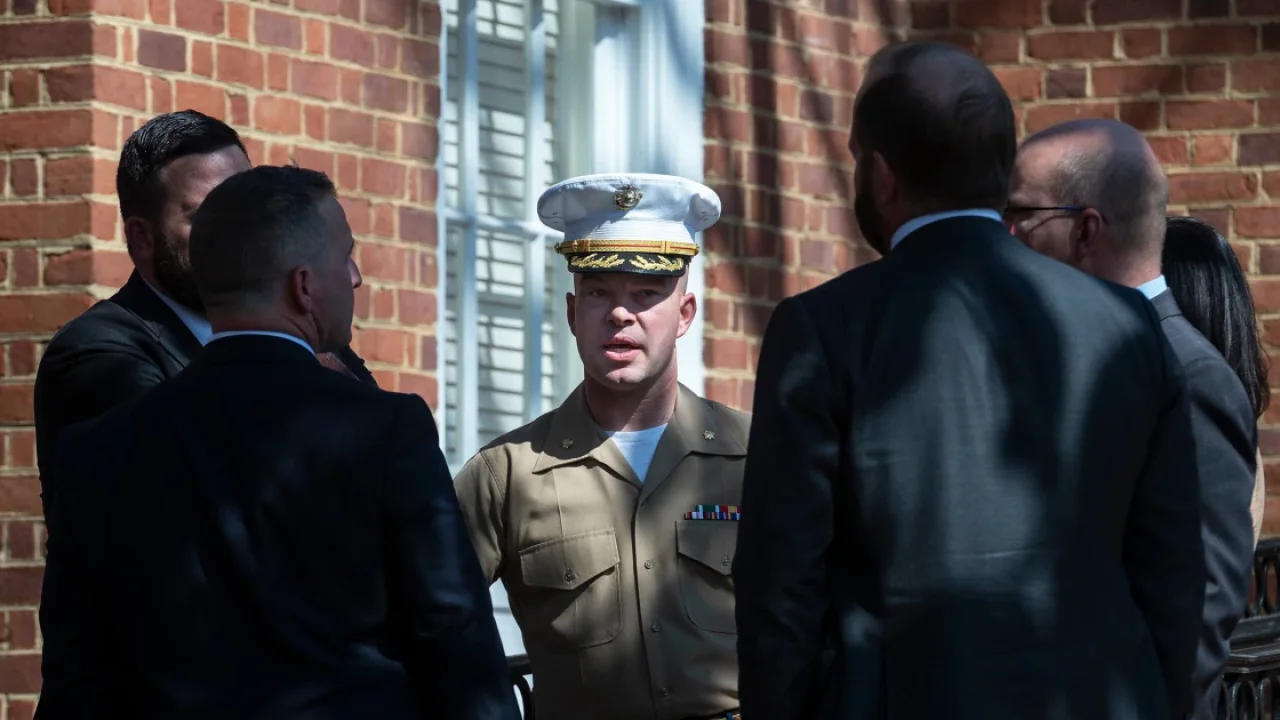
The Virginia Supreme Court ruled Thursday that U.S. Marine Joshua Mast and his wife Stephanie will keep the Afghan war orphan they brought to America, ending a heartbreaking legal fight that has raged for years. The decision splits the court and raises troubling questions about how our legal system handles international adoption cases involving vulnerable children.

A Tragedy Born from Battlefield Horror
The story begins in September 2019 with violence that no child should ever witness. During a U.S. military raid on a compound in rural Afghanistan, a young girl was severely injured. Her parents and siblings were killed in the operation, which was targeting foreign terrorists who had entered the country.
American soldiers rushed the wounded child to a military hospital, where she began a journey that would eventually span two continents and multiple court systems. What seemed like a straightforward case of helping a war-injured child quickly became anything but simple.
The State Department, following international protocol, worked with Afghan authorities and the International Committee of the Red Cross to locate the girl’s surviving relatives. They found what appeared to be her uncle, who was vetted by the Afghan government. The child was placed with his family, where she lived for 18 months while recovering from her injuries.
“The system worked exactly as it should have under international law,” explains Sarah Mitchell, an expert in international child welfare cases. “When a child is displaced by conflict, the priority is always reunification with verified family members.”

But thousands of miles away in Virginia, Marine Joshua Mast had different plans. He and his wife began pursuing adoption through Fluvanna County courts, claiming the child was “stateless” and the daughter of foreign fighters.
The Legal Battle That Divided a Court
The case that unfolded reveals a system with serious flaws. Here are the key events that led to this week’s ruling:

| Date | Event | Impact |
|---|---|---|
| September 2019 | Child injured in military raid | Parents and siblings killed |
| 2019-2020 | Child placed with Afghan relatives | Family cared for her 18 months |
| December 2020 | Virginia judge grants final adoption | Afghan family had no knowledge |
| August 2021 | Taliban takes control of Afghanistan | Family agrees to evacuate |
| 2021 | Mast takes child at refugee center | Afghan family hasn’t seen her since |
Judge Richard Moore granted the Masts a final adoption order in December 2020. The critical detail? The child was still 7,000 miles away in Afghanistan, living with relatives who had no idea an American court was giving her to another family.
Under Virginia law, adoption orders become nearly impossible to challenge after six months. When that deadline passed, the Afghan war orphan was still with her extended family, completely unaware that she now legally belonged to strangers.
The situation exploded when the Taliban seized control of Afghanistan in August 2021. The Afghan family, fearing for their safety, agreed to evacuate. Mast used his military connections to help arrange their passage to America—but once they reached a refugee resettlement center in Virginia, he took the child and left.
“What happened here goes against every principle of child welfare and international law,” says Dr. Amanda Rodriguez, who specializes in cross-border custody disputes. “You cannot simply take a child from another country without proper legal process.”
A Supreme Court Divided
Thursday’s ruling from the Virginia Supreme Court split 4-3, revealing deep disagreement about this unprecedented case. The majority upheld the adoption based on a technicality—Virginia’s six-month rule that makes adoption orders nearly impossible to overturn.
The four justices in the majority argued that this law exists to create stability for children, preventing them from being bounced between families. They ruled that even if the adoption was obtained through questionable means, the time limit protects the finality of the decision.
But three justices issued what legal observers are calling one of the most scathing dissents in recent memory. They described the case as “wrong,” “cancerous,” and “like a house built on a rotten foundation.”
The dissenting justices argued that the Afghan family should have been recognized as the child’s “de facto parents” since they had been caring for her. This would have given them constitutional rights to challenge the adoption, regardless of Virginia’s six-month rule.
“The majority’s decision essentially rewards fraud and manipulation of our court system,” notes legal analyst Michael Thompson. “It sets a dangerous precedent for international adoption cases.”
The case has exposed serious gaps in how American courts handle adoptions involving foreign children. The Afghan family had no legal representation, no knowledge of the proceedings, and no opportunity to present their side of the story.
What This Means for Everyone Involved
The immediate impact is clear: the Afghan war orphan will remain with the Mast family in Virginia. But the broader implications reach far beyond this single case.
For the Afghan family, the ruling represents a devastating loss. They cared for this child through her recovery from war injuries, only to lose her through legal proceedings they never knew existed. The protective order shielding their identities reflects genuine fears that speaking publicly could endanger relatives still in Taliban-controlled Afghanistan.
For the Masts, the victory comes with significant controversy. While they now have legal custody, questions about how they obtained it will likely follow them—and potentially the child—for years to come.
The case also highlights broader issues with international adoption and refugee resettlement. How do we protect vulnerable children while respecting the rights of their families? What happens when American courts make decisions about foreign children without involving all interested parties?
“This case will be studied in law schools for decades,” predicts Professor Lisa Chen, who teaches international family law. “It shows how our legal system can fail everyone involved, including the child it’s supposed to protect.”
The ruling may also influence future cases involving refugee children and military families. Some worry it creates incentives for people to manipulate court systems when dealing with vulnerable foreign children.
As this long legal battle finally ends, one question remains: what’s best for the Afghan war orphan at the center of it all? She’s now old enough to understand that multiple families claim her as their own, and that courts thousands of miles apart have been deciding her fate.
The Virginia Supreme Court’s decision brings legal closure, but the human cost of this case will likely resonate for years to come.
FAQs
What exactly did the Virginia Supreme Court rule?
The court ruled 4-3 that the Mast family can keep the Afghan war orphan they adopted, despite serious questions about how the adoption was obtained.
Why couldn’t the Afghan family challenge the adoption?
Virginia law prevents challenges to adoption orders after six months, and that deadline had passed while the child was still in Afghanistan with her relatives.
How did the Masts get custody of a child in another country?
They convinced a Virginia judge to grant them adoption orders while claiming the child was “stateless,” even though she was living with vetted relatives in Afghanistan.
What happened when the Afghan family came to America?
Mast helped arrange their evacuation from Taliban-controlled Afghanistan, but took the child from them at a refugee center and they haven’t seen her since.
Can this decision be appealed?
The Virginia Supreme Court is the highest court in the state, so this decision is final unless the case somehow reaches federal courts on constitutional grounds.
What does this mean for similar cases in the future?
Legal experts worry this creates a dangerous precedent that could encourage manipulation of court systems in international adoption cases involving vulnerable children.
About the Author