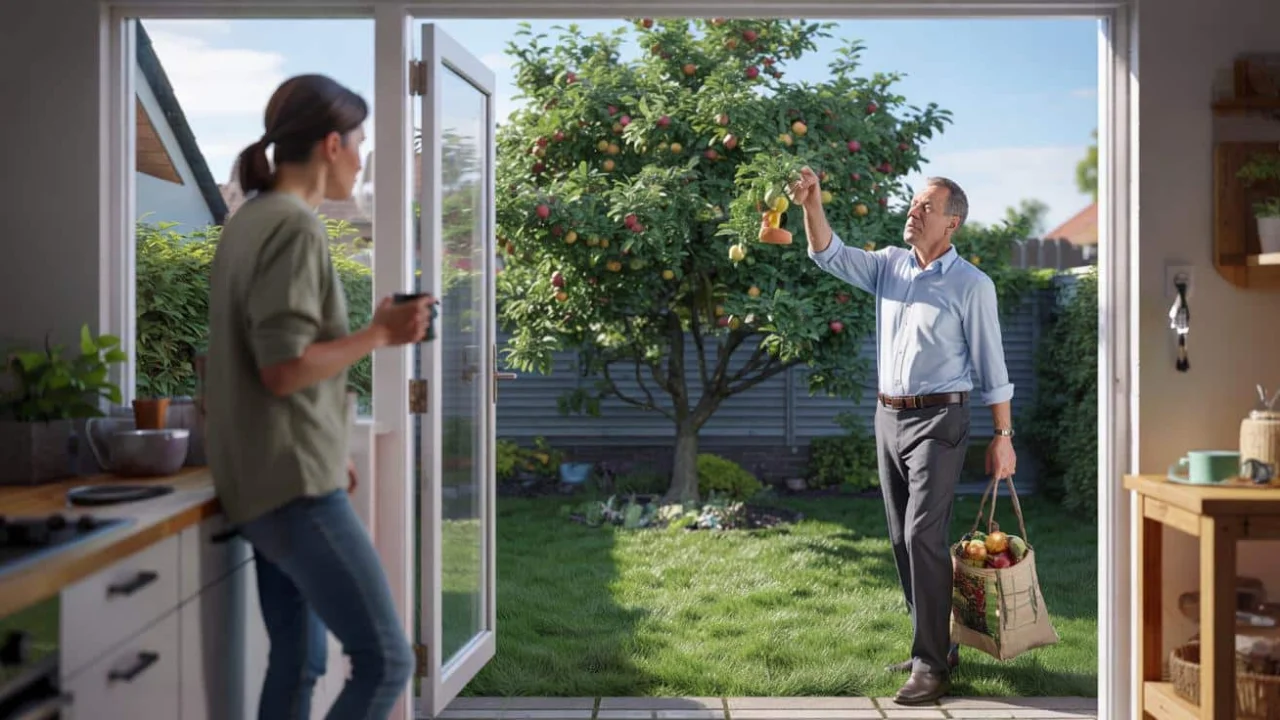
Sarah was enjoying her morning tea when she spotted him through her kitchen window. Her landlord, David, was casually strolling through her back garden with a plastic carrier bag, methodically picking pears from the tree she’d been watching ripen for weeks. No knock on the door, no text message, no heads-up whatsoever.

Her heart sank as she watched him fill the bag with what she’d assumed would be her harvest. She’d even bought a step ladder the previous weekend, planning to make pear crumble for her daughter’s birthday party. Now she stood frozen, unsure whether to confront him or pretend she hadn’t noticed.
This awkward scene plays out in rental properties across the country every summer, leaving tenants questioning their rights and landlords assuming theirs. The question isn’t just about fruit—it’s about boundaries, respect, and what “exclusive use” actually means when you’re renting someone else’s property.

Understanding Landlord Garden Rights and Tenant Boundaries
The legal reality around landlord garden rights creates a peculiar gray area that catches many people off guard. While your landlord technically owns the trees, bushes, and everything growing in the garden, the moment you sign a tenancy agreement granting you “exclusive use” of that outdoor space, the rules change dramatically.
“Most tenants don’t realize that their rental agreement extends the same privacy protections to their garden as it does to their bedroom,” explains housing solicitor James Mitchell. “A landlord can’t just walk into your living room uninvited, and the same principle applies to your garden.”

The confusion stems from ownership versus occupancy rights. Yes, the landlord owns the property and everything permanently attached to it, including mature fruit trees. However, once they’ve rented out the property with garden access, they’ve essentially transferred the right to use and enjoy that space to you as the tenant.
This means your landlord should follow the same entry protocols for your garden as they would for your house:

- Give at least 24 hours written notice
- Specify a valid reason for entry
- Arrange a convenient time
- Respect your right to refuse unreasonable requests
When Landlords Can and Cannot Enter Your Garden
The circumstances under which landlords can access rented gardens aren’t as straightforward as many property owners assume. Legal grounds for entry exist, but they’re limited and must follow proper procedures.

| Valid Reasons for Garden Entry | Invalid Reasons |
|---|---|
| Emergency repairs (broken fence, fallen tree) | Routine fruit harvesting |
| Property inspections (with notice) | Garden maintenance you can reasonably do |
| Essential maintenance (roof access, utilities) | Showing garden to prospective buyers without notice |
| Safety hazards (dangerous branches) | Personal enjoyment of garden features |
“I’ve seen landlords justify garden entry for the most ridiculous reasons,” says tenant rights advisor Maria Rodriguez. “Wanting to pick fruit for their family barbecue isn’t a legal justification for entering someone’s rented space without permission.”
The fruit question becomes particularly thorny because many landlords view harvesting as property maintenance. They argue they’re preventing fruit from rotting, attracting pests, or creating mess. While there’s some logic to this reasoning, it doesn’t override your right to exclusive use of the garden space.
Most tenancy agreements address garden maintenance responsibilities but rarely specify fruit harvesting rights. This oversight leads to assumptions on both sides that often end badly.
Consider Mark’s situation: his landlord installed security cameras specifically to monitor when fruit was ripe, then would arrive unannounced to collect it. After months of feeling surveilled in his own garden, Mark discovered this behavior violated both his privacy rights and the terms of his tenancy agreement.
What This Means for Renters and Property Owners
The practical implications of landlord garden rights affect thousands of rental relationships, especially as more people seek properties with outdoor space post-pandemic. Tenants who thought they’d scored a great deal with a fruit tree often find themselves in uncomfortable confrontations with property owners who see harvest time as their prerogative.
For tenants, understanding your rights prevents that sinking feeling when you discover someone’s been in your garden uninvited. You have legitimate grounds to request proper notice and can refuse unreasonable entry requests, even if your landlord owns the trees.
“The key is communication before conflict,” advises property mediator Susan Chen. “Most disputes arise because expectations weren’t set clearly from the beginning.”
Smart tenants address fruit harvesting in their tenancy negotiations. Some arrange to share the harvest, others agree to maintain the trees in exchange for keeping the produce, and some simply clarify that garden entry requires the same notice as house entry.
Property owners need to recognize that renting out garden space means temporarily giving up some control over it. The rental income compensates for this inconvenience. Landlords who want to maintain unlimited garden access should consider adjusting their rental terms or pricing accordingly.
The legal consequences of unauthorized garden entry mirror those of entering the house without permission. Persistent violations could constitute harassment, breach of tenancy terms, or even trespass, depending on circumstances and local laws.
Moving forward, both parties benefit from explicit garden clauses in tenancy agreements. These might specify maintenance responsibilities, entry procedures, and yes, who gets to enjoy the apple harvest each autumn.
The broader trend shows tenants increasingly asserting their rights to outdoor space privacy, while progressive landlords recognize that respecting boundaries leads to better, longer tenancies. After all, a tenant who feels secure and respected in their garden is more likely to care for the property and renew their lease.
FAQs
Can my landlord take fruit from trees in my rented garden?
Not without following proper entry procedures and giving you appropriate notice, just like entering your house.
Do I own the fruit that grows in my rented garden?
You have the right to exclusive use and enjoyment of the garden space, which typically includes harvesting fruit during your tenancy.
What should I do if my landlord keeps entering my garden uninvited?
Document the incidents, remind them of proper entry procedures in writing, and contact local tenant advisory services if the behavior continues.
Can I change the locks on my garden gate?
Generally yes, as long as you provide your landlord with a key for legitimate access needs, similar to house door locks.
Should fruit harvesting rights be in my tenancy agreement?
Ideally yes, clear terms about garden use, maintenance responsibilities, and produce rights prevent future disputes.
What constitutes reasonable notice for garden entry?
At least 24 hours written notice specifying the reason, except in genuine emergencies threatening property or safety.
About the Author
