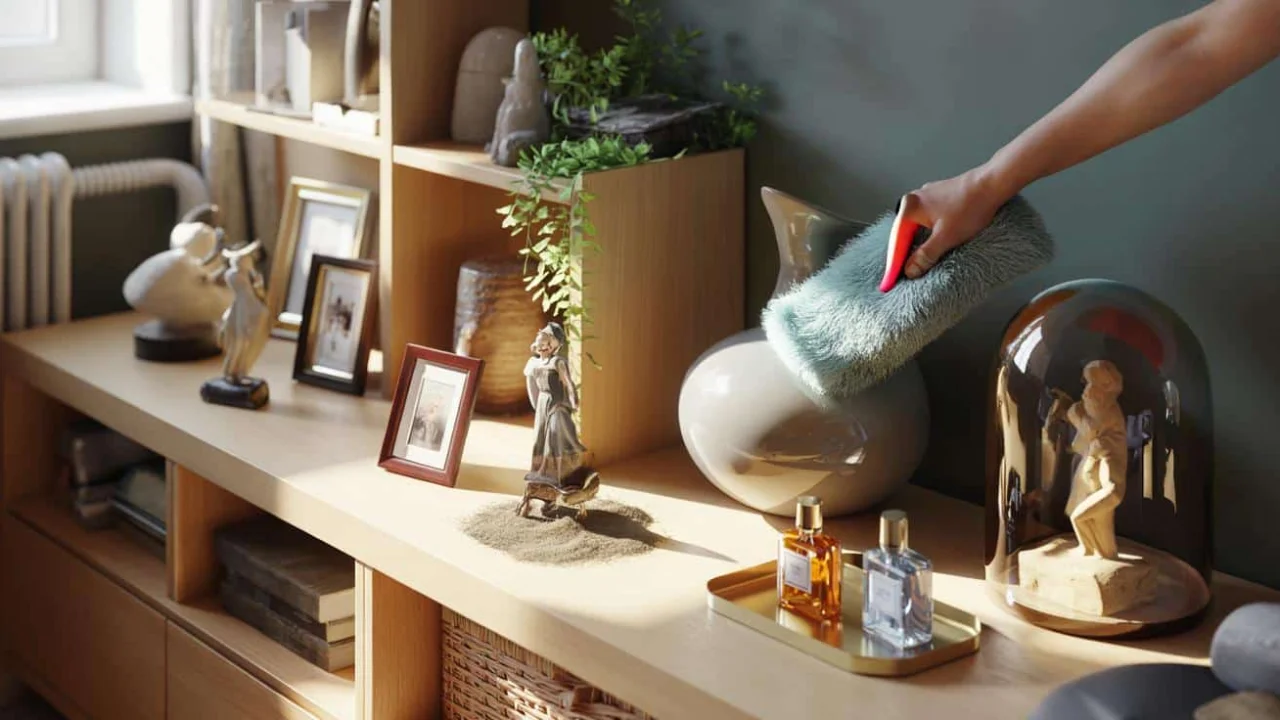
Maria arranged her new ceramic collection on the floating shelf last weekend, each piece catching the afternoon light perfectly. The hand-painted bowls from Morocco, the delicate glass birds from her grandmother, the small wooden elephant from Thailand – they transformed her plain wall into a story of travels and memories.

Three weeks later, she walked past with her morning coffee and stopped cold. Every single piece wore a dull gray coat of dust. The vibrant colors looked muted, the glass had lost its sparkle, and somehow her beautiful display now screamed “neglected house.” She grabbed a paper towel and started wiping frantically, only to watch the dust swirl around and resettle moments later.
Sound familiar? You’re not alone in this daily battle. Dust prevention for decorative objects has become the silent struggle of every homeowner who loves displaying meaningful pieces but hates the constant maintenance they demand.

Why decorative objects become dust magnets overnight
Think about it – your decorative objects are sitting ducks. Unlike furniture that gets moved or surfaces that get wiped regularly, these small treasures sit perfectly still for weeks, giving dust particles unlimited time to settle and stick.
“The static electricity that builds up on decorative items actually attracts dust particles like tiny magnets,” explains Sarah Chen, a professional house cleaner with 15 years of experience. “This is especially true for materials like glass, ceramic, and certain metals.”

Every decorative object has unique dust-trapping features. Carved wooden figures have countless tiny crevices. Textured pottery creates microscopic landing strips. Even smooth surfaces develop invisible oils from handling that help dust particles stick better than you’d expect.
The location matters too. Objects near heating vents, windows, or high-traffic areas collect dust faster because of air circulation patterns. Your beautiful mantelpiece display? It’s in the perfect storm zone where warm air rises and carries particles directly to your collectibles.

Practical strategies that actually work for dust prevention
Here’s the reality: you can’t eliminate dust completely, but you can outsmart it with the right approach. The key is creating barriers and changing how dust settles rather than just cleaning it after it arrives.
Start with strategic placement. Moving your most dust-prone items away from air vents and windows can cut dust accumulation by up to 40%. “I tell my clients to think like dust particles,” says professional organizer Michael Torres. “Where would you land if you were floating through the room?”
| Material Type | Dust Attraction Level | Prevention Method | Cleaning Frequency |
|---|---|---|---|
| Glass/Crystal | High | Anti-static spray | Weekly |
| Smooth Ceramic | Medium | Microfiber covers | Bi-weekly |
| Textured Wood | Very High | Display case/rotation | Every 3-4 days |
| Metal Objects | High | Regular polishing | Weekly |
The most effective dust prevention techniques include:
- Using glass display cases for your most cherished pieces
- Applying anti-static sprays to smooth surfaces monthly
- Installing air purifiers near major display areas
- Covering objects with breathable cloth when not actively displaying them
- Rotating displays so you’re only maintaining a few pieces at a time
- Creating “dust breaks” with taller objects that catch particles before they reach smaller items
The rotation strategy works particularly well. Instead of displaying 20 small objects that each need weekly attention, display 7-8 pieces and store the rest in protective containers. Switch them out monthly for a fresh look without the overwhelming maintenance.
“I learned this trick from museums,” shares interior designer Rachel Kim. “They never display everything at once, partly because of dust management. Your home can work the same way.”
The real cost of ignoring dust prevention
Beyond the obvious aesthetic problems, dust buildup on decorative objects creates a cascade of issues that affect your entire living space. When dust accumulates on multiple surfaces, it becomes airborne again with the slightest movement, triggering allergies and making your air quality worse.
For collectors, dust can cause permanent damage. It scratches delicate surfaces during cleaning, settles into porous materials like unglazed ceramics, and accelerates tarnishing on metals. That vintage silver picture frame or antique porcelain figurine could lose significant value from improper dust handling alone.
The psychological impact hits harder than most people realize. When your favorite objects look neglected, your entire space feels less welcoming. Guests notice dusty displays immediately – it’s often the first thing that makes a home feel “lived in” rather than “cared for.”
“I’ve seen people stop entertaining because they’re embarrassed about dust on their collections,” notes cleaning expert Jennifer Walsh. “The objects that should bring joy become sources of stress instead.”
Time costs add up too. The average homeowner spends 23 minutes per week just on dusting decorative objects. That’s nearly 20 hours per year – time that could be spent actually enjoying your beautiful things rather than maintaining them.
Smart dust prevention reduces this maintenance time by 60-70%. Instead of weekly panic-cleaning sessions, you’re doing quick monthly touch-ups and actually having time to appreciate what you’ve collected.
The solution isn’t getting rid of decorative objects – it’s approaching them strategically. When you invest 10 minutes in setting up proper dust prevention systems, you save hours of frustrated cleaning later. Your objects stay beautiful longer, your air stays cleaner, and your home maintains that “just cleaned” feeling without the constant effort.
FAQs
How often should I clean decorative objects to prevent dust buildup?
Most decorative objects need attention every 1-2 weeks, but using prevention methods like anti-static sprays can extend this to 3-4 weeks.
What’s the best tool for dusting delicate decorative items?
Microfiber cloths work best for most surfaces, while soft-bristled brushes handle intricate details and compressed air removes dust from hard-to-reach places.
Do air purifiers actually help reduce dust on decorative objects?
Yes, quality air purifiers can reduce airborne particles by 40-60%, significantly slowing dust accumulation on nearby objects.
Should I use furniture polish on all decorative objects?
No – only use appropriate cleaners for each material. Glass cleaners for glass, wood polish for wood, and nothing but dry cleaning for delicate fabrics or antiques.
Is it better to display fewer objects to reduce dust problems?
Absolutely. Displaying 5-7 meaningful pieces instead of 15-20 smaller items makes maintenance manageable while creating more visual impact.
Can houseplants help reduce dust on decorative objects?
Some plants do filter air naturally, but they also shed particles and require watering that increases humidity – which can attract more dust to nearby objects.
About the Author