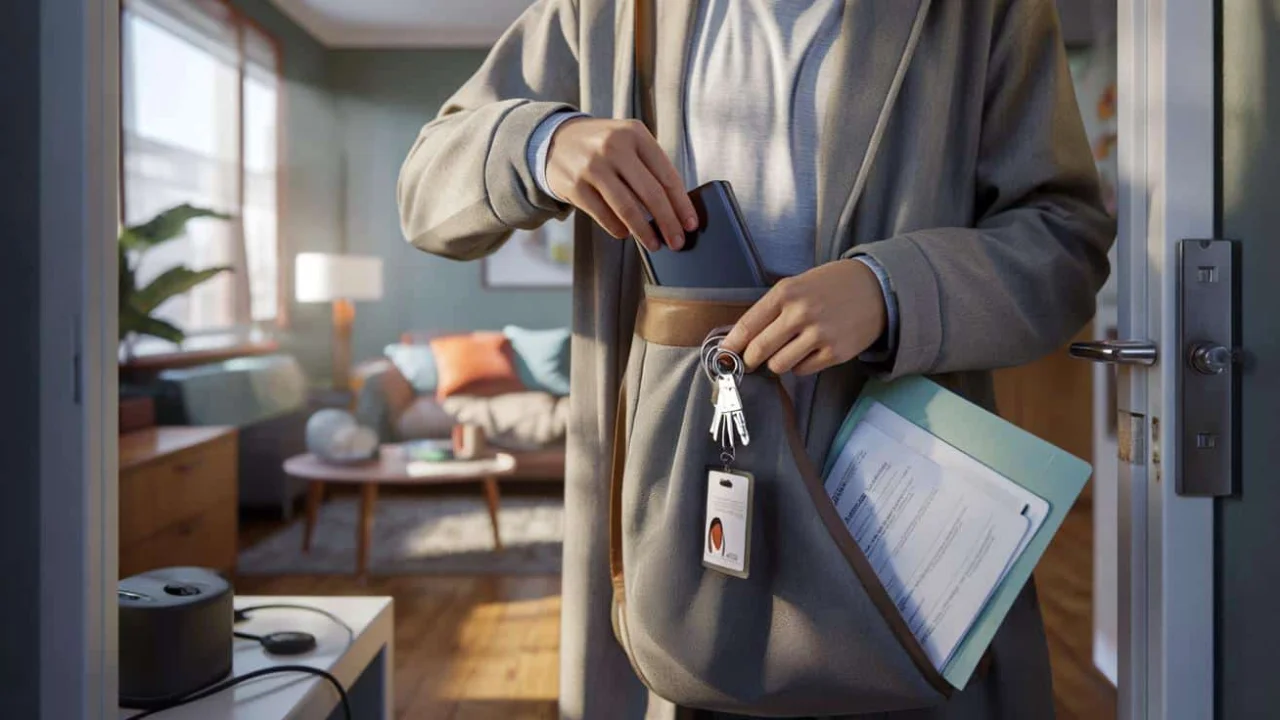
The morning it really hit me, I left home feeling oddly proud of myself. Bag packed, coffee finished, shoes on the right feet for once. I even locked the door with that smug “look at me being an adult” satisfaction.

Two minutes later, in the elevator, my stomach dropped. I’d forgotten the folder for my 9 a.m. meeting. Again.
That week was a mess of tiny failures. Keys left on the table. Earbuds on the counter. Charger still plugged in next to my bed. Nothing dramatic, just a slow drip of “oh no, not again” moments that made me feel scattered and slightly broken.

The invisible tax of forgetting small things
There’s a special kind of stress that comes from constantly forgetting small stuff. You’re not losing your passport or your laptop – you’re losing five minutes here, ten minutes there. A card, your badge, your water bottle.
It doesn’t look serious from the outside. You laugh it off, say you’re “just a bit all over the place today.” Yet your day gets chipped away by returns, small panics, and those awkward “sorry, I have to go back, I forgot…” messages.

After a while, forgetting small things isn’t just about objects. It starts nibbling at your confidence.
“I see patients who beat themselves up over these minor memory lapses,” says Dr. Sarah Chen, a cognitive behavioral therapist. “They think it means they’re failing at life, when really it’s just their brain processing too much information at once.”

One Tuesday, I forgot my office keycard three times. The third time, the security guard just raised an eyebrow and we both laughed, but I wanted to disappear. I had left home, walked halfway to the bus, gone back. Then I’d reached the building, realized my card was still on the kitchen counter, gone back again.
By noon, I had already lost almost an hour of my day, just from those micro-forgets. No crisis. No drama. Just a trail of wasted time and rising self-annoyance.

The simple door trick that changed everything
The turning point wasn’t an app, or a miracle routine. It was one small thing I started doing at my door.
I call it the “Three-Touch Rule.” Before I turn the door handle, I touch three things: my pocket (phone and keys), my bag (wallet and work stuff), and my chest (checking for my badge or whatever else I need that day).
That’s it. Three quick taps, taking maybe five seconds total.
The first week felt silly. I’d stand there like I was patting myself down for airport security. But something weird happened – those panicked elevator moments stopped. The frustrated walks back home became rare exceptions instead of weekly rituals.
“Creating a physical checkpoint routine works because it engages multiple senses,” explains memory researcher Dr. James Martinez. “You’re not just thinking about what you need – you’re feeling for it, which creates stronger neural pathways.”
Here’s what makes this technique so effective for people struggling with forgetting small things:
- It takes under 10 seconds, so you actually do it
- The physical touching engages muscle memory
- It happens at the natural transition point – leaving home
- You catch forgotten items when it’s still easy to grab them
- It builds confidence in your own reliability
Why our brains keep forgetting the little stuff
On the surface, forgetting small things feels like laziness or carelessness. It often isn’t. It’s a brain running multiple tabs at once. You’re thinking of the email you didn’t answer, the message you just got, the meeting you’re dreading.
Modern life overloads our working memory – the mental space where we hold information temporarily. When that space gets crowded, small details get pushed out first.
| Common Items We Forget | Average Weekly Frequency | Time Lost Per Incident |
|---|---|---|
| Keys | 2-3 times | 8-15 minutes |
| Phone charger | 1-2 times | 5-20 minutes |
| Work badge/ID | 1-2 times | 10-30 minutes |
| Earbuds/headphones | 2-4 times | 3-10 minutes |
| Important documents | 1 time | 15-45 minutes |
“The brain prioritizes survival and complex tasks,” notes neuroscientist Dr. Lisa Park. “Remembering where you put your earbuds doesn’t register as urgent, even when forgetting them disrupts your entire commute.”
This isn’t a character flaw. It’s human nature bumping against modern complexity.
Making the habit stick when you’re naturally forgetful
The hardest part about stopping the cycle of forgetting small things isn’t learning the technique – it’s remembering to use it. Here’s how to make the Three-Touch Rule automatic:
Week 1: Put a sticky note on your door at eye level. Write “3 touches” or draw three circles. This visual cue reminds you until the habit forms.
Week 2: Move the note to the inside of your door. You’ll see it as you’re about to leave, but it’s less obvious to visitors.
Week 3: Remove the note. By now, your hand should automatically reach for the door handle differently – with a slight pause built in.
The key is linking this new behavior to something you already do automatically: leaving home. You never forget to turn the door handle, so you piggyback the memory check onto that existing habit.
“Habit stacking works because it uses established neural pathways,” explains behavioral psychologist Dr. Mark Thompson. “Instead of creating a completely new routine, you’re adding a small step to something your brain already does on autopilot.”
After three months of using this system, forgetting small things went from a daily frustration to a rare occurrence. I still have the occasional slip-up, but those panicked pocket-pat moments in elevators are mostly history.
The bonus? Other people started noticing. Colleagues mentioned I seemed more prepared. Friends stopped getting those “running late, forgot my…” texts. Small changes, but they add up to feeling more competent and less scattered.
Sometimes the biggest improvements come from the tiniest adjustments. A five-second pause at your door might be the difference between starting your day frustrated or confident.
FAQs
How long does it take for the Three-Touch Rule to become automatic?
Most people see it become habit within 2-3 weeks of consistent use, though some notice it clicking after just a few days.
What if I forget to do the three touches?
Start with a visual reminder like a sticky note on your door. The key is catching yourself and trying again rather than giving up entirely.
Does this work for people with ADHD or memory issues?
Many people with attention challenges find physical routines like this helpful because they engage multiple senses, but it’s worth discussing memory strategies with a healthcare provider.
What if I need to remember more than three things?
You can adapt it – some people do a “five-point check” or create categories like “tech stuff, work stuff, personal stuff.” The key is keeping it simple enough to actually do.
Is there a backup plan for when I’m really rushed?
Even when you’re running late, the three touches take under 10 seconds. It’s faster than going back for forgotten items later.
Can I use this technique for other situations besides leaving home?
Absolutely. Some people adapt it for leaving the office, getting out of the car, or even packing for trips. The principle works anywhere you need a final check.
About the Author