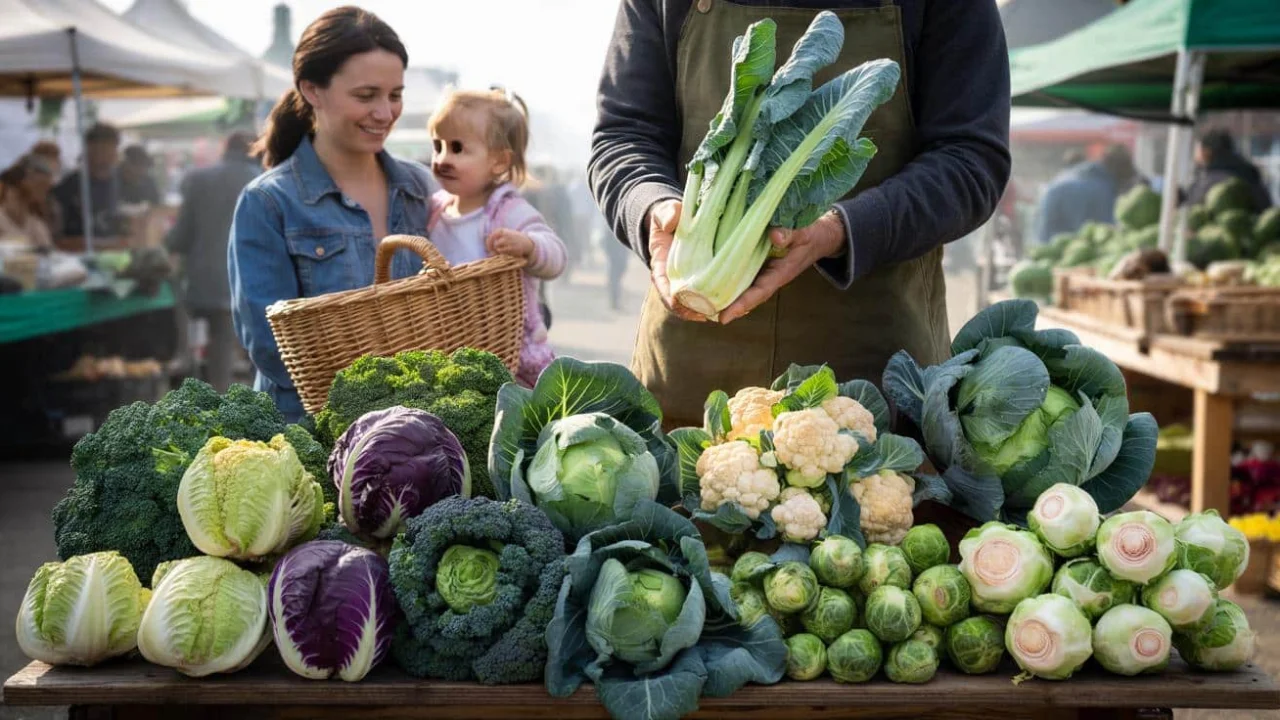
Sarah stared at her grocery receipt in disbelief. She’d spent nearly forty dollars on what she thought was a rainbow of healthy vegetables for the week. Kale for her morning smoothies, broccoli for dinner, Brussels sprouts to roast, and a head of cabbage for soup. Her cart looked like a nutritionist’s dream come true.

But as she loaded the bags into her car, a nagging thought crept in. Her college botany professor had mentioned something years ago about vegetables being more connected than they seemed. She brushed it off then, focused on passing the exam.
Turns out, she should have paid closer attention. Because Sarah hadn’t bought a diverse vegetable medley at all. She’d essentially purchased the same plant six different ways – and she’s not alone in missing this mind-bending botanical truth.

Meet the shape-shifting superstar of your dinner plate
The vegetables filling Sarah’s bags – and probably yours too – are all members of the brassica vegetables family. More specifically, they’re all varieties of a single species called Brassica oleracea. Think of it as nature’s ultimate costume party, where one plant shows up wearing completely different outfits.
“Most people are shocked when I tell them that broccoli and cabbage are basically the same plant,” says Dr. Jennifer Martinez, a plant biologist at the University of California. “It challenges everything we think we know about vegetable diversity.”

This wild coastal plant originally grew along the rocky shores of western and southern Europe. Picture a scrappy, somewhat unremarkable plant with thick, waxy leaves designed to withstand salt spray and harsh winds. Not exactly dinner table material in its natural state.
But humans saw potential. Over thousands of years, farmers and gardeners selected different traits from this humble ancestor. Some focused on developing bigger leaves, others wanted tighter flower buds, and still others preferred plants with swollen stems. Each group of people essentially sculpted the same genetic clay into entirely different forms.

The incredible transformations hiding in plain sight
The variety of forms that Brassica oleracea can take is honestly stunning. Here’s what humans have coaxed out of this single species through selective breeding:
| Vegetable | Plant Part We Eat | What Was Selected For |
|---|---|---|
| Kale | Leaves | Large, nutritious foliage |
| Cabbage | Leaves | Tight, compact leaf formation |
| Broccoli | Flower buds | Dense clusters of unopened flowers |
| Cauliflower | Flower buds | White, compact flower heads |
| Brussels sprouts | Leaf buds | Multiple small cabbage-like buds along the stem |
| Kohlrabi | Stem | Swollen, bulbous stem base |
| Collard greens | Leaves | Large, flat, loose leaves |
“It’s like looking at a master sculptor’s different works,” explains Dr. Robert Chen, a geneticist specializing in crop evolution. “Same raw material, completely different artistic vision each time.”

The transformation becomes even more remarkable when you consider the timeline. Kale likely emerged around 2000 BCE, making it one of the earliest cultivated forms. Cabbage followed, then broccoli appeared in Italy around the Roman era. Brussels sprouts didn’t show up until the 16th century in Belgium.
Each culture that encountered these brassica vegetables shaped them according to their needs and tastes. The result? What looks like a diverse family of vegetables is actually a testament to human ingenuity and patience.
Why this botanical magic trick matters for your health and wallet
Understanding that these vegetables are essentially siblings changes how we think about nutrition and meal planning. Since they share the same genetic foundation, brassica vegetables offer similar health benefits across the board.
All members of this family are packed with vitamin C, vitamin K, and folate. They’re also rich in glucosinolates – sulfur-containing compounds that give them their characteristic slightly bitter or peppery taste and may help protect against certain cancers.
- High fiber content supports digestive health
- Antioxidants help combat inflammation
- Low calorie density makes them perfect for weight management
- Versatile preparation methods keep meals interesting
- Generally affordable and widely available
“From a nutritional standpoint, you’re getting tremendous bang for your buck with any brassica vegetable,” notes registered dietitian Lisa Thompson. “They’re nutritional powerhouses regardless of which variety you choose.”
This knowledge can also make grocery shopping more strategic. Instead of feeling pressured to buy six different types of vegetables, you can focus on what’s freshest, cheapest, or most appealing that week. You’re still getting excellent nutritional variety even if you stick to just one or two brassica vegetables.
For gardeners, this revelation opens up fascinating possibilities. Since these vegetables are so closely related, many can cross-pollinate if grown near each other. Some adventurous gardeners deliberately cross different varieties to create unique hybrids.
The cost savings can be significant too. When broccoli prices spike, cauliflower might be a more affordable option that delivers similar nutrients. During kale shortages, collard greens or cabbage can fill the gap nutritionally and culinarily.
“I tell my clients to think of brassica vegetables as a team,” says Thompson. “You don’t need every team member on your plate every day to get the benefits.”
This botanical revelation also highlights something profound about plant breeding and human innovation. Long before we understood genetics, our ancestors were essentially conducting sophisticated breeding programs, selecting for traits they valued and slowly reshaping wild plants into the foods we recognize today.
The next time you’re at the grocery store, take a moment to appreciate the incredible diversity hiding within this single species. That colorful array of brassica vegetables represents thousands of years of human creativity and patience, turning one scrappy coastal plant into a nutritional goldmine that feeds millions of people worldwide.
FAQs
Can all brassica vegetables be used interchangeably in recipes?
While they share similar nutritional profiles, their textures and flavors differ significantly, so direct substitution doesn’t always work well in specific recipes.
Do brassica vegetables have the same growing requirements?
Generally yes, since they’re the same species they prefer cool weather, well-drained soil, and similar care, though some varieties are more cold-tolerant than others.
Are there any other vegetable families like this?
Yes! Squash, pumpkins, and cucumbers are all varieties of different species within the same family, and many legumes share similar relationships.
Why do some brassica vegetables taste more bitter than others?
The concentration of glucosinolates varies between varieties, and factors like growing conditions, harvest timing, and preparation methods can affect bitterness levels.
Can you grow different brassica vegetables in the same garden bed?
Absolutely, and they’ll often benefit from similar care schedules, though you should be aware they may cross-pollinate if you’re saving seeds.
Are there any brassica vegetables I might not recognize?
Yes, some lesser-known varieties include romanesco (a striking spiral-patterned cousin of broccoli), purple cauliflower, and Chinese broccoli, all from the same species.
About the Author