Sarah stared at the bright red strawberries spilling from their plastic container, her three-year-old daughter bouncing excitedly beside her. “Strawberries! Can I have one now, Mommy?” But Sarah hesitated. She’d just read another article about the “Dirty Dozen” list, and strawberries topped it again. A quick rinse under the tap felt inadequate, but she wasn’t sure what else to do.

This scene plays out in kitchens everywhere. We want to give our families fresh, delicious fruit, but the nagging worry about pesticide residues makes that simple pleasure complicated. You’ve probably found yourself in the same spot—holding beautiful strawberries while wondering if your usual washing routine is actually doing anything meaningful.
The truth is, most of us have been washing strawberries wrong our entire lives, and the popular “solutions” aren’t much better.

The problem with our usual washing methods
That quick rinse under running water feels responsible, but it’s mostly theater. Water alone removes visible dirt and some surface contamination, but many modern pesticides are designed to be “systemic”—meaning they don’t just sit on the surface.
“People think if they rinse for five seconds, they’ve solved the pesticide problem,” explains Dr. Jennifer Martinez, a food safety researcher at Cornell University. “But strawberries are incredibly porous fruits with all those little seeds and crevices where residues can hide.”

The vinegar solution isn’t much better, despite its popularity on social media. While vinegar can help with some types of bacteria and surface residues, it’s not the pesticide-removing miracle many believe it to be. Worse, soaking strawberries in acidic solutions can actually break down their delicate structure, leaving you with mushy, off-tasting fruit.
So what actually works? The answer comes from food science laboratories, not kitchen folklore.

The science-backed method for washing strawberries
Researchers have tested various washing methods, and the most effective approach combines time, temperature, and gentle mechanical action. Here’s what actually removes the most pesticide residues:
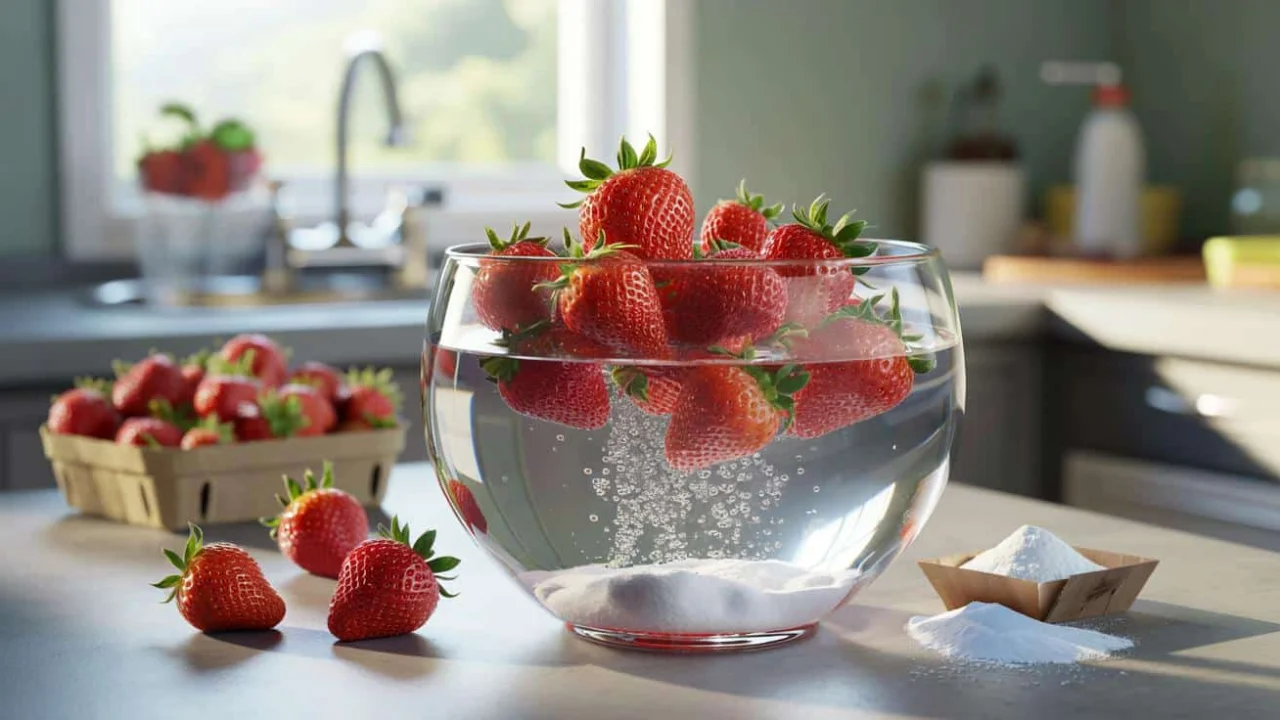
- Baking soda solution: Mix 1 tablespoon of baking soda per cup of cool water
- Gentle scrubbing: Use a soft brush or your clean hands to gently agitate the berries
- Proper timing: Soak for 12-15 minutes, not the 30+ minutes some sources suggest
- Thorough rinsing: Follow with clean running water for at least 30 seconds

The baking soda creates an alkaline environment that helps break down many common pesticide compounds. Unlike harsh detergents or bleach solutions, it’s gentle enough that any residue won’t harm you, but effective enough to significantly reduce pesticide levels.
| Washing Method | Pesticide Reduction | Time Required | Fruit Quality Impact |
|---|---|---|---|
| Tap Water Only | 20-30% | 30 seconds | Minimal |
| Vinegar Solution | 40-50% | 10 minutes | Can affect texture/taste |
| Baking Soda Method | 80-96% | 15 minutes | Preserves quality |
| Commercial Wash | 60-70% | 5 minutes | Minimal |
“The baking soda method consistently outperforms other home washing techniques,” notes Dr. Lili He, who led groundbreaking research on fruit washing at the University of Massachusetts. “We found it removed up to 96% of certain pesticide residues when done correctly.”
Why this matters for your family’s health
The stakes aren’t just academic. Strawberries consistently rank at the top of the Environmental Working Group’s “Dirty Dozen” list, with samples showing residues from multiple different pesticides. Children are particularly vulnerable because their developing bodies process these chemicals differently than adults.
But here’s what many parents don’t realize: the goal isn’t to eliminate every trace of pesticide residue—that’s practically impossible. The goal is to reduce your family’s overall exposure to levels that pose minimal risk while still enjoying nutritious fresh fruit.
“I tell parents that washing strawberries properly is like wearing a seatbelt,” says pediatric nutritionist Dr. Amanda Chen. “It doesn’t eliminate all risk, but it significantly reduces it while preserving all the health benefits of eating fresh berries.”
The nutritional benefits of strawberries—vitamin C, antioxidants, fiber—far outweigh the risks from trace pesticide residues, especially when you’re washing them effectively. The worst outcome would be avoiding fresh fruit altogether out of fear.
For families buying conventional strawberries, the baking soda wash becomes even more critical. Organic strawberries have lower pesticide residues, but they’re not pesticide-free, and they still benefit from proper washing to remove bacteria and other contaminants.
The method works for other soft fruits too—blueberries, raspberries, and grapes all respond well to the same technique. Just adjust the soaking time slightly for more delicate berries like raspberries (10-12 minutes instead of 15).
Remember to wash strawberries just before eating them, not when you bring them home. Excess moisture encourages mold growth, so clean berries store better when they’re completely dry.
FAQs
Can I use regular dish soap instead of baking soda?
No, dish soap isn’t designed for food and can leave residues that are harder to rinse off completely.
Do I need to remove the green tops before washing?
Keep the tops on during washing to prevent water from entering the berry and making it soggy, then remove them afterward.
How long can I store strawberries after washing them this way?
Make sure they’re completely dry before storing, then they’ll keep as long as unwashed berries—typically 5-7 days refrigerated.
Does this method work for frozen strawberries too?
Frozen strawberries are typically washed before freezing, but you can rinse them briefly after thawing if desired.
Is the baking soda method safe for organic strawberries?
Yes, it’s gentle enough for organic fruit and helps remove bacteria and natural contaminants even when pesticide levels are lower.
What if my strawberries taste slightly different after washing?
Make sure you’re rinsing thoroughly after the baking soda soak—any lingering alkaline taste should disappear with proper rinsing.
About the Author